
Limestone for Facades: Types and Properties
Facade limestone is a sedimentary rock based on calcium carbonate and one of the most widely used cladding stones in the history of architecture. It is valued for its calm light tones, soft texture and ease of working: limestone is used for slabs, blocks, cornices, window surrounds, columns and carved ornament.
The main selection criterion is density. Limestones range from very dense, close to marble in their properties, to porous shell limestones; for exterior cladding in a cold climate, dense varieties with confirmed frost resistance and low water absorption are suitable, while porous ones need protection and well-designed drainage.
This article is for architects, developers and homeowners. Other stones are covered in Natural stone for facades and interiors.
What limestone is
Limestone forms on the beds of seas and lakes from shells, skeletons of marine organisms and chemically precipitated calcium carbonate. Over time the sediment compacts and turns into stone. Depending on the conditions of formation, the result varies in density, structure and colour.
The main characteristics of limestone as a cladding material:
• colour: from white and cream to beige, yellow, grey and sometimes pinkish;
• texture: from uniform and fine-grained to shelly, with visible shell remains;
• workability: it is easy to cut, mill and profile, making it suitable for carved and three-dimensional ornament;
• chemistry: a carbonate rock, sensitive to acids.
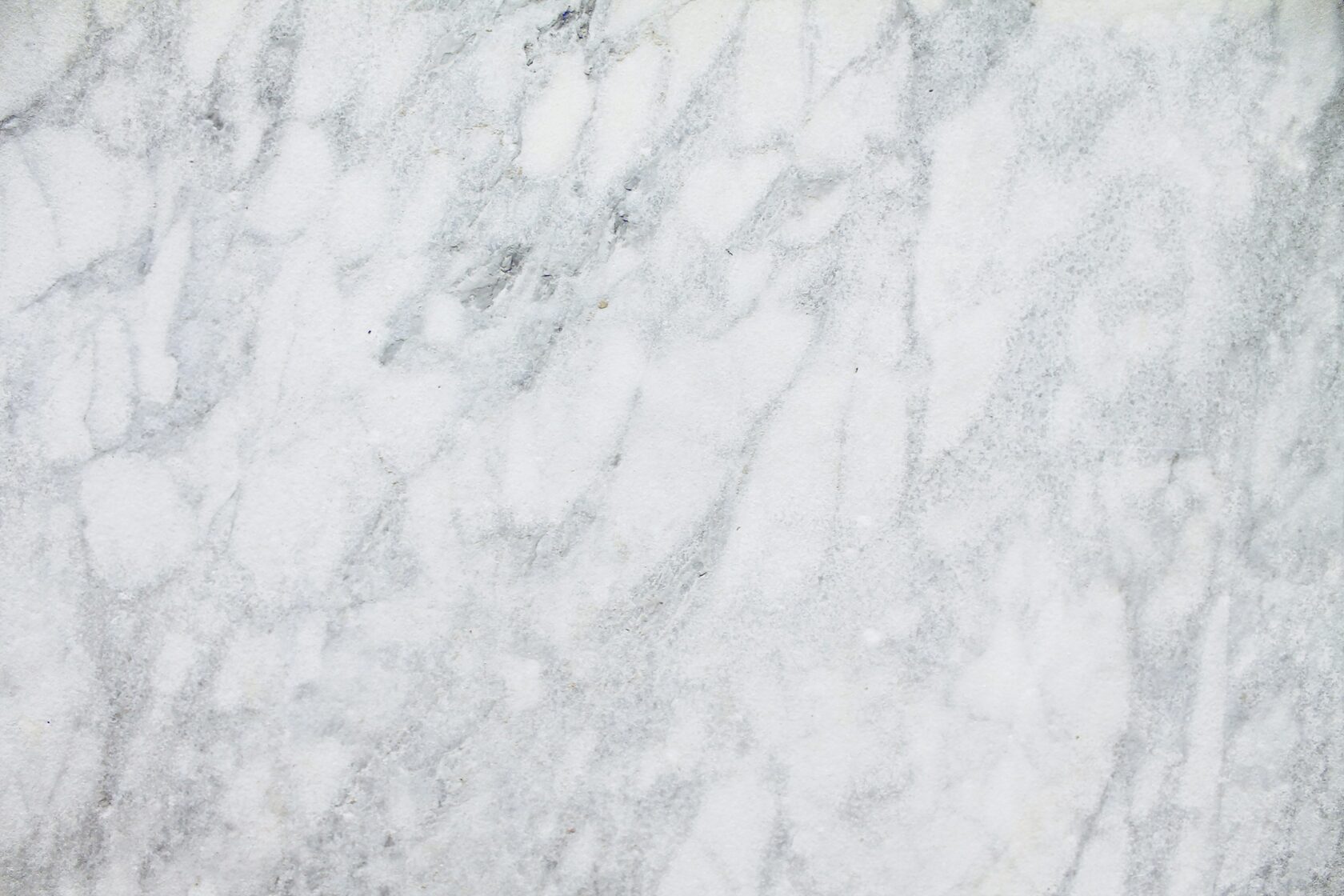
Shell limestone (coquina) is a variety made almost entirely of shells and shell fragments. It is light and porous, works easily and is traditionally used in low-rise construction in southern regions, both as a walling block and as cladding. Limestone cladding is found both on historic buildings and in contemporary architecture, from private houses to public buildings.
Types
For cladding purposes it is convenient to classify limestones by density and structure:
| Variety | Structure | Use on the facade |
|---|---|---|
| Dense (marble-like) limestone | Fine-grained, low porosity | Wall cladding, plinth, cornices, steps |
| Oolitic limestone | Composed of small spherical grains | Walls, ornament; properties depend on the quarry |
| Shell limestone (coquina) | Shells and fragments, high porosity | Walls of low-rise buildings, with water-repellent treatment |
| Dolomitic limestone and dolomite | Denser than many limestones | Walls and plinth |
| Travertine (calcareous tuff) | Porous, layered | Walls, ornament; pores are often filled |
By origin, the limestones in TECHNOFORMA's range are imported (Turkey, Iran and other countries) and from Dagestan; the company has extensive experience with Dagestan stone. Its equipment processes soft stones, including limestone and shell limestone.
Properties
The physical and mechanical properties of limestone vary more than those of most cladding stones. Below are general patterns; specific values are stated in the batch test reports.
• Density and strength: from high in marble-like limestones to low in shell limestones. Strength determines the permissible slab thickness and fixing method.
• Water absorption: the main parameter for facades; the higher it is, the greater the risk of frost damage and the faster the stone darkens with dirt.
• Frost resistance: sufficient for exterior cladding in dense grades; for porous ones it must be checked for the specific climate zone.
• Thermal conductivity: porous limestones and shell limestone insulate better than dense stone, which is why they were historically used as walling material.
• Acid resistance: low; in polluted urban air and under acid rain the surface gradually weathers.
• Vapour permeability: the stone "breathes", which is taken into account when choosing sealers.
Applications
Where limestone works on a facade:
• Wall cladding: slabs wet-fixed on low-rise buildings or on a rainscreen substructure on multi-storey ones; for a rainscreen system, slabs of soft stone are made thicker, with the thickness determined by calculation.
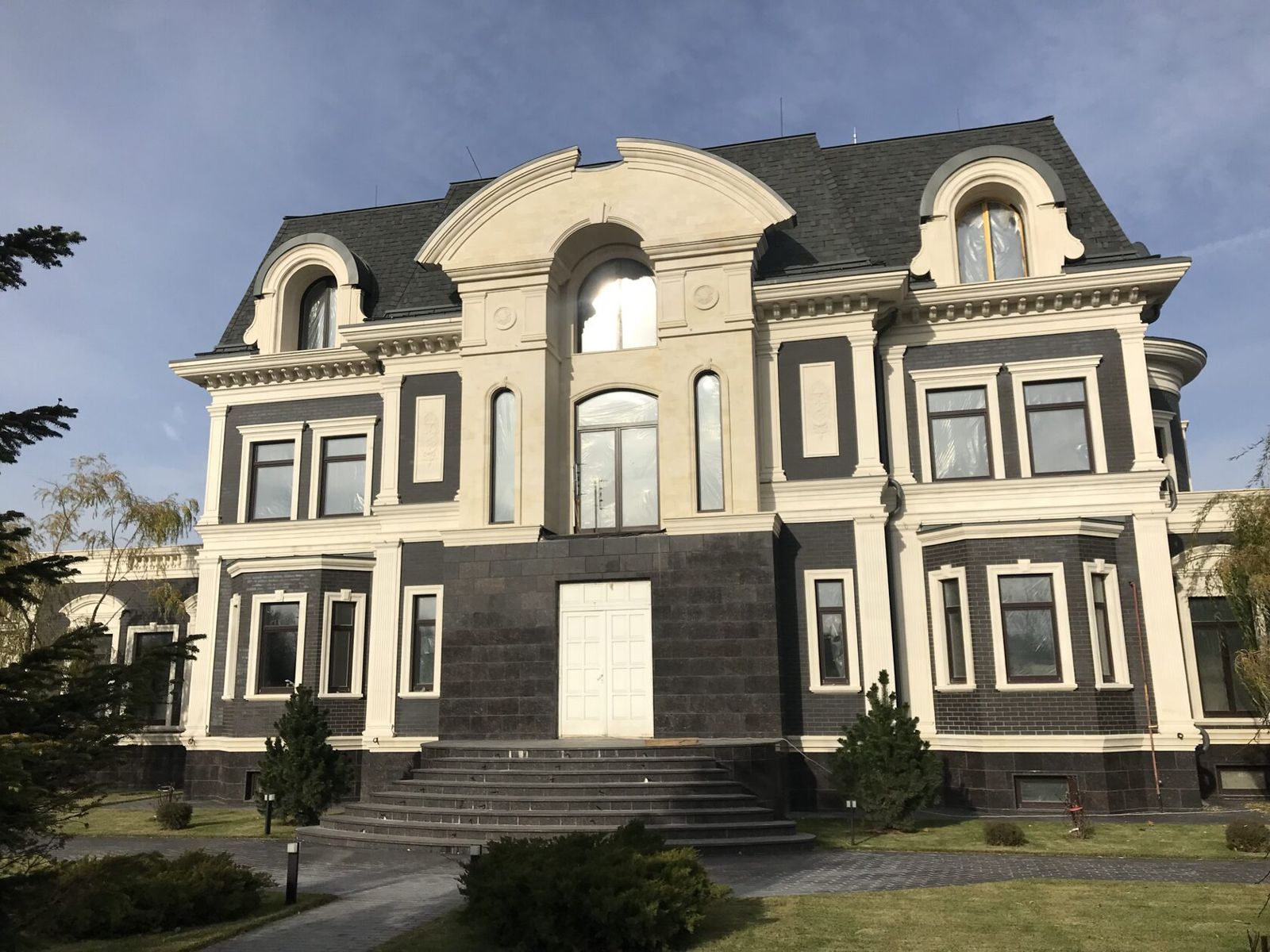
• Architectural ornament: cornices, string courses, window surrounds, pilasters, balusters, capitals. Its workability makes limestone one of the best stones for carving.
• Plinth and steps: dense grades only; porous limestones deteriorate faster in the splash and snow zone, so the plinth is often made of granite.
• Block masonry: shell limestone and porous limestones are used as walling material in southern regions.
If the volume of complex ornament is large and the budget or wall load is limited, repeated elements can be made of glass fibre reinforced concrete (GFRC) with the texture and colour of limestone, keeping natural stone on the wall surfaces. On large projects this preserves the look of a stone facade and reduces the load on the substructure: GFRC elements are thin-walled and reinforced with glass fibre.
Limestone combines well with other materials: granite on the plinth, timber and metal in contemporary architecture, render on secondary elevations.
Protection
Protection of limestone on a facade works on two levels: design and chemical.
Design protection:
• flashings and drips on all horizontal elements: cornices, string courses, sills;
• a fall on the top surfaces of ornament so that water does not stand;
• a gap between the cladding and ground level, and a plinth of dense stone;
• a ventilated cavity with rainscreen installation so that the stone dries from both sides.
Chemical protection:
• a vapour-permeable water repellent for natural stone after installation, which reduces water absorption without trapping vapour;
• anti-graffiti coatings in urban settings where needed;
• cleaning only with neutral stone cleaners, since acidic products destroy the carbonate surface.
Protective treatment is repeated at the intervals specified by the product manufacturer and after facade cleaning.
Examples from TECHNOFORMA projects
TECHNOFORMA supplies limestone, both imported and from Dagestan, together with granite, marble, travertine, sandstone, dolomite, basalt, shell limestone and onyx, from stock and to order, and carries out measurement, design, 3D visualisation, layout, installation and designer supervision. An example of work with natural stone on a facade is the Dinastiya club house in Kislovodsk (700 m² of granite together with GFRC and porcelain stoneware).
All projects are in TECHNOFORMA projects. The most porous type of limestone is covered in Shell limestone: properties and facade cladding.
FAQ
Is limestone suitable for facade cladding in a cold climate?
Yes, dense grades with confirmed frost resistance and low water absorption. Porous limestones need water-repellent treatment, good drainage and verification against test reports.
How does limestone differ from shell limestone?
Shell limestone (coquina) is a variety of limestone made almost entirely of shells. It is lighter and more porous than dense limestones and retains heat better, but needs protection on a facade.
Where is shell limestone used?
As a walling block and cladding for low-rise buildings, for boundary walls and landscaping elements, and also in interiors.
How should limestone on a facade be protected?
With a vapour-permeable water repellent for natural stone, and flashings and drips on horizontal elements. Clean only with neutral products.
Can limestone be used for carved ornament?
Yes, limestone is one of the easiest stones to carve and profile: cornices, capitals, balusters, window surrounds.