
Iranian vs Turkish Travertine: The Differences
Iranian and Turkish travertine are the two largest segments of this stone on the Russian market. Both are the same rock with a similar porous layered structure, but they differ in palette, pattern and the properties of individual quarries. Iranian travertine is often chosen for its rich warm shades, from beige to red and gold; Turkish for its wide range of light cream and walnut tones and large production volumes.
The main selection criterion is not the country but the specific quarry and batch: the variation in properties within one country is greater than between countries. For a facade, test reports decide; for an interior, colour and pattern come first.
This article is for architects, designers and clients. Other stones are covered in Natural stone for facades and interiors.
Quarries
Travertine forms near mineral springs, and both Iran and Turkey have many such areas.
• Turkey is one of the world's largest exporters of travertine. Well-known quarries are in the Denizli area (Western Anatolia), near the travertine terraces of Pamukkale. Turkish stone is quarried in large volumes and widely available on the market.
• Iran has several major quarrying areas; Iranian travertines are known above all for their colour variety, including red, yellow and gold shades that are rare elsewhere.
• Italy is the home of "Roman" travertine from the Tivoli area, the historic benchmark against which others are compared.
For a buyer in Russia there are practical differences too. Turkish stone is generally easier to find in large volumes from different suppliers and to reorder several years later. Iranian stone is valued for its distinctive colours, but a specific grade may be available only in limited batches, so it is best to reserve the full volume for the project at once.
TECHNOFORMA imports stone from Turkey and Iran (as well as India and China) and keeps stock from these countries, so samples from different quarries can be compared before ordering.
Colour and structure
Colour and pattern are how travertines from the two countries are told apart by eye. Below are typical tendencies; a specific stone may fall outside them.
| Parameter | Iranian travertine | Turkish travertine |
|---|---|---|
| Palette | Beige, cream, as well as rich yellows, golds, reds and walnuts | Mostly light: ivory, cream, beige, light walnut; silver and dark grades also exist |
| Pattern | Often pronounced layering and contrast | From uniform to striped, depending on quarry and cut |
| Porosity | Varies by quarry | Varies by quarry |
| Range | Unique colours, fewer uniform volumes | Large choice of standard light grades |
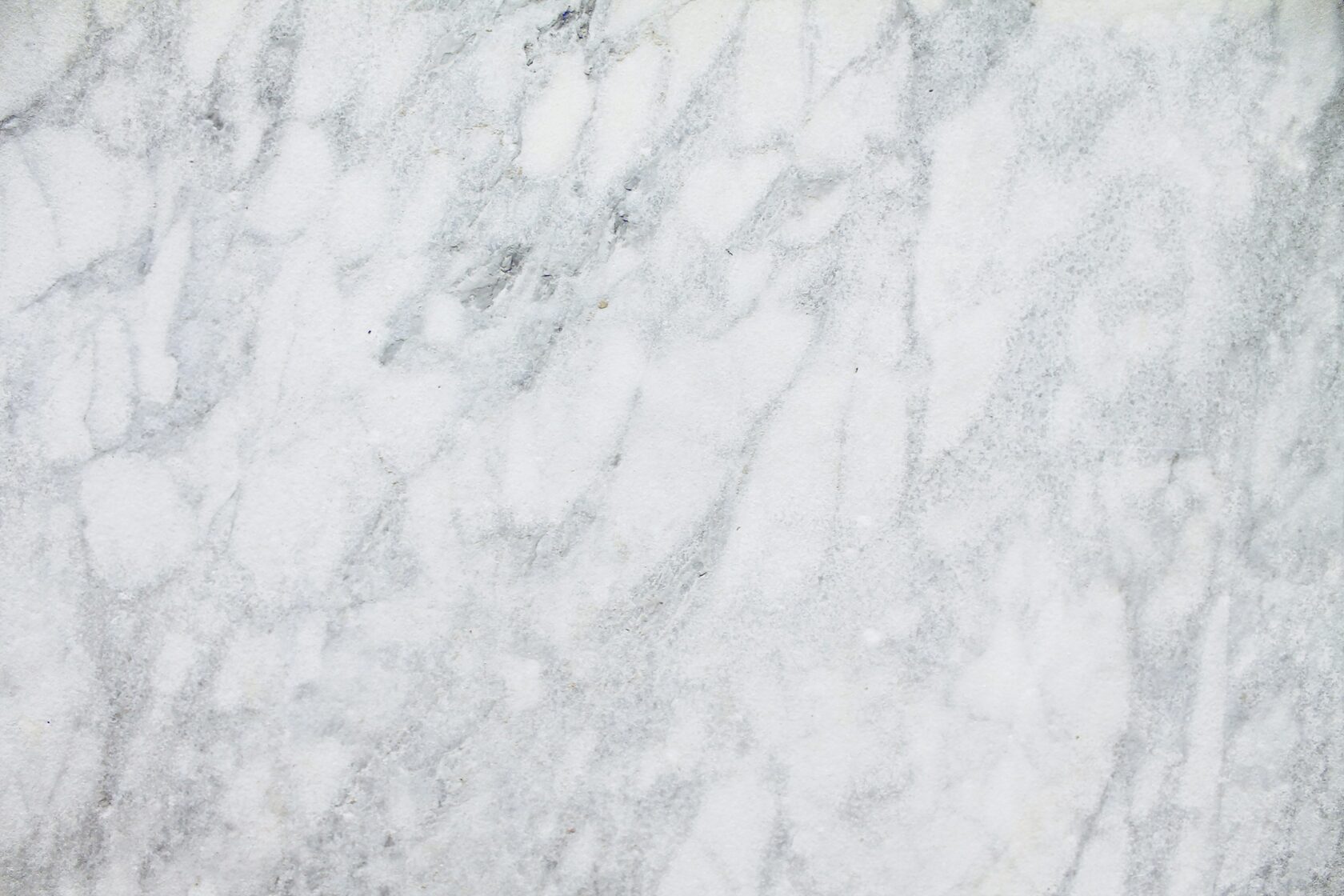
The pattern also depends strongly on the cut: along the layers (vein cut) gives a striped texture, across them (cross cut) a uniform "cloudy" one. So when comparing samples it is important to look at the same cut and the same surface finish.
Quality
The quality of travertine is determined not by the country but by a number of measurable indicators:
• Density and porosity: the denser the stone, the better it withstands outdoor conditions and the easier it is to maintain.
• Frost resistance and water absorption: critical for facades; values are taken from the batch test reports.
• Homogeneity: no large cavities, cracks or soft layers.
• Grade: suppliers grade stone by the number of pores, colour uniformity and defects; grade designations differ between suppliers.
• Quality of pore filling: evenness, colour and UV resistance of the filler.
• Geometry: accuracy of thickness calibration and dimensions, square corners.
Practical advice: for one project, order the whole volume from one quarry and, where possible, one batch. Even within one country, the shade from different quarries varies noticeably.
Prices
The price of travertine depends on grade, quarry, format, thickness, surface finish and logistics. Rare colours (for example, rich red Iranian grades) are usually more expensive than mainstream light ones. Large volumes of standard Turkish stone are easier to source and to match when reordering.
The total cost of cladding depends not only on the price per square metre of slab but also on:
• the wastage rate in the layout, which is higher for large formats and complex geometry;
• manufacturing profiled elements such as cornices, sills and window surrounds;
• the installation method and, for a facade, the substructure;
• pore filling and protective treatment.
TECHNOFORMA calculates the cost once the stone and layout have been chosen; the installation cost is determined after inspecting the site.
How to choose
How to choose between Iranian and Turkish travertine:
1. Start with colour. If you need a rich warm or red tone, look at Iranian grades; for light cream and beige, the Turkish range is wider.
2. Define the application. For a facade, request frost resistance and water absorption test reports; for floors, abrasion resistance.
3. Compare samples of the same cut and finish, under different lighting, preferably large ones: travertine's pattern cannot be read on a small sample.
4. Check the available volume in one batch, with a margin for breakage and future repairs.
5. Get a layout: it shows the actual quantity required and allows slabs to be matched by pattern.
For facades in a cold climate, density and frost resistance are decisive, and there is no rule that Iranian or Turkish is better: both countries have dense grades suitable for exterior cladding and soft ones best kept for interiors. If several stones suit in colour, choose the one with better test results.
For interiors (floors, walls, bathrooms), pattern, shade and the pore-count grade come first. For high-traffic floors, dense grades with filled pores and a honed finish are chosen: it is less slippery and does not show scratches as quickly as a polished finish.
Examples from TECHNOFORMA projects
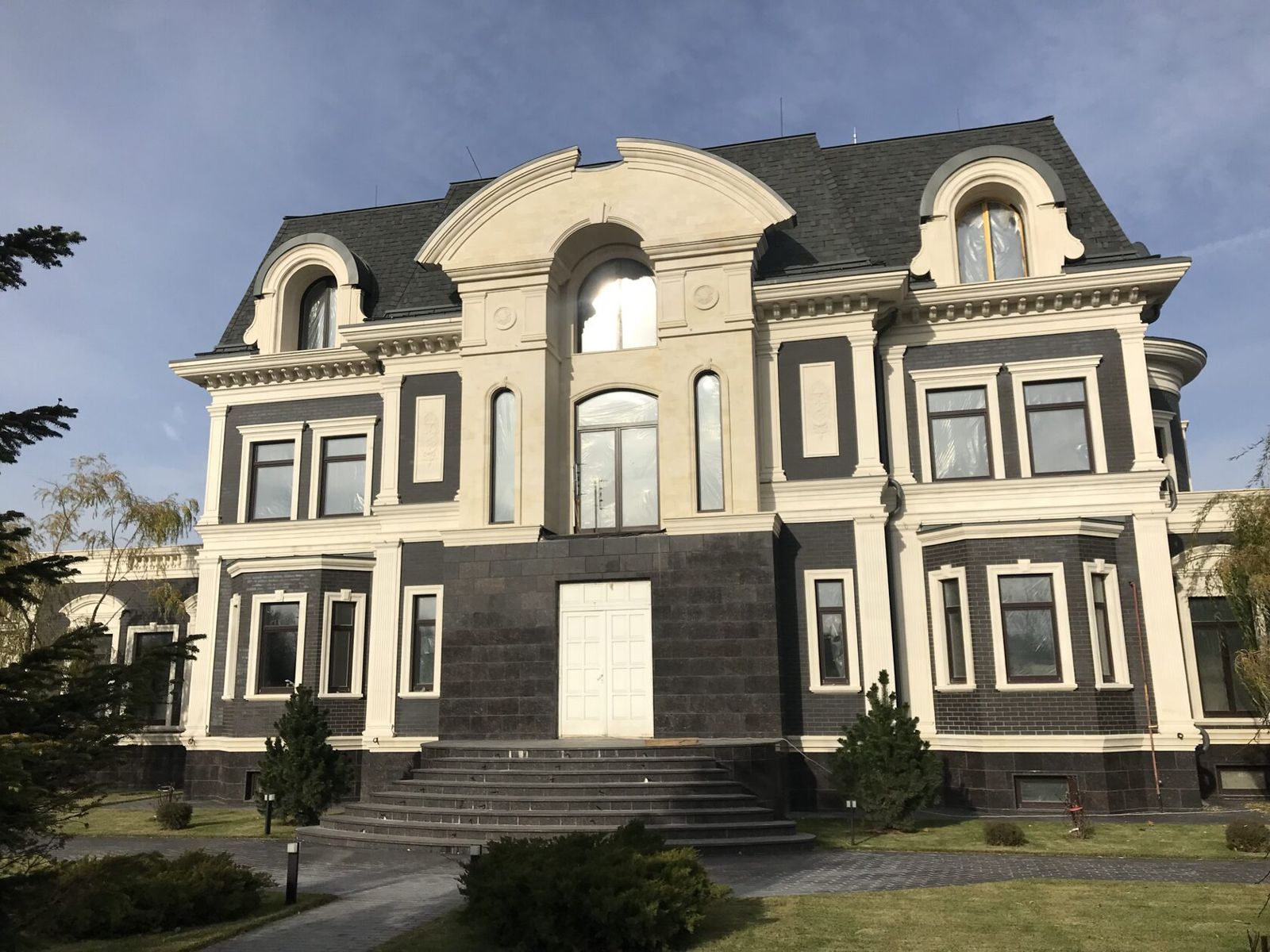
TECHNOFORMA supplies travertine and other stones from its stock from Iran, Turkey, India and China, as well as to order, and carries out layout, 3D visualisation and installation. An example of a facade with natural stone in the company's portfolio is the Dinastiya club house in Kislovodsk, where 700 m² of granite was used together with glass fibre reinforced concrete (GFRC) and porcelain stoneware.
All projects are in TECHNOFORMA projects. If you are choosing between travertine and other sedimentary stones, read Limestone for facades: types and properties.
FAQ
What is Roman travertine?
Travertine from the Tivoli area near Rome, the material of many historic buildings in Rome. Today the name is also often used for similar-looking light travertines from other countries.
How does Turkish travertine differ from Iranian?
Turkish travertine is more often available in light cream and beige tones in large volumes; Iranian in rich warm shades, including reds and golds. Technical properties depend on the specific quarry.
Which travertine is best for a facade?
The one with confirmed frost resistance and low water absorption for your climate, regardless of country. For facades, grades with filled pores are usually chosen.
Is travertine connected with Gaudí?
Gaudí's works make wide use of local Catalan stone; there is no direct connection with Roman travertine. The search query probably combines an interest in travertine with an interest in Art Nouveau architecture.