
Dagestan Stone: Types, Deposits and Applications
Dagestan stone is a collective name for natural cladding stone quarried in the Republic of Dagestan: above all sedimentary carbonate rocks (limestones, dolomites and shell limestones) as well as sandstones. They are valued for their light, warm palette, good workability and expressive texture.
The key selection criterion is not the name “Dagestan” but the specific rock and its density: dense dolomite or limestone suits facades and plinths, while porous shell limestone suits walls and interiors with mandatory moisture protection.
The material is chosen by architects and developers for the facades of residential and public buildings, and by private homeowners for cladding, fences and landscaping. An overview of other rocks is in the section Natural stone for facades and interiors.
Which Rocks Are Quarried
Mountainous Dagestan and its foothills are made up mainly of sedimentary strata of marine origin. That is why most of the stone sold under this name consists of carbonate rocks:
• limestone: dense and porous, in light shades;
• dolomite: a denser and harder carbonate rock, often used as facade tiles;
• shell limestone (coquina): a light, porous limestone made of shells;
• sandstone: cemented sand, from grey to yellow-brown;
• shelly limestone and tuff-like varieties: transitional types that are often sold under a common name.
Trade names are often derived from a village or quarry. The same name from different suppliers may mean stone of different density, so it is best to rely on the characteristics of the specific batch: density, water absorption, strength and frost resistance from the test report.
Limestone, Dolomite, Shell Limestone
The three most popular Dagestan rocks look similar but behave differently.
| Rock | Composition | Density and strength | Where it fits |
|---|---|---|---|
| Limestone | calcite | from porous to dense; strength varies widely | facades, cornices, window surrounds, interiors |
| Dolomite | the mineral dolomite (calcium magnesium carbonate) | usually denser and harder than limestone, lower water absorption | facades, plinths, paths, steps |
| Shell limestone | calcite, shells and shell fragments | light and porous, low strength | walls, cladding in sheltered areas, interiors |
Values depend on the deposit and bed; exact figures are in the product data sheet or test report.
Dagestan shell limestone stands out for its visible shell structure and low weight. It is chosen for its texture, but on a facade without water-repellent treatment it quickly absorbs moisture. Dolomite, by contrast, copes better outdoors and is more often used for plinths and paving. Limestone sits in between and is well suited to architectural details because it is easy to work.
Colours
The colours of Dagestan stone are determined by impurities and formation conditions. The main groups are:
• white and milky: pure limestones and dolomites; the most popular option for classical facades;
• cream, beige, sand: limestones and shell limestones with iron oxide impurities;
• yellow and honey: shell limestones and sandstones;
• grey and grey-blue: dense dolomites;
• pinkish and terracotta: certain varieties with a higher iron content.
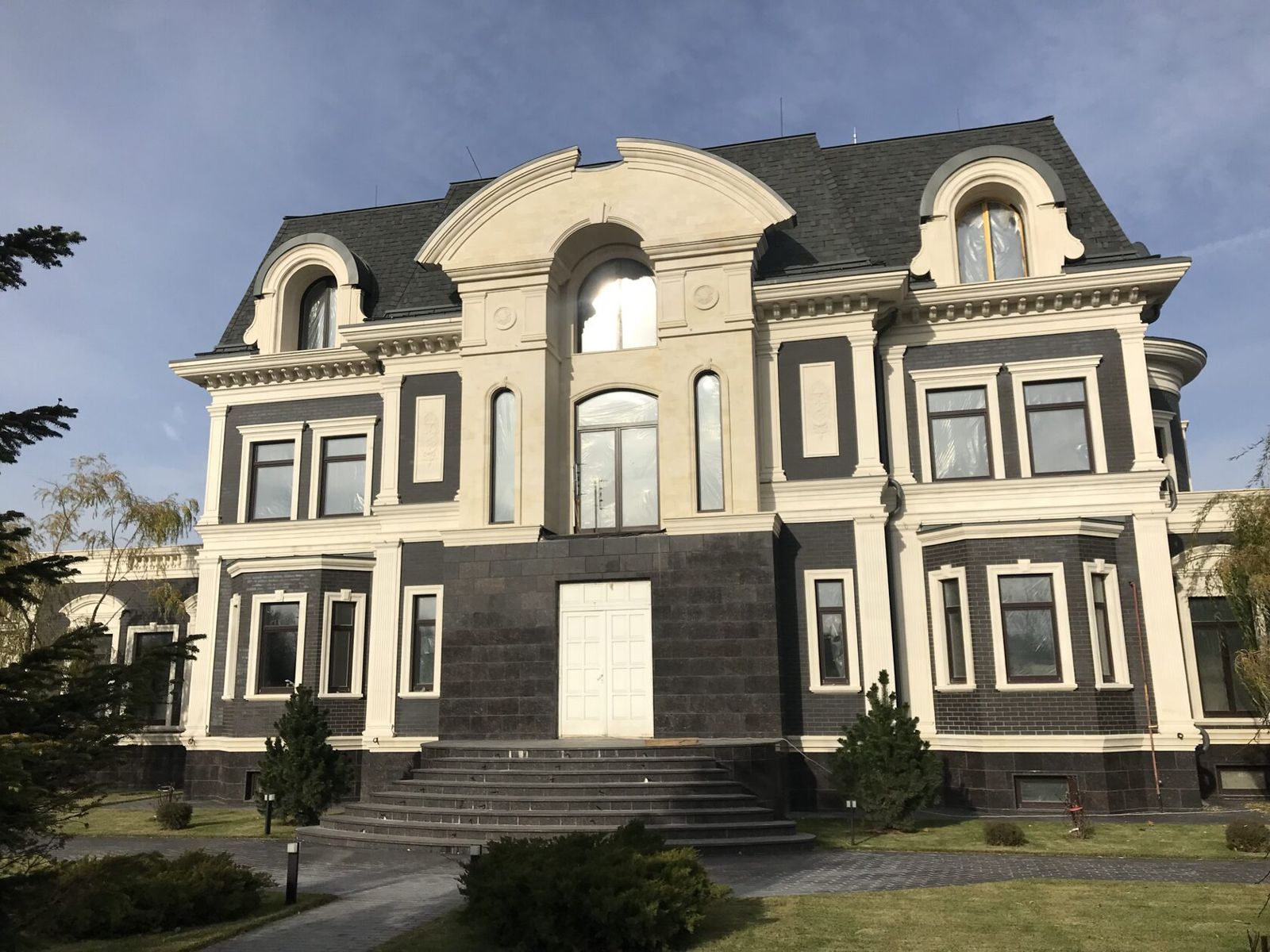
The colour of natural stone is uneven even within one quarry. This matters for a facade: the stone must be sorted by tone and the layout prepared in advance. After water-repellent treatment or a colour-enhancing impregnation the shade becomes richer, so samples should be compared in the state in which the stone will appear on site.
White Dagestan stone for facades looks very bright in the sun and can emphasise dirt, so a darker tone is often chosen for the lower part of the building.
Combining several shades is a common technique: light stone on the wall planes, darker dolomite on the plinth, opening surrounds and corners. This contrast highlights the architecture while hiding the inevitable soiling at the lower level. The layout and colour scheme are easy to check in a 3D visualisation before the stone is ordered.
Use in Architecture
In architecture Dagestan stone plays several roles.
• Facade cladding. Sawn tiles on adhesive or slabs on a substructure. For multi-storey buildings cladding is carried out to a ventilated rainscreen facade design, with fixings calculated for the weight of the stone and the wind load.
• Plinth. Dense dolomite and limestone with reduced water absorption, with waterproofing and a barrier from the ground.
• Architectural details. Cornices, pilasters, window surrounds, balusters: soft rocks allow profiles to be cut by machine.
• Landscaping. Paths, patios, steps, fences and retaining walls. For paving, dense stone 30 mm thick or more is chosen.
• Interiors. Lobby walls, fireplaces, saunas: wherever texture matters and there is no constant wetting.
When complex facade sculpting is needed (columns, capitals, large cornices), natural stone is often combined with glass fibre reinforced concrete (GFRC): GFRC reproduces the shape and colour of stone at a lower weight, while stone stays in the areas where natural texture is required.
Choosing a Supplier
Dagestan stone is quarried by many small quarries and workshops, so batch quality varies. What to look for when choosing a supplier:
1. Test reports for density, water absorption, strength and frost resistance of the specific rock.
2. Calibration. Variation in tile thickness should be minimal, otherwise installation becomes harder and adhesive consumption rises.
3. Samples from the current batch, not from a showroom display.
4. Stock volume, so that the entire facade is clad with stone from one batch.
5. Service: measurements, layout, 3D visualisation, installation and design supervision. When one organisation handles both supply and installation, there are fewer disputes over responsibility for the result.
TECHNOFORMA has worked with natural stone for more than 15 years and has extensive experience with Dagestan stones. The company provides design, 3D visualisation, layout, measurements by its own surveyors, installation and design supervision. Its warehouses range from Novorossiysk and Makhachkala to Novosibirsk and Yekaterinburg.
Examples from TECHNOFORMA Projects
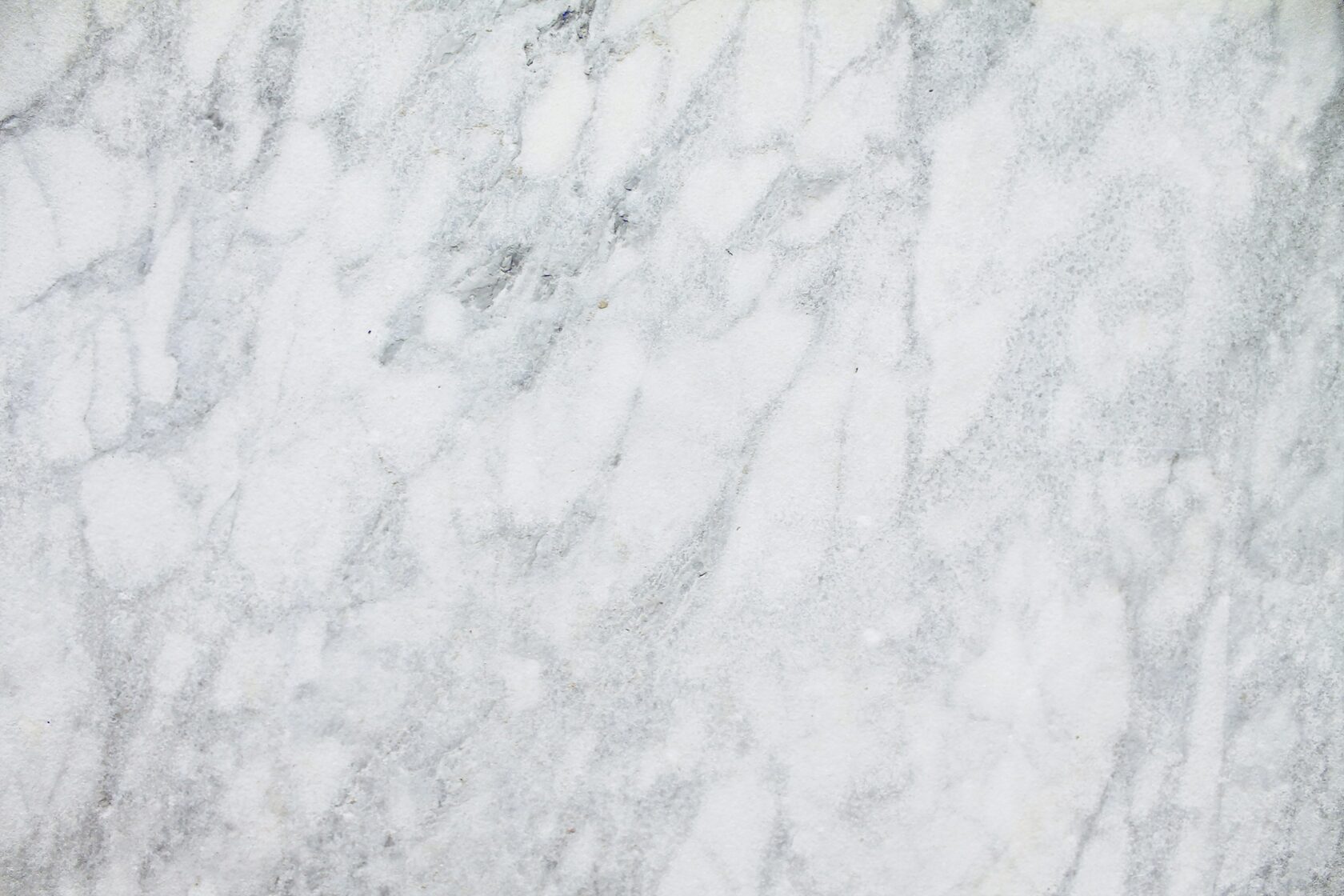
Most TECHNOFORMA projects are in Dagestan, where the company knows the local stone and local conditions well. One example is the Dominanta residential complex in Makhachkala: 18 storeys, 4 buildings, 14,000 m² of GFRC and 13,000 m² of porcelain stoneware, with design and installation by the company. At the Dinastia club house in Kislovodsk natural stone was used on the facade: 700 m² of granite together with GFRC and porcelain stoneware.
Other work is in the TECHNOFORMA projects section. One of the main Dagestan rocks is covered in detail in the article “Dolomite: properties and use in cladding”.
FAQ
What is Dagestan stone?
It is natural stone from Dagestan: mainly limestone, dolomite, shell limestone and sandstone. The name is a trade name covering different rocks, so when buying it is important to confirm the specific rock and its characteristics.
Is Dagestan stone suitable for facades and plinths?
Yes. Dense limestones and dolomites suit facades; for plinths use the densest grades with low water absorption, together with waterproofing and a water-repellent impregnation.
Can Dagestan stone be laid on aerated concrete blocks?
Yes, if the substrate is prepared: reinforced render or a rainscreen system, natural stone adhesive and a load calculation. Aerated concrete has limited anchor-holding capacity, so fixings are selected accordingly.
Which Dagestan stone is suitable for paths?
Dense dolomite or limestone at least 30 mm thick for footpaths, and thicker where vehicles may drive on it. Porous shell limestone is not suitable for paving.
Can Dagestan stone be painted?
This is not usually done: paint covers the texture and pores. To change the tone, colour-enhancing impregnations designed for exterior use are applied.
Is there artificial Dagestan stone?
Yes, concrete and gypsum products imitating Dagestan stone are made. They are lighter and more uniform but differ from natural stone in durability and texture.