
Natural Stone or Porcelain Stoneware on a Facade
Choosing between natural stone and porcelain stoneware for a facade is a choice between a unique natural texture and industrial predictability. Natural stone has an inimitable pattern, ages gracefully and can be repaired: a slab can be reground. Porcelain stoneware is consistent from batch to batch, lighter for a comparable format, stable in its properties and usually easier to procure.
The main criterion is the purpose of the facade. If the building is prestigious, its appearance must last for decades and the budget allows, stone is chosen. If schedule, repeatability, large areas and budget control matter, porcelain stoneware. Many projects combine them: stone on the plinth and entrances, porcelain stoneware and GFRC (glass fibre reinforced concrete) on the main wall areas.
This guide is for architects, developers and general contractors. A general overview of stones is in the section Natural stone for facades and interiors.
Appearance
Natural stone is valued because every slab is unique: depth of colour, crystals, veining, natural variations in tone. On a facade this gives a living surface that looks different at different times of day. The downside is variability: slabs from different blocks differ, so a layout and batch selection are needed.
Porcelain stoneware is a manufactured material sintered from clays and mineral additives. Modern digital printing can imitate marble, granite, travertine, limestone, concrete and wood. Up close the imitation is noticeable: the pattern repeats every few tiles, the edge shows a body of a different colour (unless the material is through-body coloured), and the surface texture is shallower. On the other hand, porcelain stoneware is uniform: all tiles in a batch are identical, which suits strict modular architecture.
• Stone: for classical and neoclassical facades, entrances, plinths, and buildings where the material must read well up close.
• Porcelain stoneware: for modular contemporary facades and large areas where an even tone matters.
Durability
Both materials are durable if chosen for the climate and installed correctly, but their weak points differ.
| Parameter | Natural stone | Porcelain stoneware |
|---|---|---|
| Water absorption | From very low (granite) to high (limestone, shell limestone), depending on the stone | Very low, consistent across the batch |
| Frost resistance | Depends on the quarry, confirmed by a test report | High for facade ranges |
| Fading | Does not fade, but may darken and soil without protection | Does not fade |
| Surface repair | Can be ground, polished, abrasive-cleaned | A damaged tile is replaced |
| Vulnerabilities | Acid rain for marble and limestone, efflorescence on porous stones | Brittle on impact, chipped edges |
| Maintenance | Water-repellent treatment of porous stones | Periodic washing |
Exact values are taken from the product certificate or test report. Granite on a facade lasts for centuries, as historic buildings show. Porcelain stoneware has been used on ventilated facades for several decades, and its durability depends primarily on the quality of the substructure and fixings.
Weight
The weight of the cladding determines the substructure, the load on the wall and the number of anchors. Facade porcelain stoneware is usually 8–12 mm thick, while natural stone on a ventilated facade is more often 20–40 mm, because a thin stone slab is brittle and cannot withstand wind load with mechanical fixing. The densities of granite and porcelain stoneware are comparable, so the main difference is thickness: a square metre of stone cladding weighs several times more than porcelain stoneware.
Practical consequences:
• stone needs a heavier substructure, more often steel or reinforced aluminium, with more anchors;
• the load-bearing capacity of the substrate must be checked, especially on aerated concrete and hollow brick;
• installing heavy slabs is slower and requires lifting equipment;
• on high-rise buildings weight becomes a limiting factor.
If the look of stone is needed with low weight, GFRC with a stone texture is considered: at a thickness of about 10–15 mm it is noticeably lighter, and three-dimensional shapes are possible.
Cost
This article gives no exact prices: the cost of a facade is determined after a site inspection and calculation. But the cost structure of the two materials differs.
• Material. Stone is more expensive on average, but the range is huge: mass-market Chinese granite can cost about the same as premium porcelain stoneware, while a rare marble or onyx costs several times more.
• Processing and waste. Stone is cut to size, edges are finished and kerfs are milled; when matching the pattern, some slabs go to waste. Porcelain stoneware comes in standard formats.
• Substructure. For stone it is heavier and more expensive, with more anchors.
• Installation. Stone slabs are heavier and take longer to install.
• Operation. Porous stones need periodic water-repellent treatment, but the surface is repairable.
So compare not the price of the slab but the cost per square metre of the finished facade including substructure and installation, plus maintenance costs over the service life.
How to choose
How to decide:
1. Define the status of the building. Prestige buildings, hotels and club houses usually benefit from stone, at least on the plinth and entrances.
2. Check the load-bearing capacity of the wall and the height of the building: this may immediately rule out heavy cladding.
3. Assess the schedule. Mass-market porcelain stoneware is available faster; stone is too if the item is in stock.
4. Decide what matters more: uniformity or uniqueness.
5. Consider a combination. Stone for the plinth, portals and columns; porcelain stoneware for standard wall areas; GFRC for complex ornament, cornices and window surrounds.
6. Check a visualisation with real samples before purchasing.
For a private house the logic is the same on a smaller scale: natural stone is more often chosen for the plinth, entrance steps and feature walls, where it is seen up close and resistance to abrasion and impact matters, while lighter materials are used for large areas. For multi-storey housing and business centres, weight, delivery times and repeatability are usually decisive, so stone is used selectively. In any case the final choice is made after calculating the substructure and comparing the cost per finished square metre for several options.
Examples from TECHNOFORMA projects
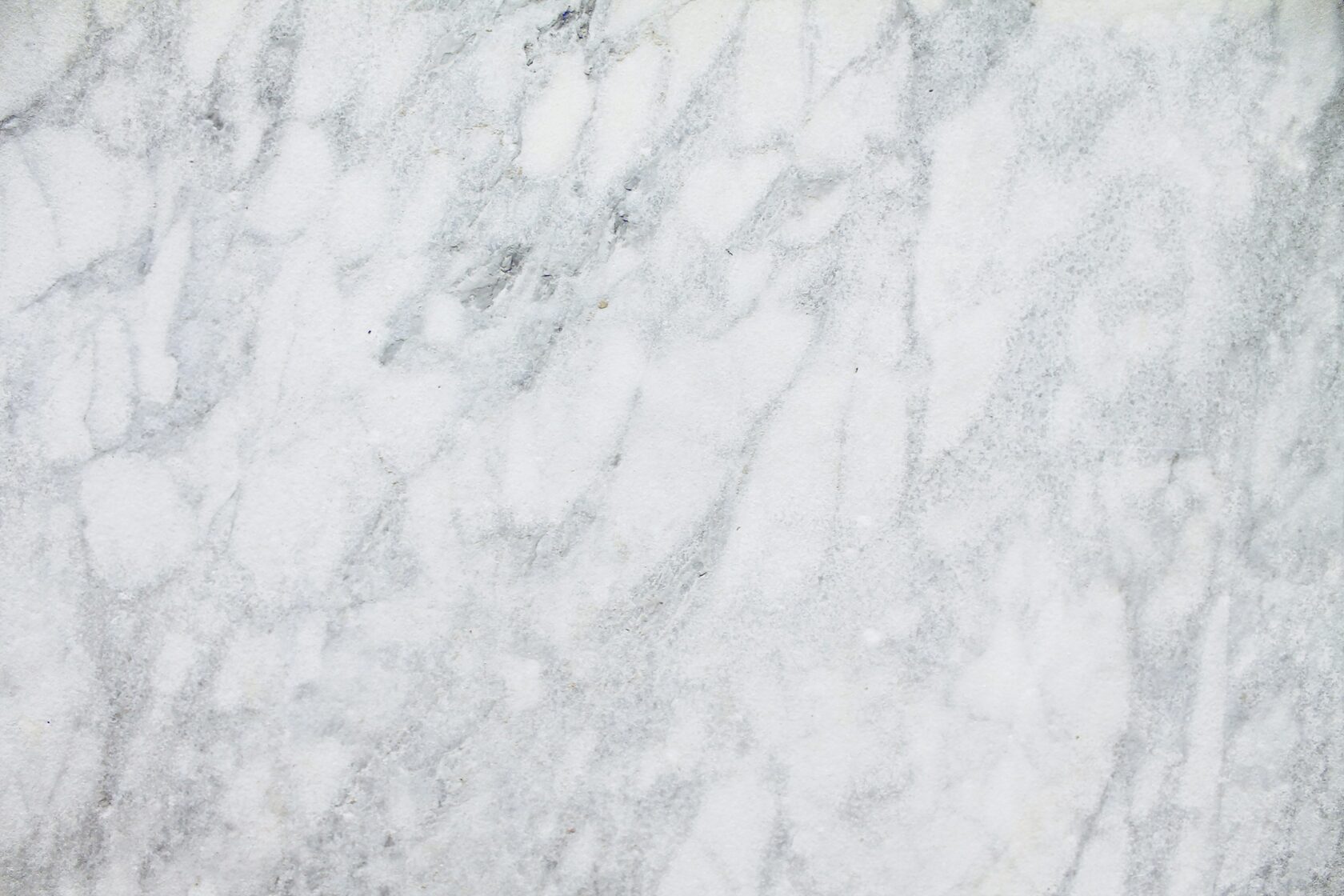
A combination of materials on a real project is the Dinastiya club house in Kislovodsk: 6,000 m² of GFRC, 700 m² of porcelain stoneware and 700 m² of granite, designed and installed by TECHNOFORMA. A large example with porcelain stoneware is the Dominanta residential complex in Makhachkala: four 18-storey buildings, 14,000 m² of GFRC and 13,000 m² of porcelain stoneware.
Other projects are in the TECHNOFORMA projects section. If you are considering stone substitutes, read Artificial stone for facades: types and differences from natural stone.
FAQ
How does stone-look porcelain stoneware on a facade differ from real stone?
The pattern is printed and repeats every few tiles, the edge is usually a different colour and the texture is shallower. On the other hand, the tiles are uniform, lighter and consistent in their properties.
Which lasts longer on a facade, stone or porcelain stoneware?
Granite and dense stones last for centuries and are repairable. Porcelain stoneware is also durable; the service life of such a facade is determined mainly by the substructure and fixings.
Which is cheaper, natural stone or porcelain stoneware?
On average porcelain stoneware, especially taking into account the lighter substructure and faster installation. But mass-market granites can be comparable in price; compare the cost of the finished facade.
Can stone and porcelain stoneware be combined on one facade?
Yes, this is a common solution: stone on the plinth and entrances, porcelain stoneware and GFRC on the main areas. The Dinastiya club house, for example, was built this way.