
Travertine: Properties, Types and Uses
Travertine is a sedimentary rock, a calcareous tuff formed when calcium carbonate is deposited from mineral springs. It is recognisable by its characteristic porous structure with cavities and its layered pattern, as well as by its warm palette, from almost white and beige to walnut, gold and reddish tones.
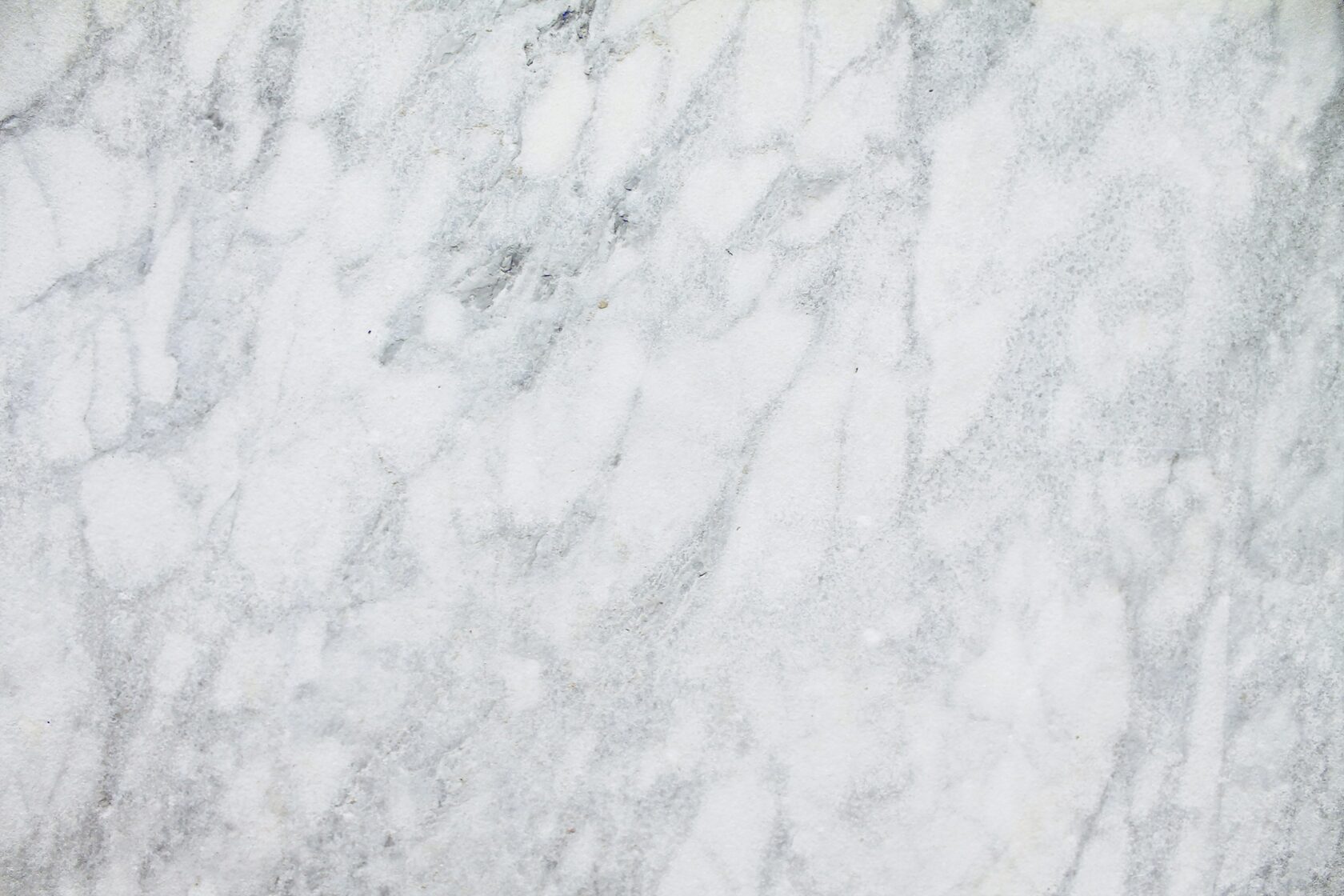
Travertine is not marble, although the two are often confused: both are carbonate rocks, but marble is metamorphic and dense, while travertine is sedimentary and porous. The main selection criterion is the intended use: a facade needs dense travertine with confirmed frost resistance and, as a rule, filled pores; for interiors the choice is wider.
This article is for architects, designers and clients choosing cladding stone. More on stone types in Natural stone for facades and interiors.
Origin
Travertine forms near hot and cold mineral springs rich in dissolved calcium carbonate. When the water reaches the surface, carbon dioxide is released and the carbonate is deposited in layers. Gas bubbles, plant remains and uneven deposition leave cavities in the stone, which is where its signature porosity comes from.
The largest deposits:
• Italy: the Tivoli area near Rome, hence the name "Roman travertine" and the material of many historic buildings in Rome.
• Turkey: one of the largest exporters; deposits around Denizli are well known, where the travertine terraces of Pamukkale are still forming today.
• Iran: supplies travertines in rich warm shades, including reds and golds.
• There are also deposits in Mexico, Peru, Central Asia and the Caucasus.
TECHNOFORMA imports stone, including from Turkey and Iran, and keeps stock from these countries; supply to order from other regions is also possible.
The correct spelling is "travertine"; variants such as "travertin" are common but incorrect in English.
Properties
The properties of travertine vary significantly between quarries and even between blocks. Below are the general patterns; exact values are stated in test reports for the specific batch.
| Property | Typical of travertine | Practical implication |
|---|---|---|
| Structure | Porous, layered, with cavities | Pores are often filled for floors and facades |
| Density and strength | Lower than granite, higher than many limestones and shell limestone | Slab thickness is chosen by calculation |
| Water absorption | Medium, depends on porosity | Water-repellent treatment is needed outdoors |
| Frost resistance | Strongly depends on the quarry | For facades, only with confirmed test results |
| Chemical resistance | Carbonate rock, sensitive to acids | Must not be cleaned with acidic products |
| Workability | Cuts and grinds well | Suitable for profiles and ornament |
| Thermal behaviour | Heats up less in the sun than dark granite | Popular for terraces and pools in warm climates |
Finishes
The appearance of travertine is determined by two factors: the cutting direction and the surface finish.
Cut:
• along the layers (vein cut): a striped pattern with pronounced layering;
• across the layers (cross cut): a more uniform, "cloudy" pattern.
Surface finish:
• polished: gloss and rich colour; pores are usually filled;
• honed: a smooth matt surface, the most popular option for facades and floors;
• tumbled: an aged look with rounded edges;
• brushed: treated with brushes to bring out the relief;
• unfilled (open pores): the most natural look, but collects dirt faster.
Pores are filled with cement or epoxy compounds matching the stone colour or in contrast. Filled travertine is easier to maintain and better suited to exterior use.
Standard formats range from small tiles for floors and walls to large slabs from which products are cut to the design; thickness depends on use and installation method. For facade slabs, steps and sills, dimensions are set by the layout, so it is better to order them to the design than to pick from standard formats. Besides slabs, travertine is used for profiled products: cornices, handrails, balusters, opening surrounds.
Where it is used
Travertine is used both outside and inside buildings:
• Facades: wall cladding, pilasters, cornices, window surrounds; only dense grades with confirmed frost resistance, on a rainscreen system, or wet-fixed on plinths and in low-rise construction;
• Paving and terraces: in southern regions with few freeze-thaw cycles;
• Interiors: floors, walls, stairs, bathrooms, fireplaces;
• Landscaping: pool copings, steps, garden elements.
In architecture travertine is associated with Ancient Rome: many famous structures, including the Colosseum, are built from it. In contemporary architecture it is chosen for its warm colour and natural texture.
The market also offers materials that are travertine in name only: "liquid travertine" is a decorative render that imitates the texture of the stone, and "flexible travertine" is a thin layer on a flexible backing. They are not natural stone and have different properties.
Care
Travertine care follows from the fact that it is a porous carbonate rock:
• Sealing: after installation the surface is treated with a protective product (water repellent or oil repellent impregnator) that reduces absorption of water and dirt; treatment is repeated periodically as recommended by the product manufacturer.
• Cleaning: only with neutral cleaners for natural stone. Acidic and chlorine-based products etch the surface and leave dull patches.
• Stains from oil, wine or coffee are removed as quickly as possible; specialist products are used for old stains.
• Restoration: worn areas can be reground, and opened pores refilled.
• Facade: the condition of joints and sealing is checked regularly, and streaks under cornices and sills are cleaned.
Examples from TECHNOFORMA projects
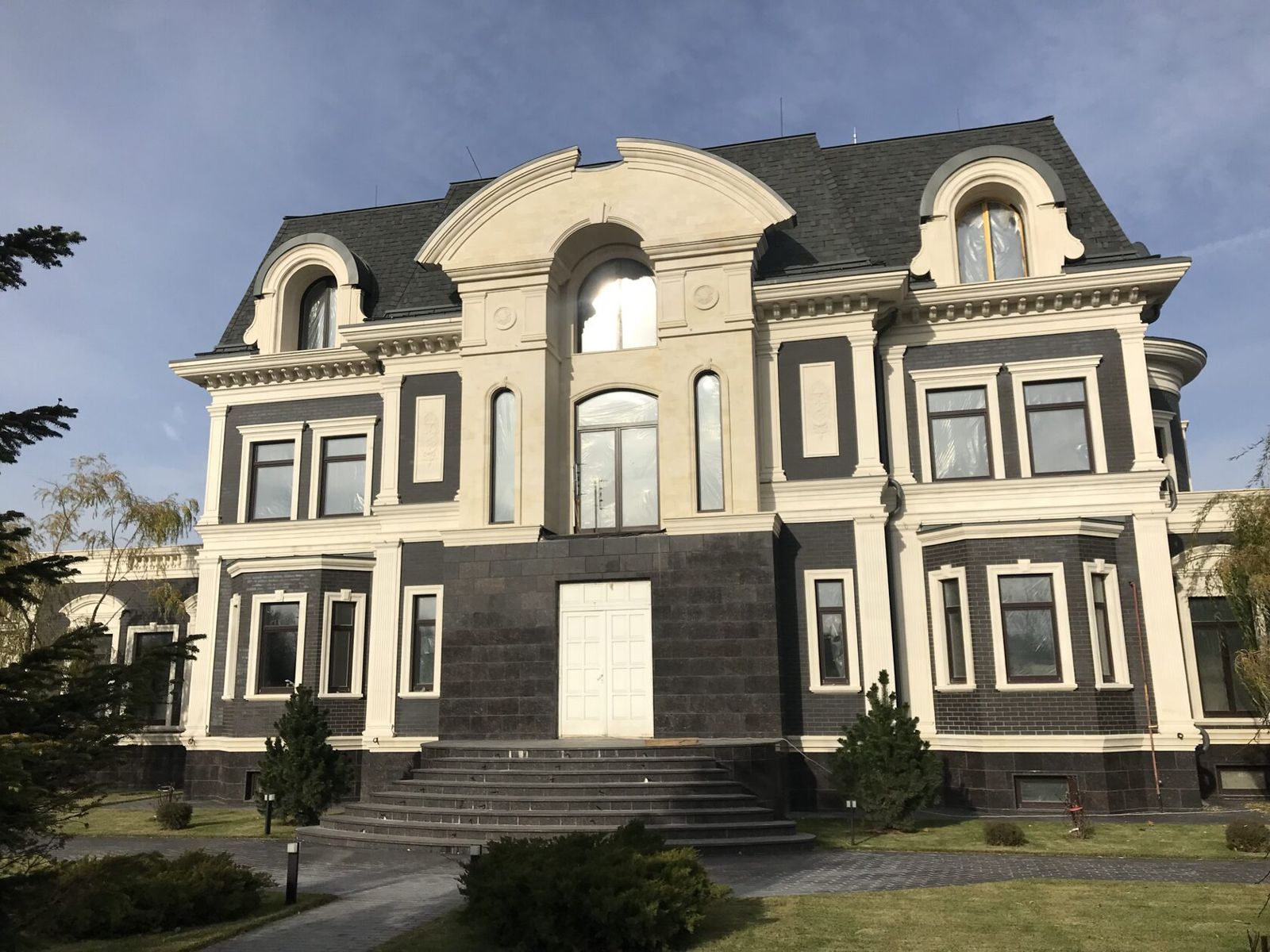
TECHNOFORMA supplies travertine along with other stones (granite, marble, limestone, sandstone, dolomite, basalt, shell limestone and onyx) from stock and to order, and also carries out measurement, layout, 3D visualisation, installation and designer supervision. An example of the company's work with natural stone on a facade is the Dinastiya club house in Kislovodsk, where 700 m² of granite was installed.
All projects are in TECHNOFORMA projects. How to use travertine specifically on external walls is covered in Travertine for facades: advantages, risks and installation.
FAQ
Is travertine a type of marble?
No. Both are carbonate stones, but travertine is a porous sedimentary rock and marble is a dense metamorphic one. They are sometimes grouped together in the trade, but their properties differ.
Travertine or marble: which is better?
Marble is denser and holds a polish better. Travertine is warmer in tone, easier to work and looks more natural in a matt finish. The choice depends on the application and conditions of use.
Is it spelled travertine or travertin?
In English the correct spelling is "travertine". "Travertin" is a common misspelling (and the form used in some other languages).
Where is travertine quarried?
The largest deposits are in Italy, Turkey and Iran; also in Mexico, Peru, Central Asia and the Caucasus.
What is liquid travertine?
A decorative render that imitates the texture of travertine. It is not natural stone, and its properties are determined by the render composition.
What type of rock is travertine?
Travertine is a calcareous tuff, a sedimentary rock deposited by mineral springs.