GFRC or Polymer Concrete for Facade Decoration
The choice between glass fibre reinforced concrete (GFRC) and polymer concrete for facade decoration depends on the scale of the project, fire safety requirements and expected service life. GFRC is a cement-based mineral material reinforced with alkali-resistant glass fibre: non-combustible, thin-walled, with almost unlimited freedom of form. Polymer concrete is a composite in which a polymer resin acts as the binder and mineral chips or sand as the aggregate.
For multi-storey residential complexes and public buildings, where strict requirements on cladding combustibility apply, GFRC is usually chosen. Polymer concrete is found in private construction and small decoration, where low water absorption and easy production of small batches matter.
This article is for architects, developers and private clients comparing offers. A general overview of GFRC is in GFRC: material and technology.
What polymer concrete is
Polymer concrete is a composite material in which cement is partly or fully replaced by a synthetic resin: polyester, epoxy, acrylic, furan or other. The aggregate is quartz sand, mineral flour or stone chips. The resin bonds the particles and after curing forms a dense, almost non-porous material.
The term is used broadly, and different products are sold under it:
• Cast polyester resin products — balusters, window sills, sinks, decorative elements, sometimes sold as "engineered stone".
• Polymer-cement compositions — cement concrete with polymer additives. Strictly speaking, this is modified concrete, not polymer concrete.
• Cladding panels and tiles with a polymer binder and mineral filler.
On facades, polymer concrete is used mainly as small decoration and cladding elements on private houses. When comparing it with GFRC, check exactly which product is offered: the resin type and content determine how the material behaves outdoors and how combustible it is. GFRC may also contain polymer admixtures, but its binder remains cement.
Comparison of strength and weight
Well-designed polymer concrete mixes have high compressive and tensile strength and very low water absorption, since the resin fills the pores. However, polymer concrete elements are usually cast with a solid section or with a wall thickness comparable to ordinary concrete products, and reinforced along the same lines as concrete.
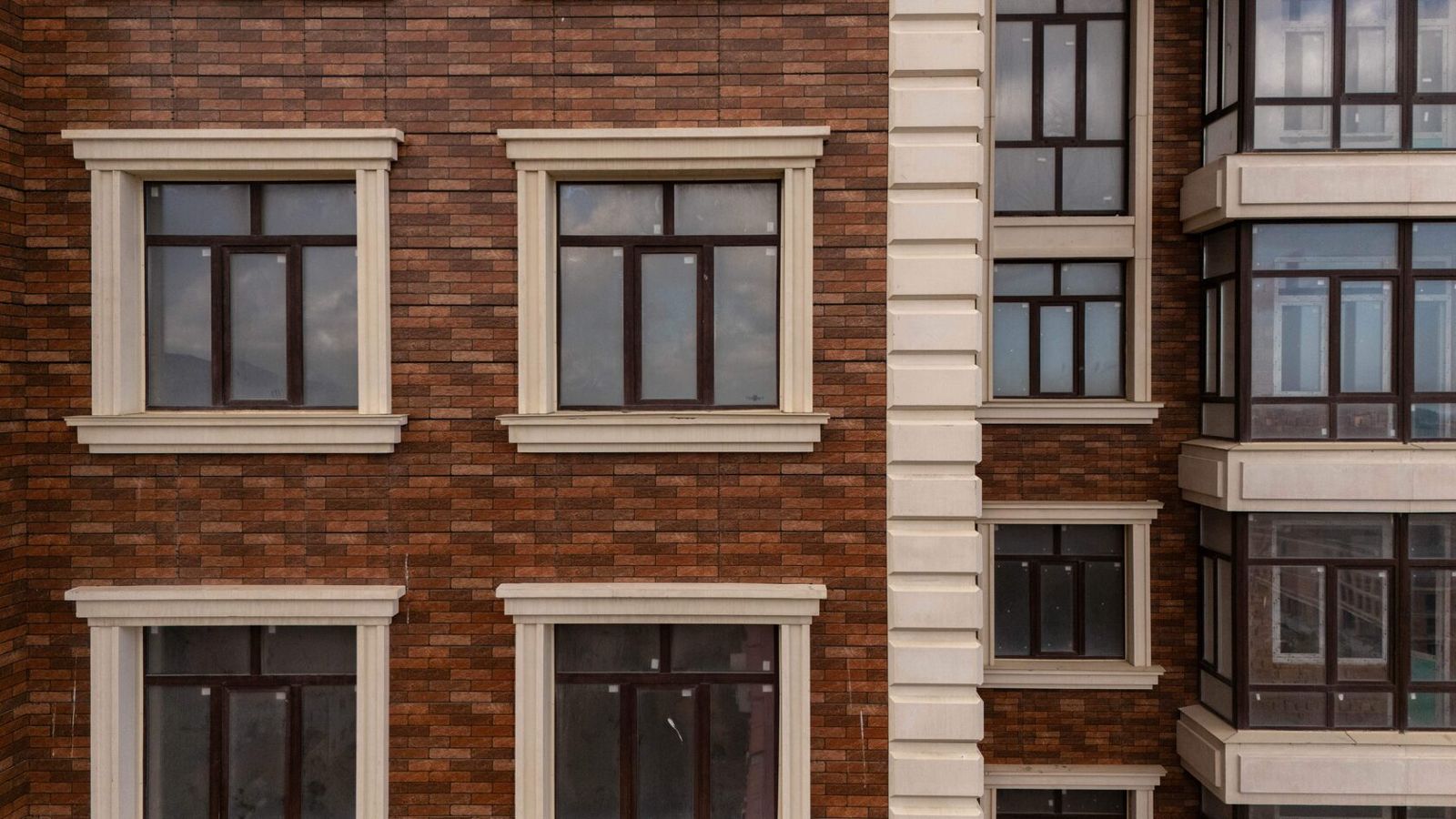
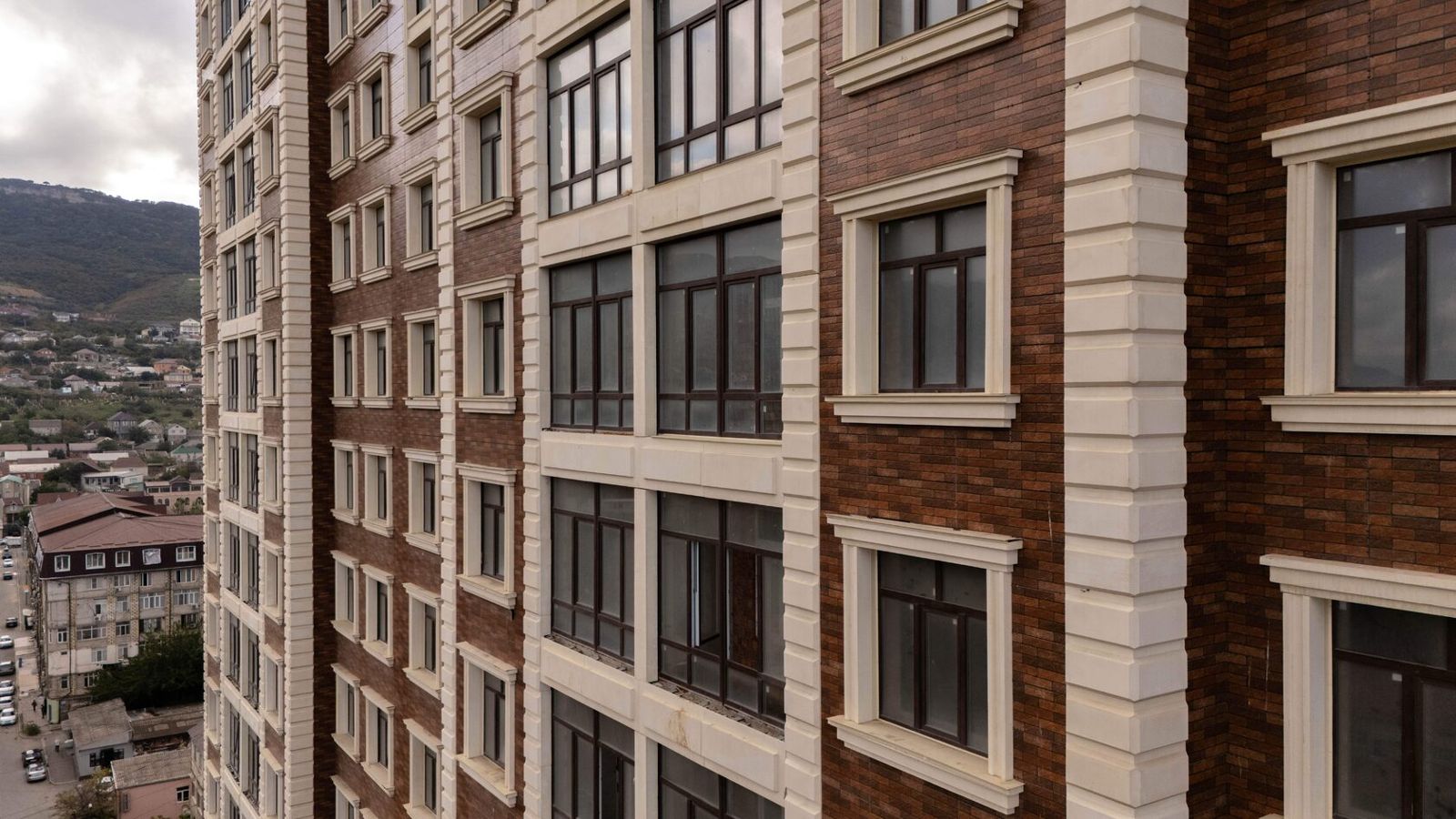
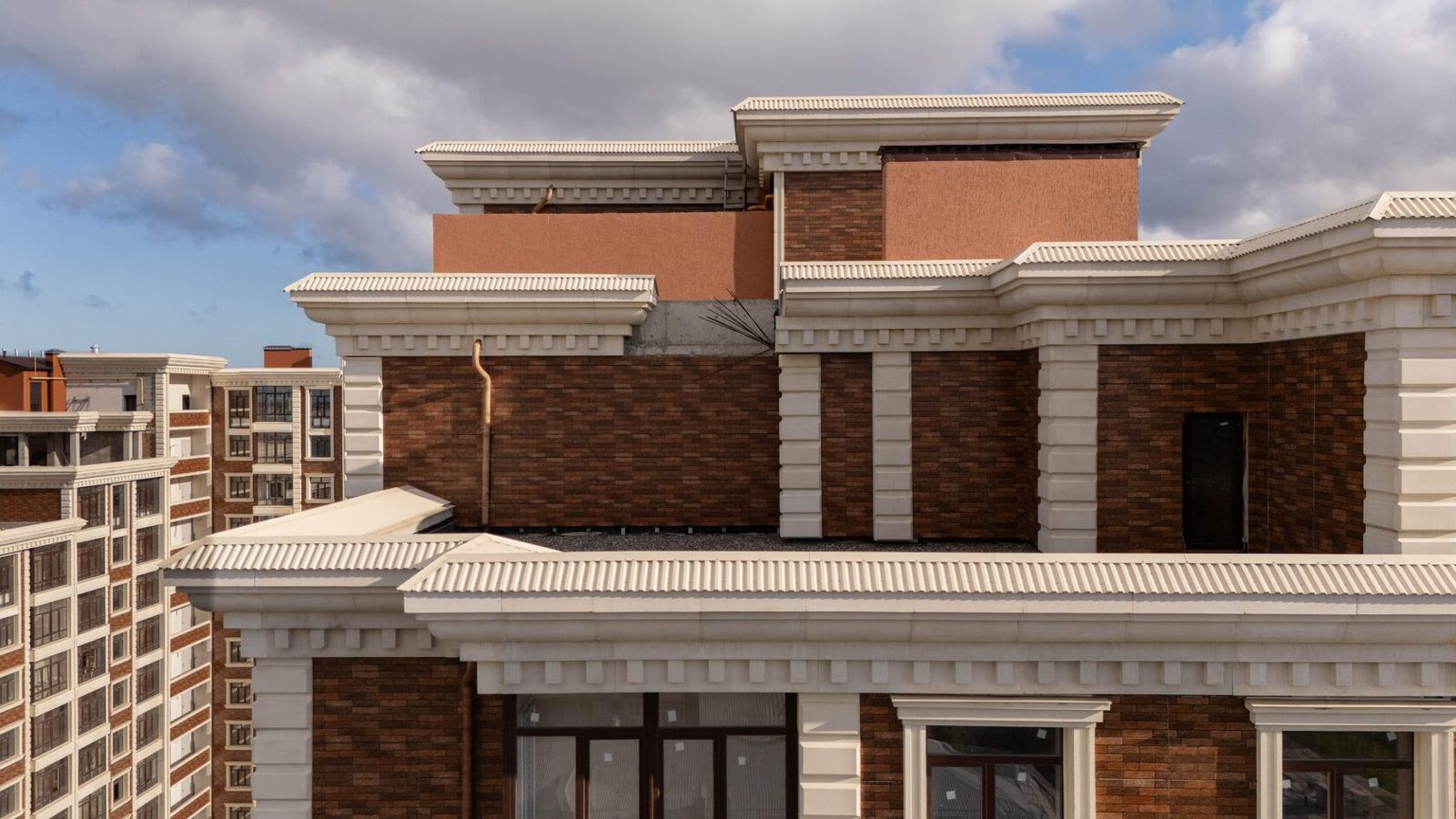
GFRC takes a different approach: alkali-resistant glass fibre makes shells 10–20 mm thick possible, so three-dimensional elements — columns, cornices, pilasters — are hollow and light. For large facade decoration this is the deciding factor.
| Parameter | GFRC | Polymer concrete |
|---|---|---|
| Binder | Cement | Synthetic resin |
| Reinforcement | Alkali-resistant glass fibre | Filler, bars or mesh where needed |
| Typical wall thickness | 10–20 mm | Usually greater, elements often solid |
| Weight of large elements | Low thanks to hollow shells | Higher for the same dimensions |
| Water absorption | Low, reduced further by water-repellent treatment | Very low |
| Combustibility | NG, non-combustible (TECHNOFORMA Group data) | Depends on the resin and its content, usually combustible |
| Large-format panels | Yes | Limited |
Values are indicative; exact properties are in the specific manufacturer's documents.
Behaviour in sun and frost
On a facade the material works in harsh conditions: solar heating of dark surfaces, UV, rain, freeze-thaw cycles.
Polymer concrete. Low water absorption gives good frost resistance. The weak points are related to the resin: many resins age under UV — the surface may yellow, lose gloss and chalk if the mix contains no stabilisers or protective coating. The coefficient of thermal expansion of polymer composites is generally higher than that of cement concrete, so movement joints and correct fixing details are important when the sun heats the elements.
GFRC. The mineral matrix is unaffected by UV and does not age in the sun. Frost resistance is provided by matrix density and admixtures: according to the company, its GFRC has high frost resistance, improved by admixtures. Thermal movement is comparable to that of wall materials, which makes it easier for the cladding and the building to work together. The vulnerable points are horizontal surfaces where water may pond; these are addressed with falls, drips and water-repellent treatment.
Element cost
This article gives no prices: they depend on the project. The cost of elements and works is determined after reviewing drawings or inspecting the site. The factors that shape the price for both materials are:
• Moulds. Unique elements need models and moulds. In large runs their cost is spread over many elements.
• Material consumption. Hollow thin-walled GFRC elements need less material per unit of element volume; with polymer concrete, the cost of resin makes every extra section noticeable.
• Complexity and texture of the surface, colouring, protective treatment.
• Batch size and lead time.
• Logistics and installation. Element weight affects delivery, the substructure and installation labour.
For a residential complex with thousands of square metres of cladding, the economics usually favour serial GFRC production. For small one-off elements on a private house, compare specific offers.
Recommendations
Practical recommendations:
1. Multi-storey residential buildings, public buildings, hotels — GFRC. Non-combustible cladding makes it easier to meet the applicable fire safety codes.
2. Large three-dimensional elements — columns, cornices, pilasters, curved panels — GFRC, thanks to hollow thin-walled shells.
3. Small decoration on a private house — either option is possible; compare specific products, their documents and feedback on outdoor performance.
4. Elements in constant contact with water — polymer concrete wins on water absorption, but GFRC with water-repellent treatment also copes.
5. In all cases, request test reports and data on combustibility, frost resistance and UV resistance.
Examples from TECHNOFORMA projects
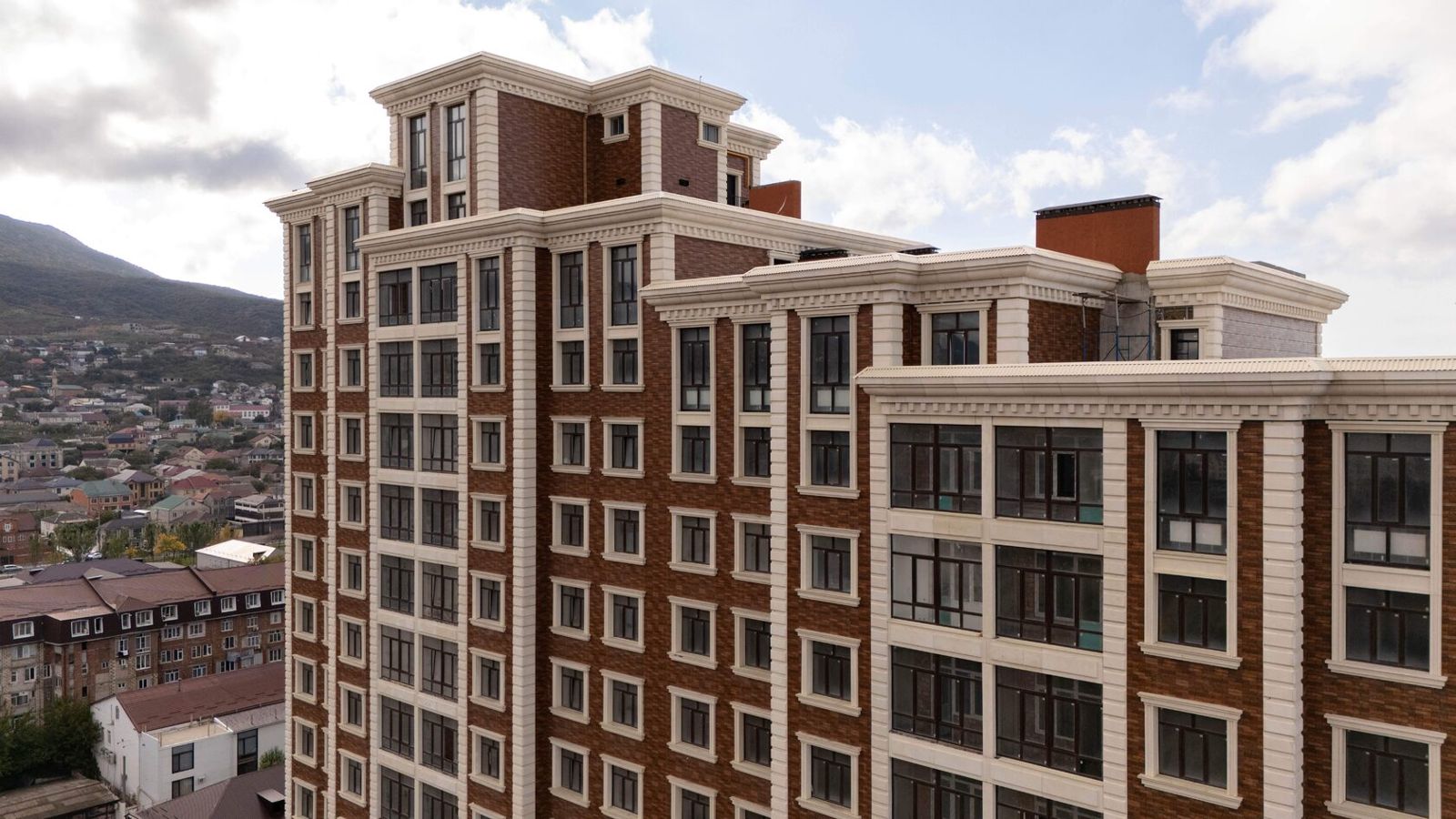
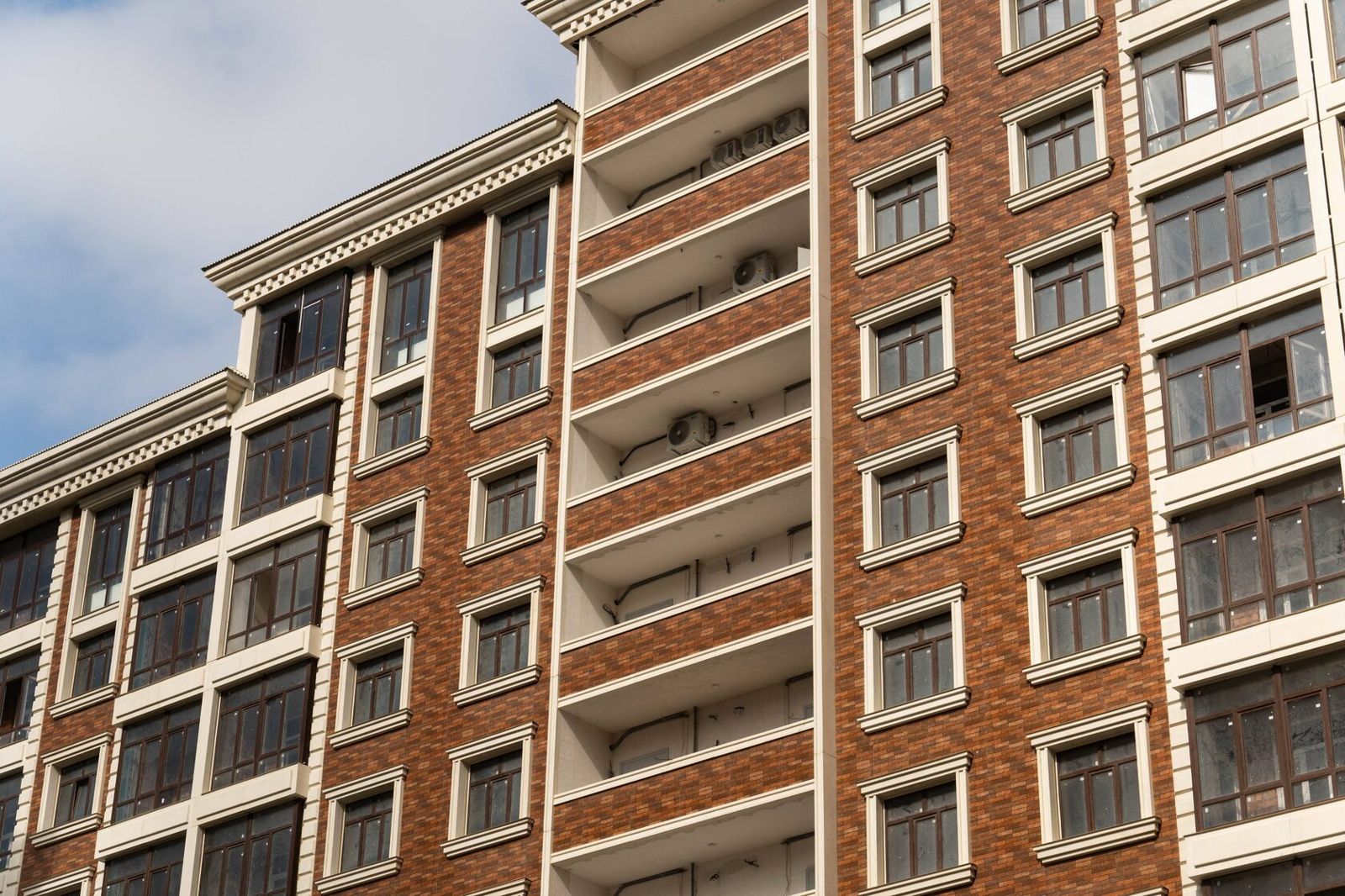
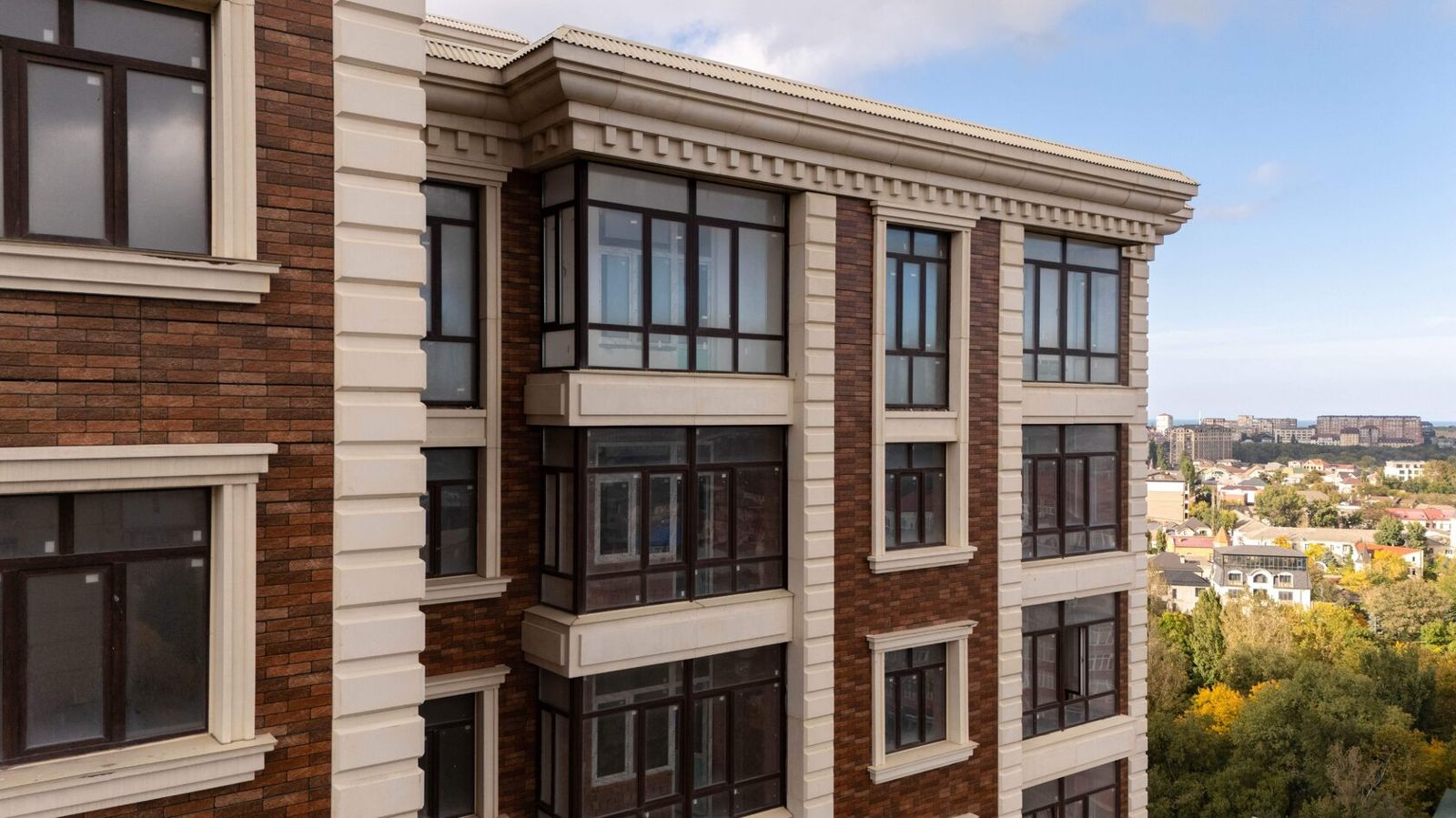
At the Al-Qasr hotel complex in Dagestan the company carried out design and installation of 24,000 m² of GFRC cladding on four 11-storey buildings. For a hotel of this scale, non-combustible cladding and serial production of complex decoration were key selection factors. At the Na Sovetskoy residential complex in Cherkessk (15 storeys) — 6,000 m² of GFRC.
More projects in TECHNOFORMA projects. A comparison with another popular material is in GFRC or polyurethane: which to choose for a facade.
FAQ
Which is better for a facade — polymer concrete or GFRC?
For multi-storey buildings and large decoration GFRC is usually chosen: it is non-combustible, light thanks to its thin wall and does not age under UV. Polymer concrete is found in small decoration on private houses.
Does polymer concrete burn?
Combustibility depends on the type and content of resin; most polymer binders are combustible. The fire class of a specific product must be checked in the manufacturer's documents.
Can polymer concrete be used on the facade of a multi-storey building?
This is determined by the fire safety code requirements for cladding and the combustibility class of the specific material. For multi-storey buildings it is simpler to use non-combustible cladding such as GFRC.
How much do GFRC elements cost?
The cost depends on shape, the number of unique elements, texture, volume and installation. TECHNOFORMA Group calculates it from drawings or after inspecting the site.