GFRC Production Technology: Spray-Up and Vibration Casting
Glass fibre reinforced concrete (GFRC) production comes down to two main forming methods: spray-up, in which the mortar and chopped glass fibre are sprayed into the mould simultaneously, and vibration casting, in which a ready mix containing fibre is poured into the mould and compacted by vibration. These are followed by curing, demoulding, surface finishing and quality control.
The method is chosen to suit the element: spray-up for large thin-walled panels with high flexural strength requirements, vibration casting for three-dimensional decoration and small, intricate elements. The result depends on production discipline as much as on the method.
This article is for designers and clients who want to understand what happens at the plant and what to check. A general overview is in GFRC: material and technology.
Two main methods
Two main methods are used in GFRC production — spray-up and vibration casting (premix). They differ in how the fibre is introduced, its proportion in the mix and, consequently, the properties of the element. Both are often used on one project: panels by spray-up, decoration by casting.
| Parameter | Spray-up | Vibration casting |
|---|---|---|
| Fibre introduction | Chopped from roving in the gun and sprayed together with the mortar | Chopped fibre is added to the mixer in advance |
| Fibre content | Higher, fibres oriented in the plane of the wall | Lower, fibres randomly distributed |
| Flexural strength | Higher | Lower |
| Typical elements | Facade panels, large shells, cornices | Balusters, capitals, rosettes, small decoration, landscape elements |
| Operator skill requirements | High, manual control of layer thickness | Lower, the process is easier to standardise |
Spray-up
In spray-up, the mortar is pumped to the gun, where a continuous strand of alkali-resistant glass fibre is chopped into lengths and mixed into the mortar spray. The usual sequence is:
1. A release agent is applied to the mould, and if required a thin fibre-free face coat for precise texture reproduction.
2. The mix with fibre is sprayed in layers of a few millimetres.
3. Each layer is rolled to remove air and lay the fibres in the plane of the wall.
4. Thickness is checked with a gauge; the final wall of a facade panel is usually 10–15 mm.
5. Where required, fixings and stiffening ribs or a steel frame on flexible anchors are embedded.
The method gives the highest flexural strength at minimum thickness, which is why it is used for large-format panels.
Vibration casting
In vibration casting, the components — cement, sand, water, admixtures and chopped fibre — are blended in a mixer until uniform. The ready mix is poured into a mould on a vibrating table and compacted by vibration until the air is released.
The advantage of the method is precise reproduction of fine relief and three-dimensional forms: balusters, capitals, brackets, rosettes, planters. The process is easier to standardise and repeat. The limitation is that, because of the lower fibre content and its random orientation, walls are made thicker than in spray-up and flexural strength is lower. That is why vibration casting is rarely used for large thin-walled panels.
Mould preparation
The mould defines the element's geometry and texture, so mould preparation is a separate production stage:
• Model (master pattern). Made from drawings or a 3D model — from timber, plastic or MDF, or CNC-milled.
• Mould material. Polyurethane or silicone moulds for complex relief; fibreglass, steel or combined moulds for flat and large elements.
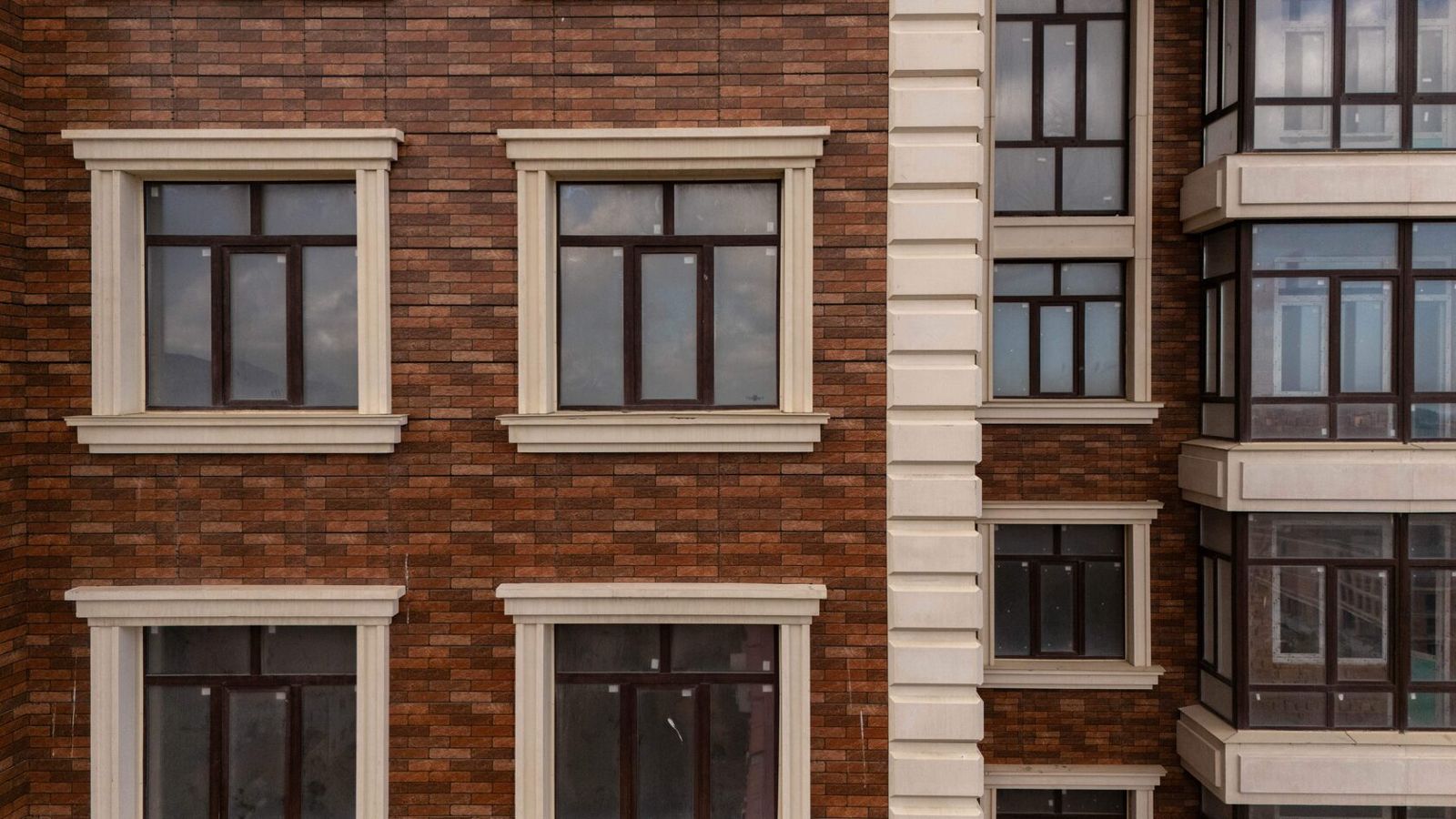
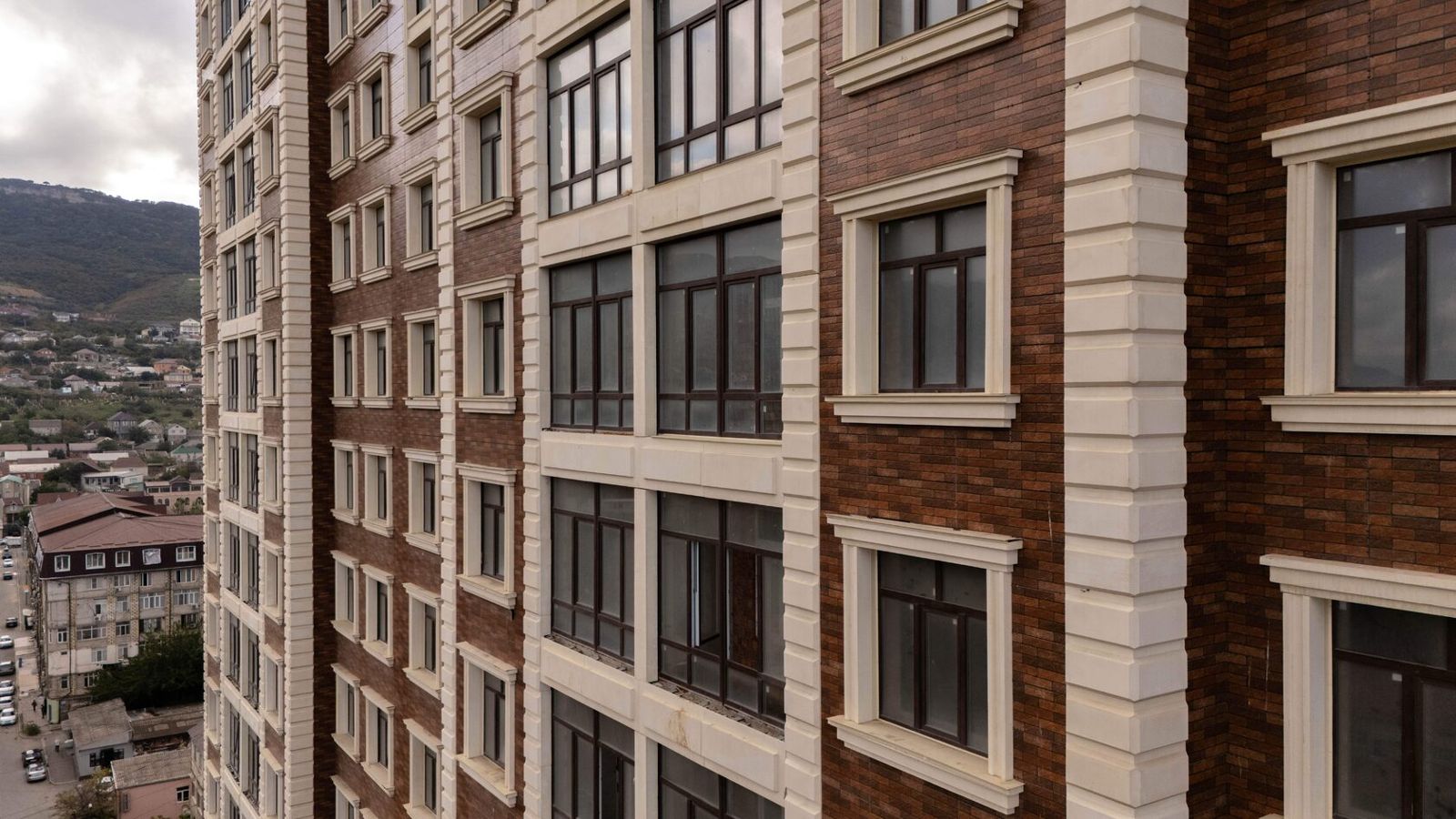
• Texture. The surface relief is built into the mould: smooth, stone-effect, wood-effect, rusticated.
• Preparation before casting. Cleaning, applying release agent, checking geometry and embedded items.
At TECHNOFORMA Group the models and moulds are made in-house, in the company's own mould shops. This removes dependence on third-party contractors and makes it faster to incorporate the architect's comments.
Curing and demoulding
After forming, the element gains strength in the mould. Thin walls lose moisture quickly, so the first day is especially important: the element is covered with film or kept in a chamber with controlled humidity and temperature. Polymer admixtures in the mix partly address the problem but do not replace control.
Demoulding takes place once the element has reached stripping strength — usually the day after forming; the exact time depends on the mix design, temperature and element size. Demoulding too early is risky: cracks and chips can occur. After demoulding the element continues to cure, undergoes surface finishing (grinding, acid etching, sandblasting, water-repellent treatment) and only then is shipped.
Quality control in production
GFRC quality cannot be judged by eye alone: a mix design defect shows up months later. So control is organised by stage:
• Incoming inspection of raw materials — cement, sand, fibre, admixtures.
• Mix control — dosing, workability, fibre content (for example, by the wash-out test).
• Forming control — layer thickness, compaction, position of embedded items.
• Control samples — made from the same mix and tested in bending; where required, also for density, water absorption and frost resistance.
• Acceptance of elements — geometry, absence of cracks and voids, colour and texture matching the approved reference sample.
According to the company, TECHNOFORMA Group carries out quality control at every production stage.
What affects production lead times
Production lead times depend on several factors:
1. Design and layout. Developing element drawings and fixing details from the architectural design.
2. Number of unique moulds. Each new profile needs a model and a mould; repeat elements are faster to produce.
3. Volume and mould turnover. One mould yields a limited number of elements per day, so several sets are made for large volumes.
4. Sample approval. Colour and texture are approved before the production run starts.
5. Season and curing regime. Temperature affects the rate of strength gain.
6. Logistics to the site.
Specific lead times for a project are set after costing. TECHNOFORMA Group's GFRC production capacity is more than 20,000 m² per month (company data).
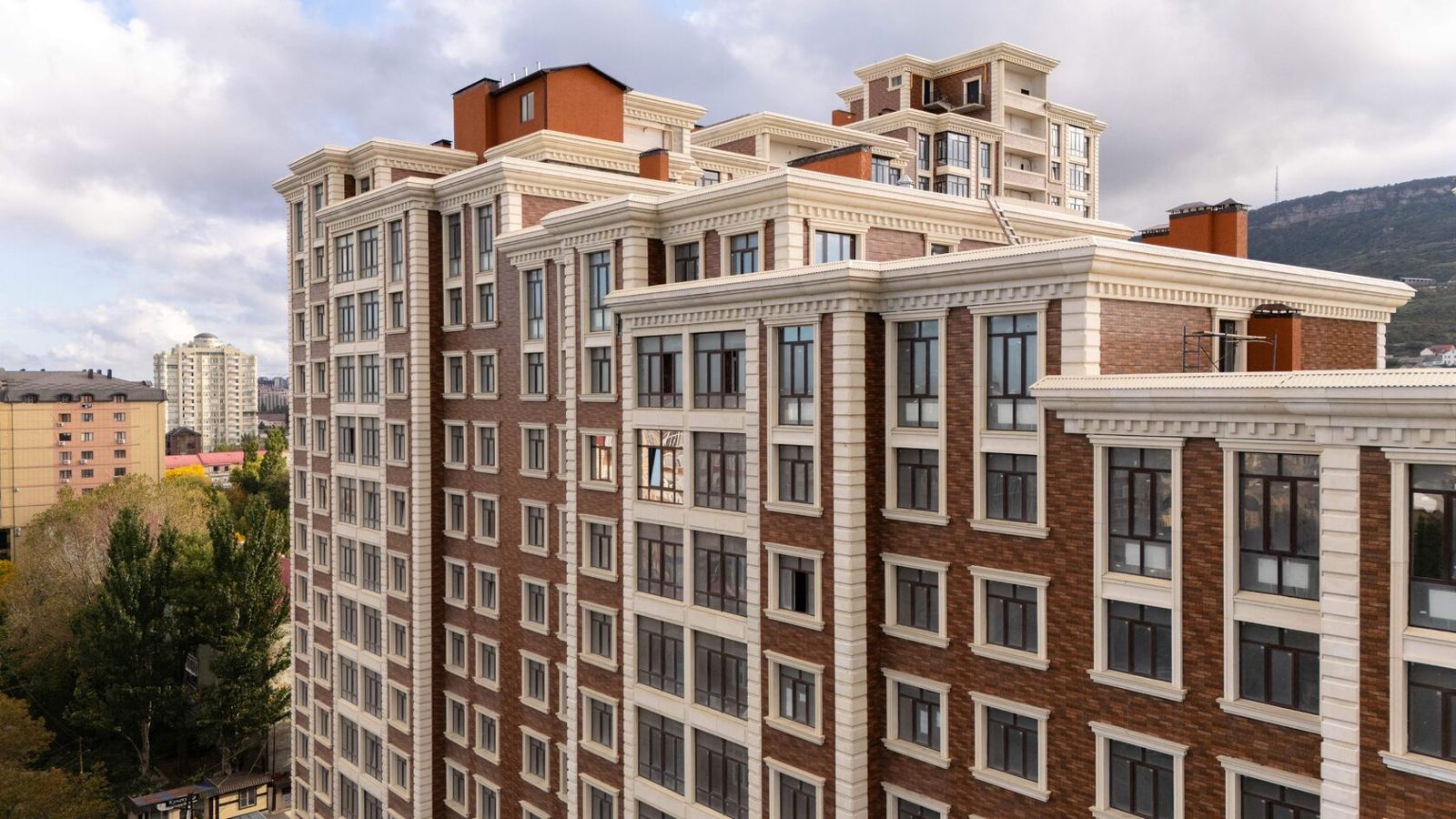
Examples from TECHNOFORMA projects
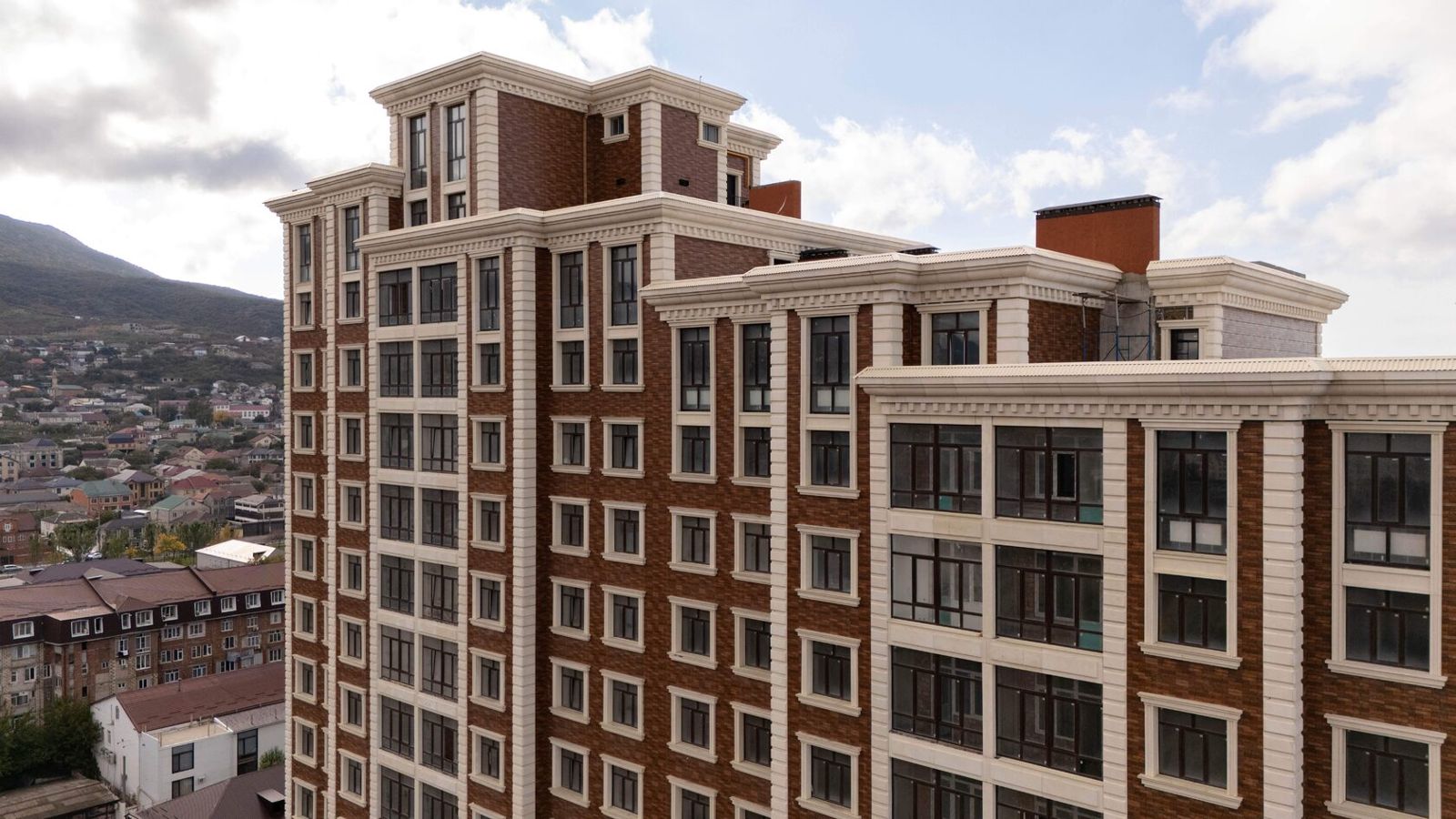
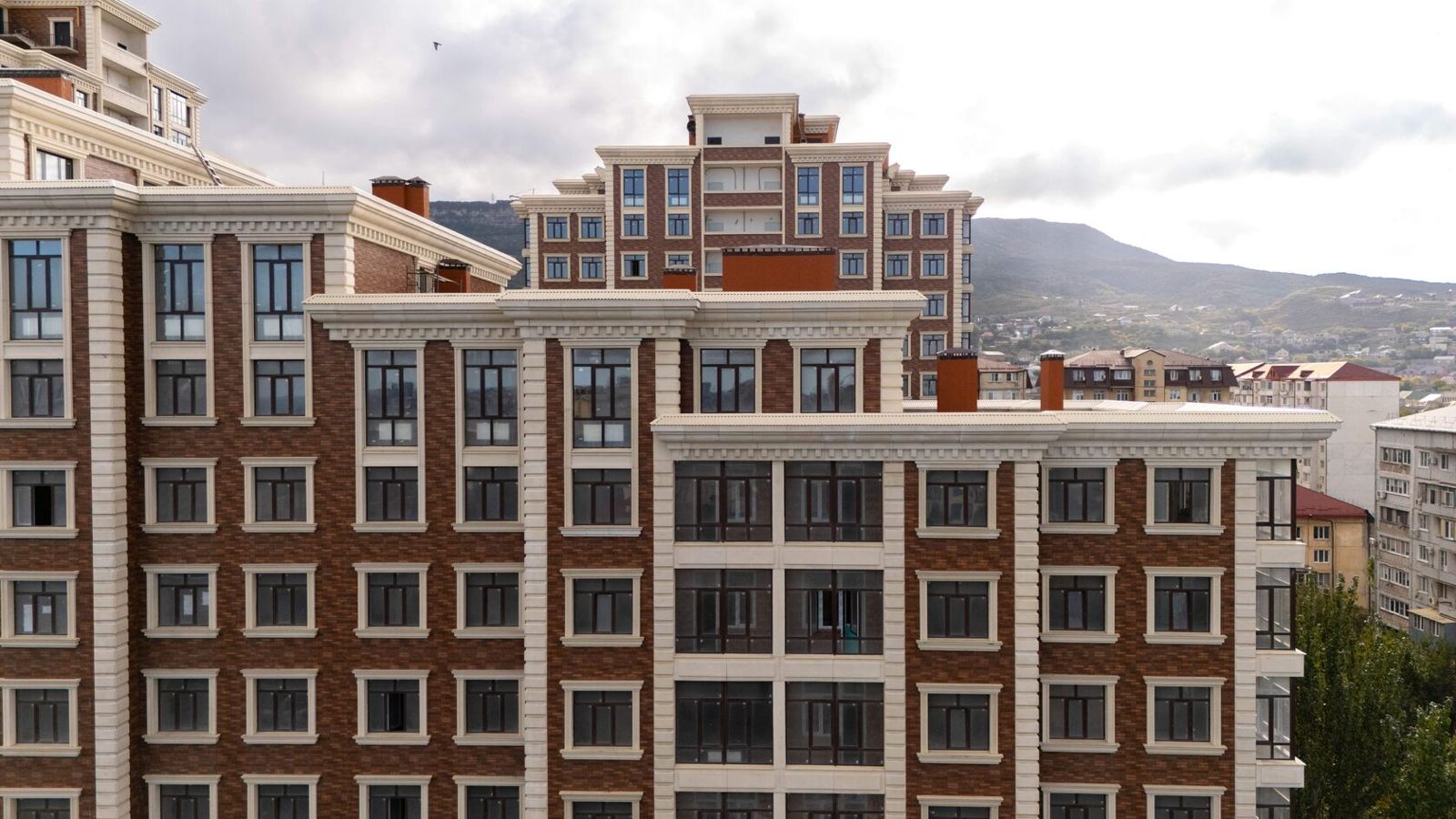
At Chechen State University in Grozny the company carried out design and installation supervision for 12,000 m² of GFRC cladding between April and October 2025. At the Dubai Houses residential complex, 70,000 m² of GFRC was produced and installed on 30 buildings between January and July 2025; volumes like this are only possible with serial production and a large stock of moulds.
More projects in TECHNOFORMA projects. The properties of the finished product are covered in GFRC properties: strength, density, frost resistance.
FAQ
What is the difference between GFRC spray-up and vibration casting?
In spray-up the fibre is chopped in the gun and applied in layers together with the mortar, giving thin panels high flexural strength. In vibration casting the fibre is pre-mixed and the mix is compacted by vibration, which is more convenient for three-dimensional decoration.
How is a ventilated rainscreen facade with GFRC panels installed?
Installation includes setting out, fixing brackets, laying insulation, a wind barrier where required, installing rails and hanging the panels on fixings with movement joints and a ventilated cavity.
What insulation is used behind a ventilated facade?
Mineral (stone) wool boards fixed to the wall with insulation anchors are usually used; the insulation must meet the fire performance requirements and the project's thermal calculation.
Can a facade be insulated with stone wool and clad with GFRC?
Yes, this is a typical ventilated rainscreen build-up: mineral wool insulation on the wall, a substructure and GFRC panels with an air gap. TECHNOFORMA Group installs insulation and ventilated facade substructures as part of its construction works.
How long do GFRC elements cure before demoulding?
Demoulding is usually done the day after forming, but the exact time depends on the mix design, temperature and element size. The element continues to gain strength after demoulding.