GFRC Textures: Smooth, Stone-Look, Acid-Etched
GFRC (glass fibre reinforced concrete) textures are the face finishes of products: smooth, stone-look, acid-etched, sandblasted, relief or timber-look. Texture is built into the mould when it is made or created by surface treatment after demoulding. Thanks to its fine-grained mix, GFRC reproduces the mould pattern accurately, down to fine details.
The main criterion for choosing a texture is the architectural concept and service conditions: a smooth surface looks more austere and shows dirt more, while a textured one hides minor irregularities better and ages more gracefully. The decision is always confirmed on samples.
This article is useful for architects and clients at the finish selection stage. For a general overview of the material, see GFRC: material and technology.
How texture is created
GFRC texture is achieved in three main ways, often combined:
1. Through the mould. The surface pattern is built into the model and transferred to the mould. Silicone and polyurethane moulds reproduce the finest relief — split stone, wood grain, ornament. Smooth fibreglass or steel moulds give an even surface.
2. Through the face-coat mix. The first layer applied to the mould can differ from the backing mix: white cement, pigments, decorative aggregate — stone chippings, quartz sand of various grades.
3. Through treatment after demoulding. Acid etching, sandblasting, grinding and sometimes bush-hammering. These operations remove the top cement skin and expose the aggregate, giving the surface the look of natural stone.
At TECHNOFORMA Group, models and moulds are made in its own mould-making shops, so a texture can be developed for a specific project.
Texture affects not only appearance but also performance. Open pores and deep relief retain more dust and moisture, so such surfaces particularly need water-repellent treatment. Smooth surfaces are easier to clean, but efflorescence, streaks and shade variation are more visible on them. This is worth considering when choosing a texture for a particular area of the facade.
Main types of texture
Below are the main types of texture and their features.
| Texture | How it is made | Appearance | Where it fits |
|---|---|---|---|
| Smooth | Smooth mould | Even, slightly matt or satin | Contemporary architecture, panels for painting, restrained office facades |
| Concrete with pores | Mould without further treatment | Natural pores and small blowholes | Architectural concrete style, loft |
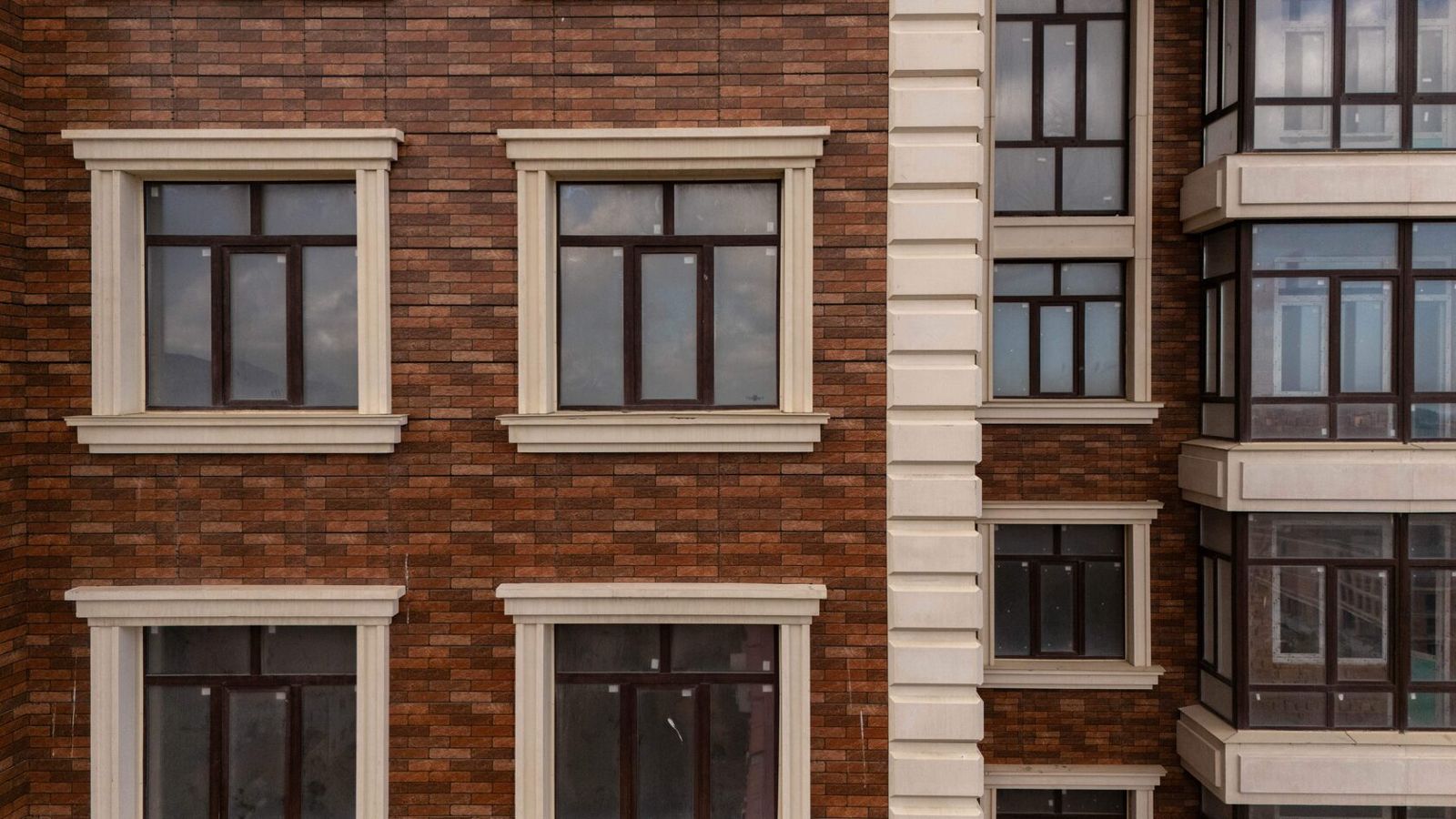
| Acid-etched | Acid etching after demoulding | Soft roughness, aggregate slightly exposed | Classical and neoclassical decoration, sandstone and limestone look |
| Sandblasted | Abrasive treatment | Matt, evenly rough | Facades, plinths, street furniture |
| Stone-look | Relief mould and matched face coat | Relief and colour of natural stone | Plinths, rustication, stone-style cladding |
| Timber-look | Mould with a grain pattern | Texture of boards or beams | Accents, street furniture, benches |
| Relief and ornamental | Mould from a sculptor's model | Ornament, bas-relief, geometry | Decoration, panels, entrances |
Stone and timber effects
Stone-look GFRC is one of the most popular solutions. To imitate a particular stone, several parameters are matched at once: the mould relief (taken from a natural sample), cement colour and pigments, aggregate grade and colour, and the surface treatment method. Imitations of porous and sedimentary stones — travertine, limestone, sandstone, shell limestone (coquina) — are especially successful, since their texture is naturally conveyed by etching and mould relief.
Travertine-look GFRC is a frequent request. Natural travertine is a sedimentary rock with characteristic pores and a banded texture; GFRC reproduces this pattern using a mould taken from the stone and a matched warm shade. The limitation is imitating crystalline stones with depth of colour: polished granite and marble are hard to replicate in concrete, and natural stone is better for such tasks. TECHNOFORMA Group also supplies natural stones, including travertine, marble and granite.
A timber texture is achieved with moulds carrying a grain pattern taken from real boards. Such products are used for benches, street furniture and accent panels. Unlike timber, GFRC does not rot and needs no moisture-protection impregnation.
Samples and approval
Texture and colour are the most subjective properties of a product, so they are agreed in advance and documented:
1. Matching to references. The architect provides a stone sample, photo, colour code or description.
2. Trial samples. The manufacturer makes several texture and shade options on conveniently sized samples.
3. Assessment in real conditions. Samples are viewed outdoors in daylight, dry and wet — concrete surfaces darken after rain.
4. Approval of the reference sample. The chosen sample is signed and kept by the client and at the factory. Serial products are accepted against it.
5. A trial product or facade mock-up — for large projects it is useful to install a fragment to assess joints and the overall look.
As part of design, TECHNOFORMA Group provides 3D visualisation, which helps to assess the combination of textures across the whole facade even before samples are made.
How texture affects price
No specific prices are given in this article: product cost is determined by the project. The factors through which texture affects price are:
• Mould. Complex relief requires a more labour-intensive model and a flexible mould, which wears faster than a rigid one.
• Face coat. White cement, pigments and decorative aggregate cost more than standard components.
• Treatment. Etching, sandblasting and grinding are extra operations and time.
• Number of variants. The more textures and colours on a project, the more complex production and quality control become.
• Protective treatment — water repellents and anti-graffiti coatings.
A smooth or concrete texture is usually the most economical. For residential complexes with large volumes, it is best to limit the number of textures to two or three and use them serially. TECHNOFORMA Group calculates the cost for your project from drawings or after a site survey.
Examples from TECHNOFORMA projects
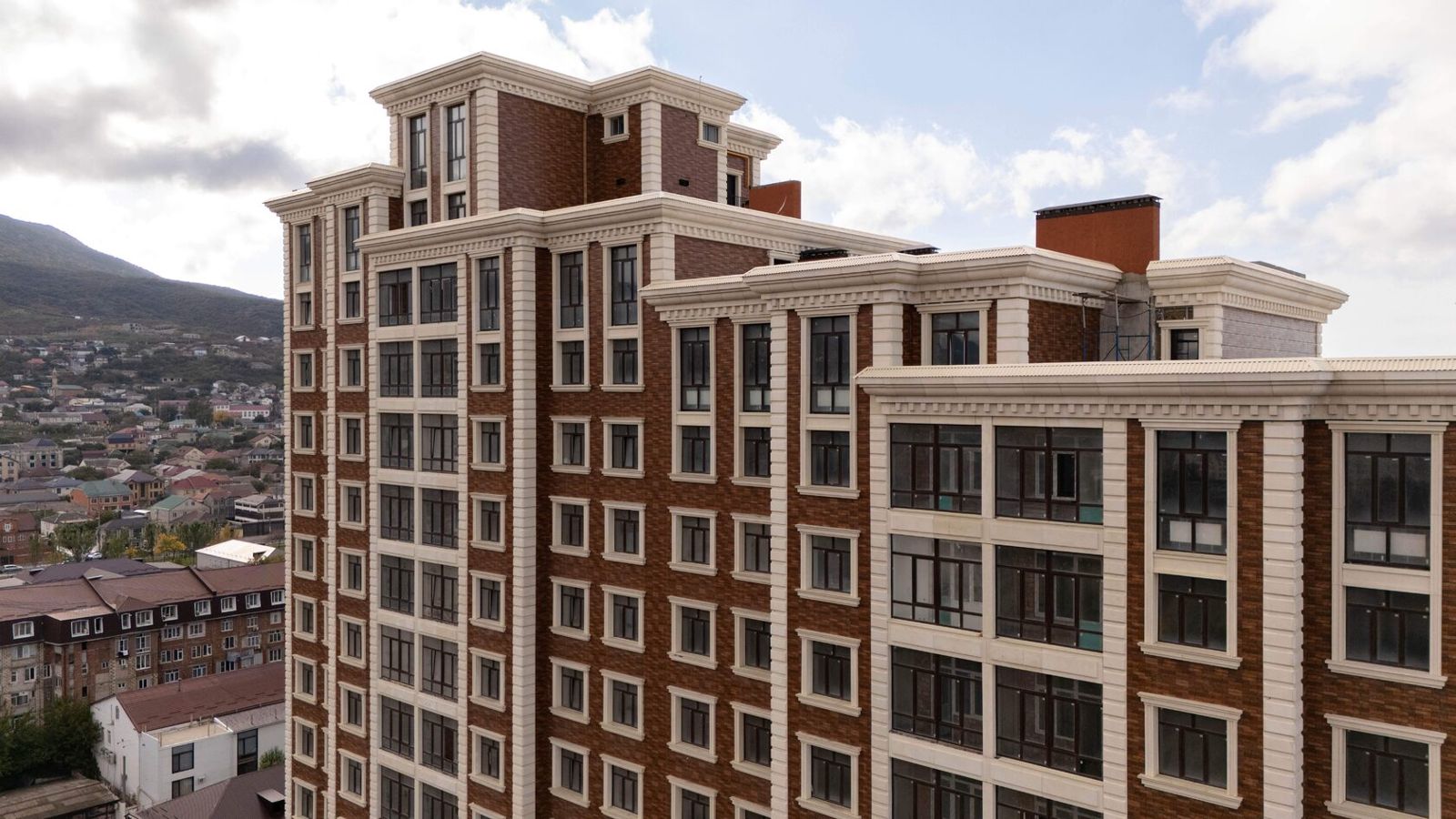
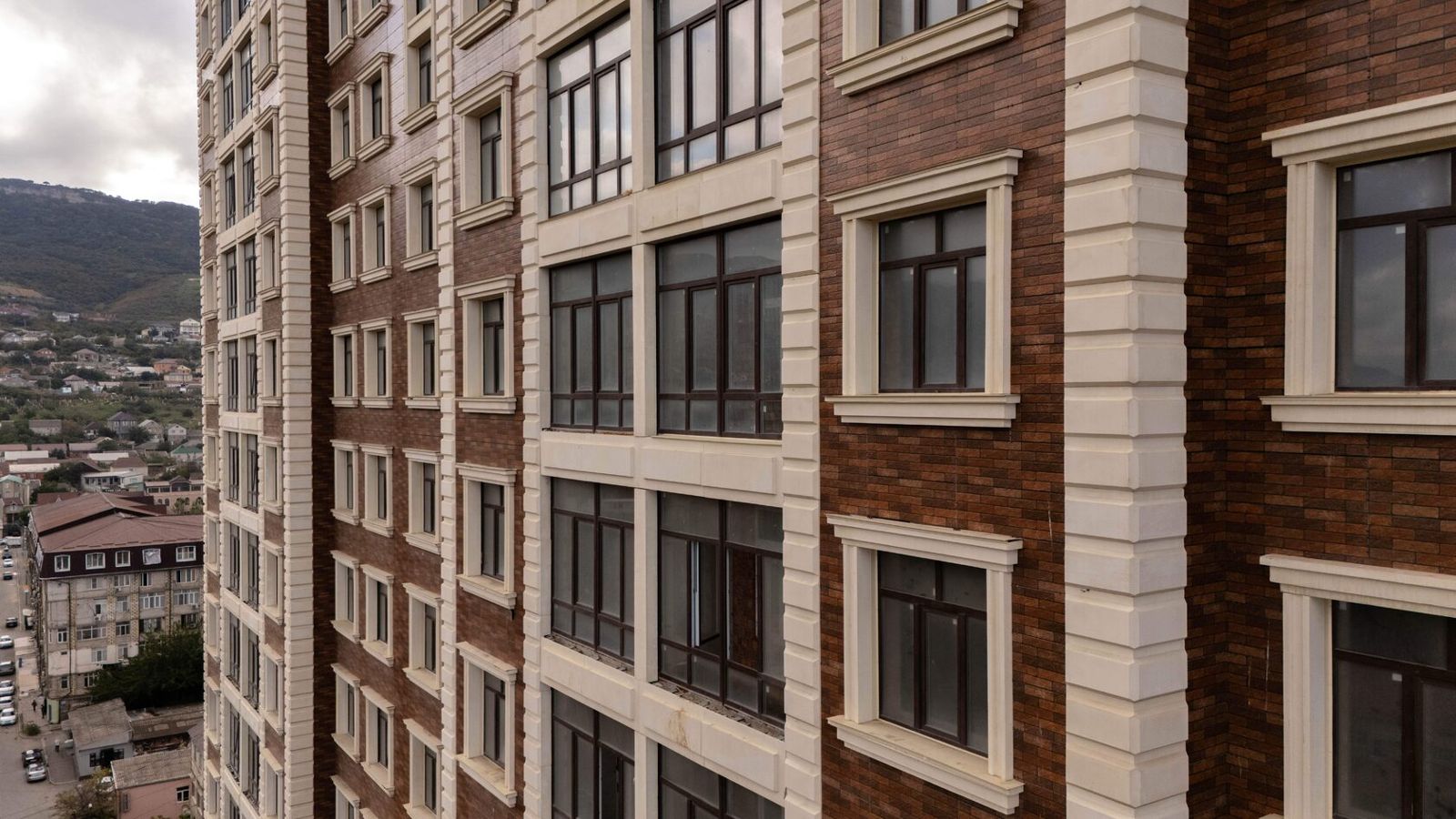
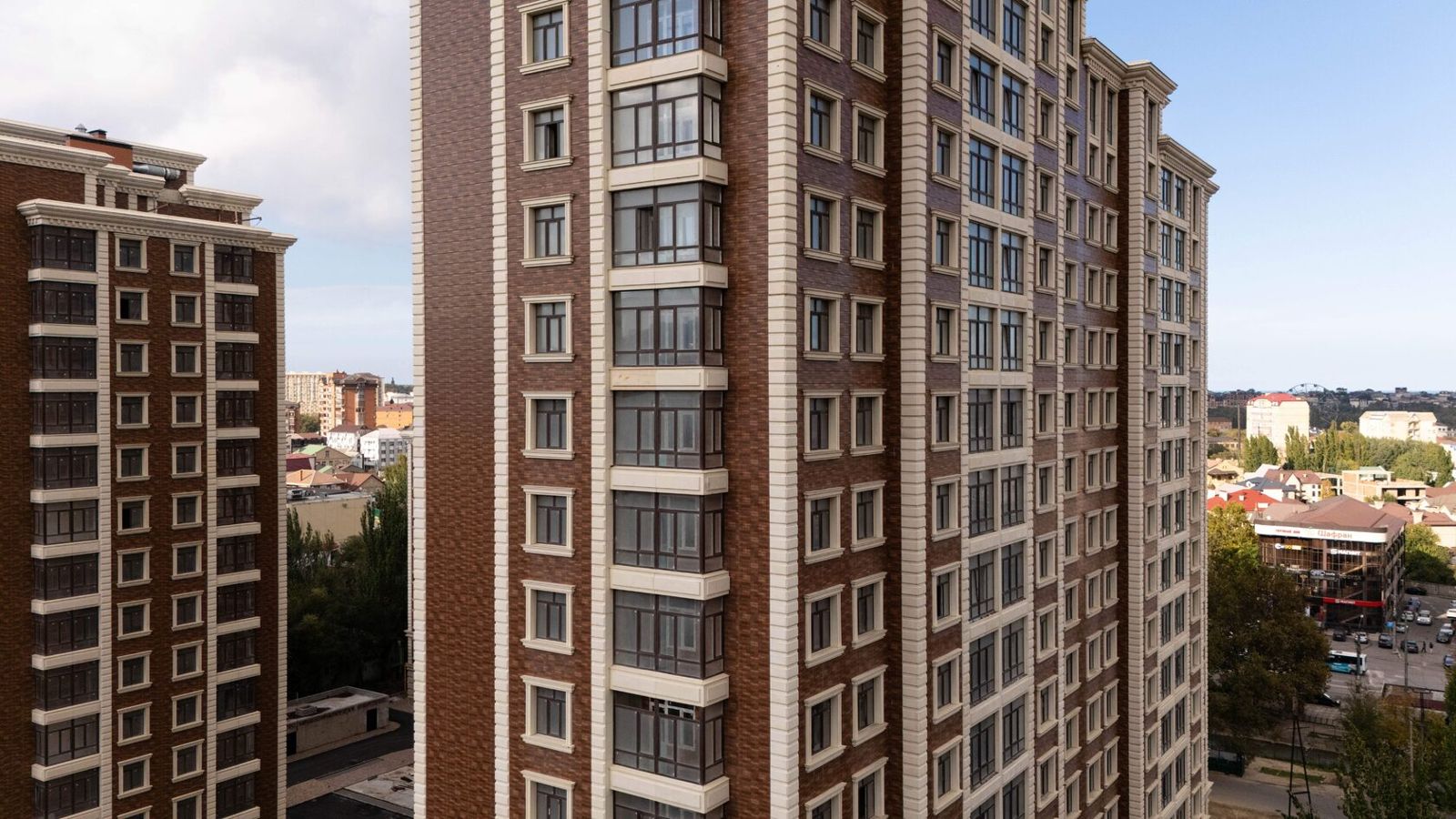
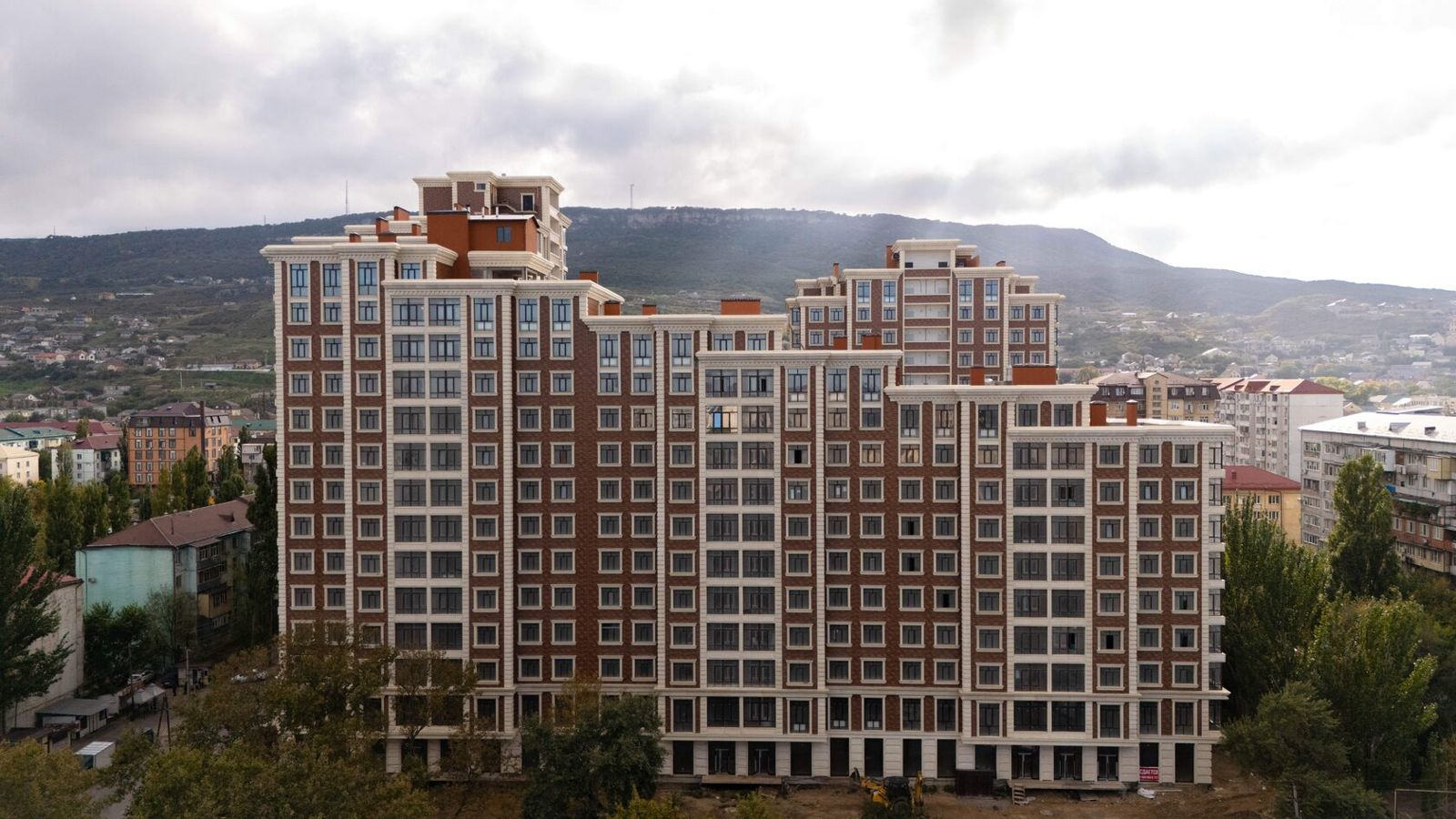
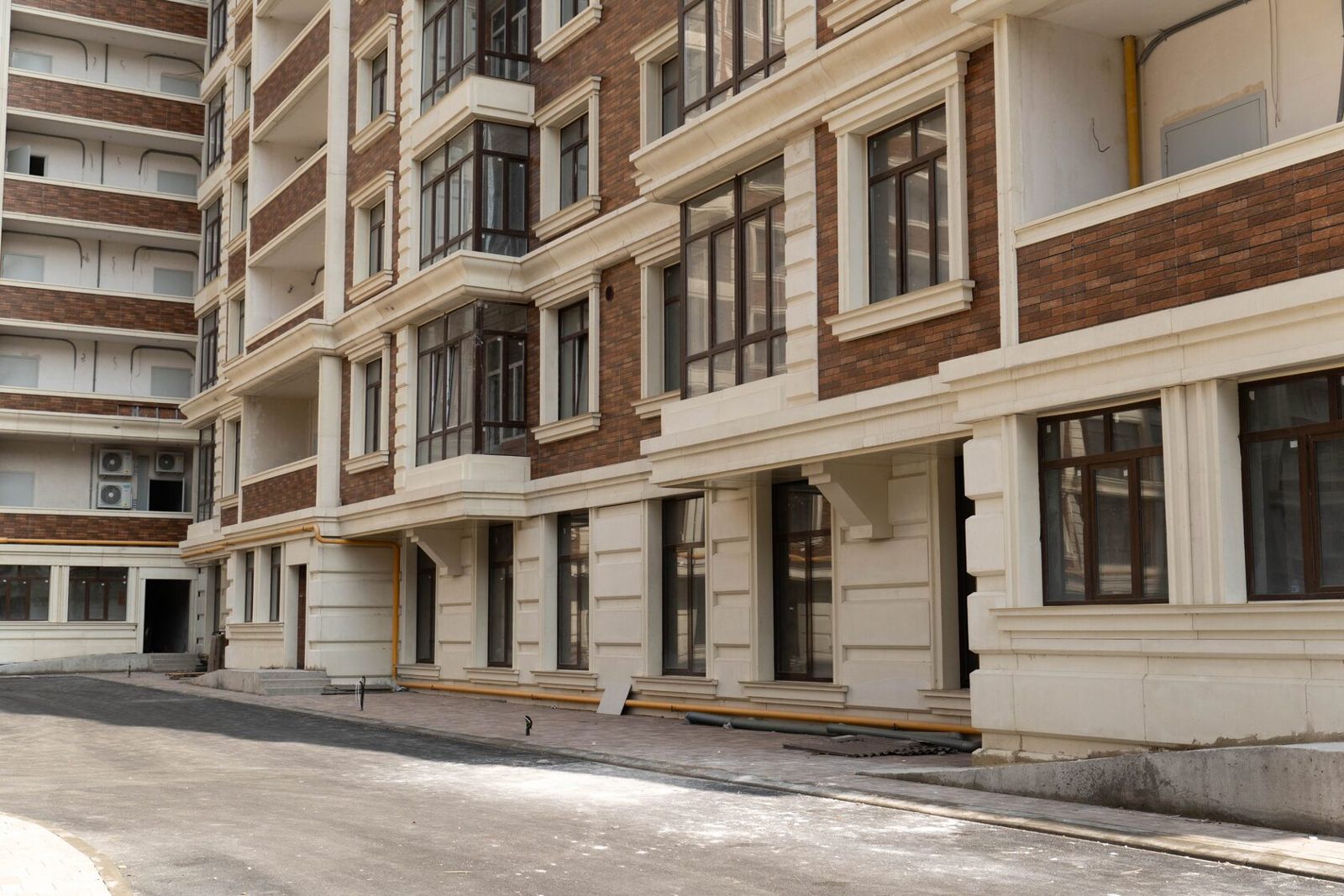
At Dinastiya club house in Kislovodsk, 6,000 m² of GFRC is combined with natural granite (700 m²) and porcelain stoneware (700 m²) — here the GFRC texture works alongside natural stone. At Zolotye Klyuchi residential complex in Makhachkala — 12,000 m² of GFRC.
More projects are in the TECHNOFORMA projects section. On choosing a shade, see GFRC colour: integral pigmentation and painting.
FAQ
What kind of stone is travertine?
A sedimentary rock formed from mineral spring deposits, with characteristic pores and a banded texture. It is used for facade and interior cladding.
Is travertine suitable for facades?
Yes, travertine is used for facade cladding; its properties depend on the quarry, so frost resistance and water absorption are checked against the batch documents. TECHNOFORMA Group supplies travertine.
Can GFRC be made to look like travertine?
Yes: the mould is taken from natural stone, and the face coat and pigments are matched to the required shade. The result is a lightweight product with a travertine texture.
How does flexible travertine-look stone differ from GFRC?
Flexible stone is a thin layer of stone chippings or a stone veneer on a flexible backing, used mainly for surface finishing. GFRC produces rigid products of any shape: panels, cornices, columns.
Which GFRC texture should I choose for a facade?
For restrained architecture — smooth or concrete; for classical styles — acid-etched or stone-look. The decision is confirmed on samples viewed outdoors in daylight.