GFRC Colour: Integral Pigmentation vs Facade Painting
The colour of glass fibre reinforced concrete (GFRC) is set in one of two ways: the mix is coloured integrally with mineral pigments, or the finished element is coated with facade paint. Without pigment, GFRC has the natural grey or light colour of cement; with white cement and light sand it is almost white, close to limestone.
The main selection criterion is not the shade in a catalogue but how the colour behaves over the years: integral colour does not peel and does not show at chips, while paint gives an exact colour match and saturated tones but needs periodic renewal. Architects should decide which option to specify at the sketch stage, because it determines the mix design, mould layout and facade maintenance schedule.
General information on the material is collected in GFRC: material and technology; this article covers colour only.
Integral (through-body) colouring
With integral colouring, the pigment is added to the mix at the batching stage, so the colour runs through the entire thickness of the element rather than just the face layer. The standard GFRC mix is glass fibre, sand, high-grade cement and water; dry mineral pigments are added to it, most often based on iron oxides (yellow, red, brown and black tones), chromium oxide (greens) and titanium dioxide (lightening).
The final shade depends on:
• cement colour — grey cement gives muted tones; clean light and pastel colours are only possible with white cement;
• sand colour and grading — light quartz sand does not "dull" the pigment;
• pigment dosage — usually within a few percent of the cement weight; beyond a certain threshold saturation barely increases, while strength may drop;
• water-cement ratio and curing conditions — these determine tone consistency between batches.
The strength of this method is durability: a chip or scratch does not expose grey concrete, and the colour does not delaminate. The limitations are a mainly warm, natural palette (ochres, sand, terracotta, graphite), while saturated blues and bright colours are more expensive and less consistent. Integral colour also always has natural variation, which is considered an advantage for "stone" facades and a risk for uniform contemporary ones. For large projects, a reference sample and an acceptable deviation range are therefore agreed in advance.
Facade painting
GFRC is painted after it has gained strength and the surface has been prepared: the element is cleaned of dust and mould release residue and primed if necessary. Vapour-permeable facade coatings designed for mineral substrates are used:
• silicate — bond chemically with the cement matrix, are highly vapour-permeable and give a matt finish;
• silicone (silicone resin) — combine vapour permeability with water repellency and offer a wide range of tints;
• acrylic facade paints — give saturated colours but are less vapour-permeable; not suitable for every service condition.
Paint for GFRC must be alkali-resistant, otherwise the pigments and binder break down in contact with fresh cement stone. Paint is usually applied in two coats; slender cornice and moulding profiles are painted before installation, joints and fixing points afterwards.
Painting is the better choice where an exact catalogue match (RAL, NCS), contrasting or bright colours are needed, as well as in restoration or when changing a building's appearance. The downside is that the coating fades and wears over time and will need renewing; the maintenance interval depends on the paint system and facade exposure and is specified by the paint manufacturer.
Pigments and fading
Fading of coloured GFRC is caused less by the pigment itself than by processes in the concrete and external exposure. The main causes:
| Effect | Cause | How the risk is reduced |
|---|---|---|
| Efflorescence (whitish bloom) | Salts and calcium hydroxide carried to the surface by moisture | Proper curing, water-repellent treatment, sealers |
| Tone fading | UV radiation, organic pigments | Lightfast mineral pigments, durable paints |
| Mottling | Uneven curing, different moisture content between batches | Consistent mix design, control of batching and curing regime |
| Soiling | Porous surface, dust, run-off | Water-repellent treatment, drainage from cornices and drip sills |
Inorganic oxide pigments are considered lightfast, so integral colour is stable. In the first year a facade may "lighten" slightly as efflorescence emerges — this is a surface effect, not a loss of pigment. Specific lightfastness and alkali resistance figures are given in the pigment and paint documentation.
Water-repellent treatment
Water-repellent (hydrophobic) treatment means applying impregnating sealers to the surface (usually silane-siloxane based) that penetrate the pores and make them water-repellent without blocking vapour permeability. This matters for colour for three reasons: less water gets into the element, so there is less efflorescence; dirt is absorbed less and is washed off by rain; and an integrally coloured surface looks more even and keeps its original tone longer.
The sealer is applied to a clean, dry surface. Some products slightly deepen the colour (a "wet stone effect"), so they are tested on a sample. If the element is to be painted, compatibility between sealer and paint is checked in advance: some water repellents prevent the coating from adhering. How often re-treatment is needed depends on the product and service conditions.
How to choose a colour for your project
Colour selection starts with the facade concept and the surrounding buildings, not with a pigment catalogue. A practical sequence:
1. Define the role of GFRC on the facade: main background, accent or imitation of natural stone.
2. Choose the colouring method: integral for "stone" solutions and areas where chip resistance matters; paint for exact colour matching and bright accents.
3. Obtain physical samples: colour on screen and on a real texture differ, especially after water-repellent treatment.
4. Assess the samples outdoors in natural light, on the side of the building where the facade will face.
5. Record the reference sample and shade tolerance in the contract.
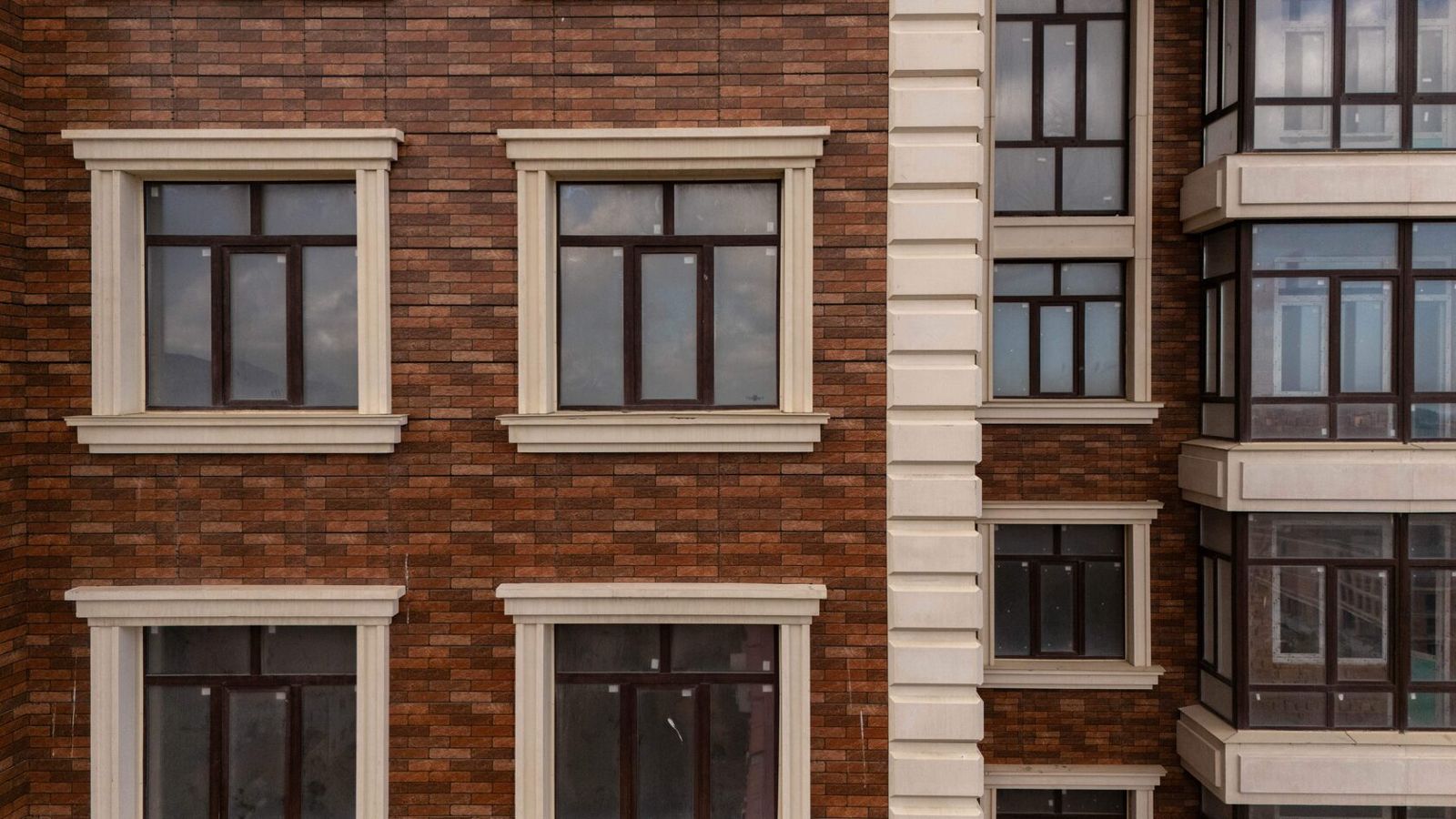
A common request is GFRC that looks like travertine. In photos, travertine ranges from creamy white through beige and walnut to golden, with characteristic pores and banding. In GFRC this effect is achieved by combining integral colour with a texture cast into the mould from real stone. If the project needs genuine natural stone, the company supplies travertine and other stones.
At TECHNOFORMA, facades are developed by the design department — 12 designers led by two architects — together with 3D visualisers who show the facade in colour before production starts.
Examples from TECHNOFORMA projects
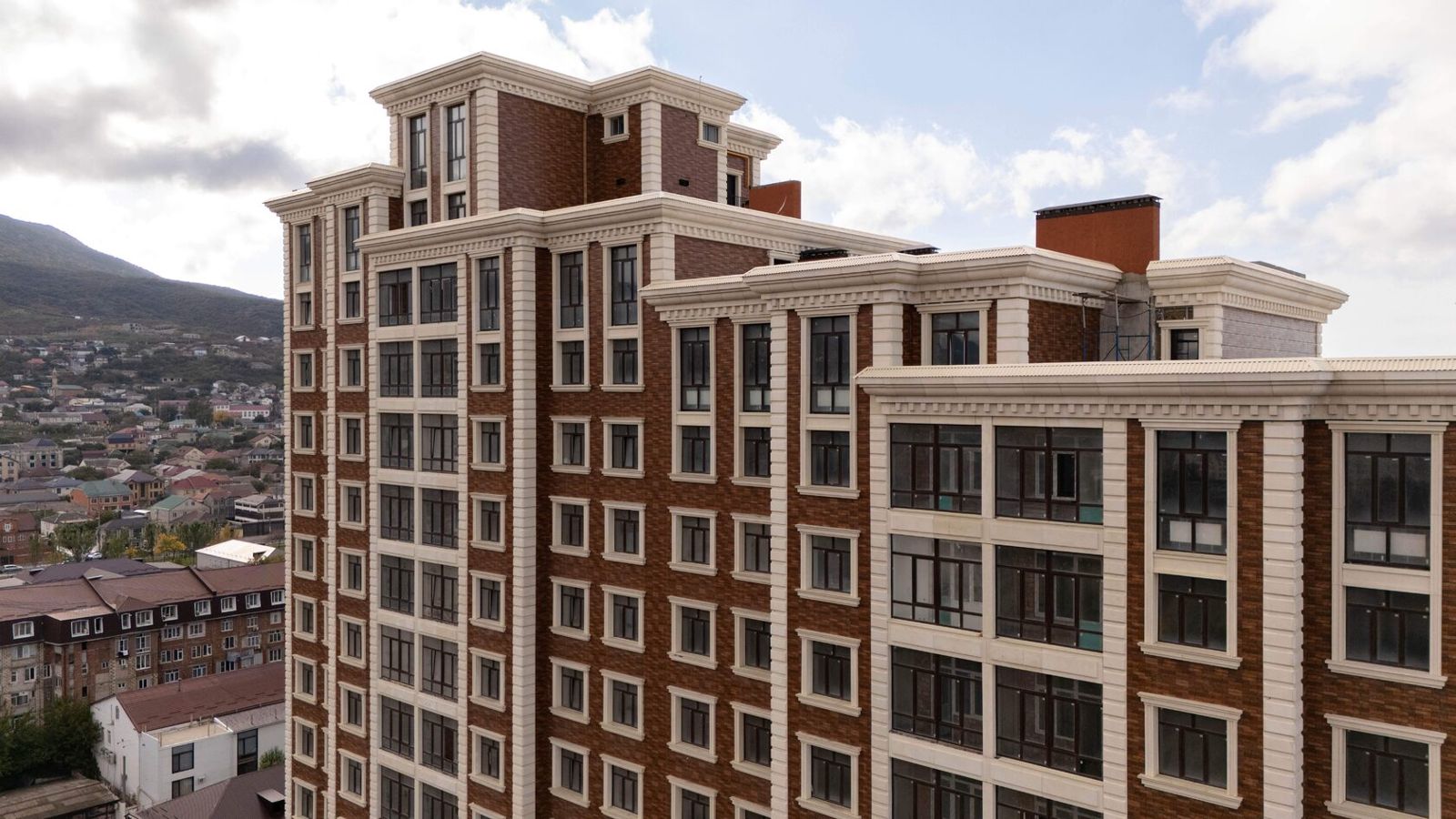
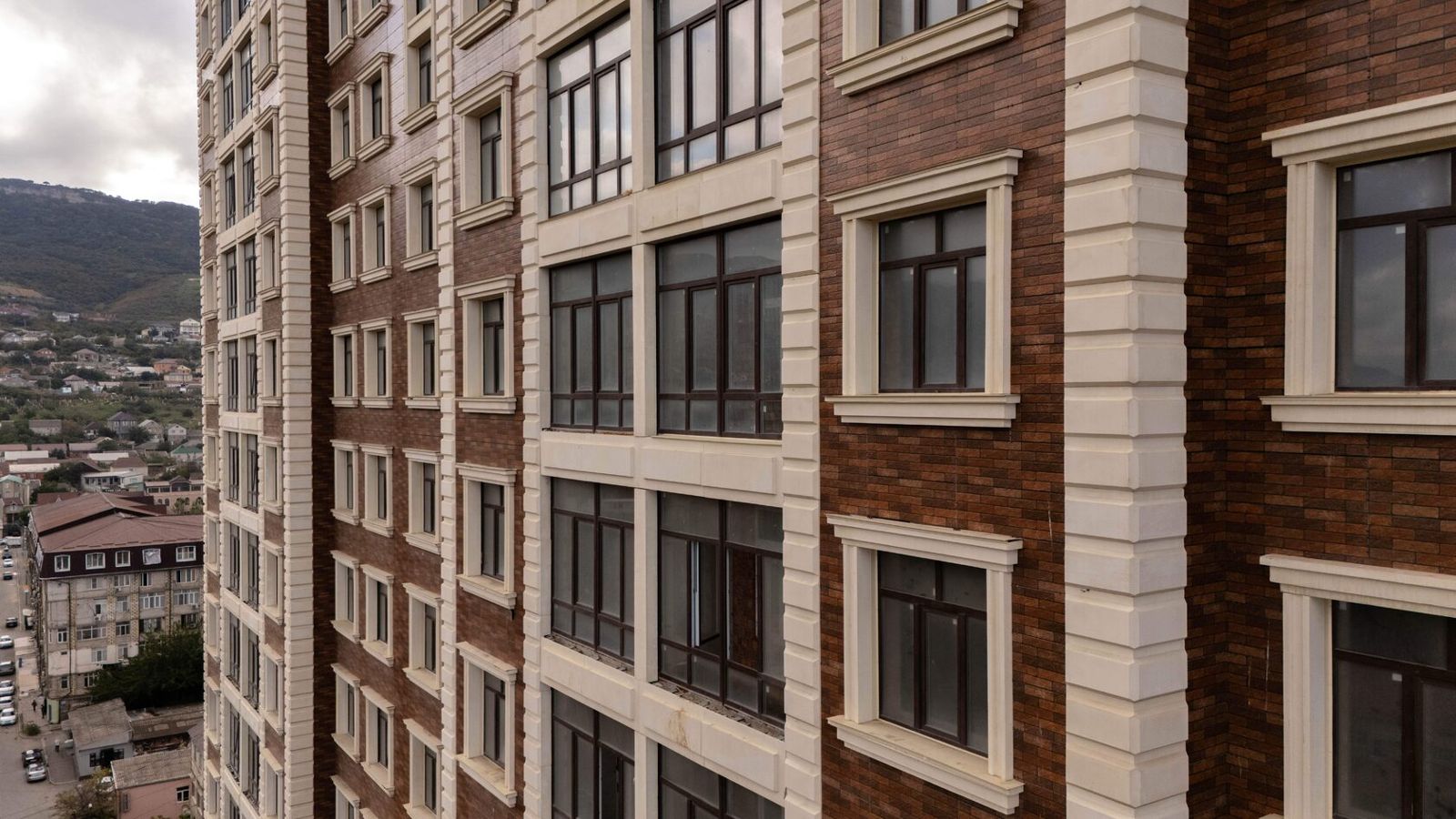
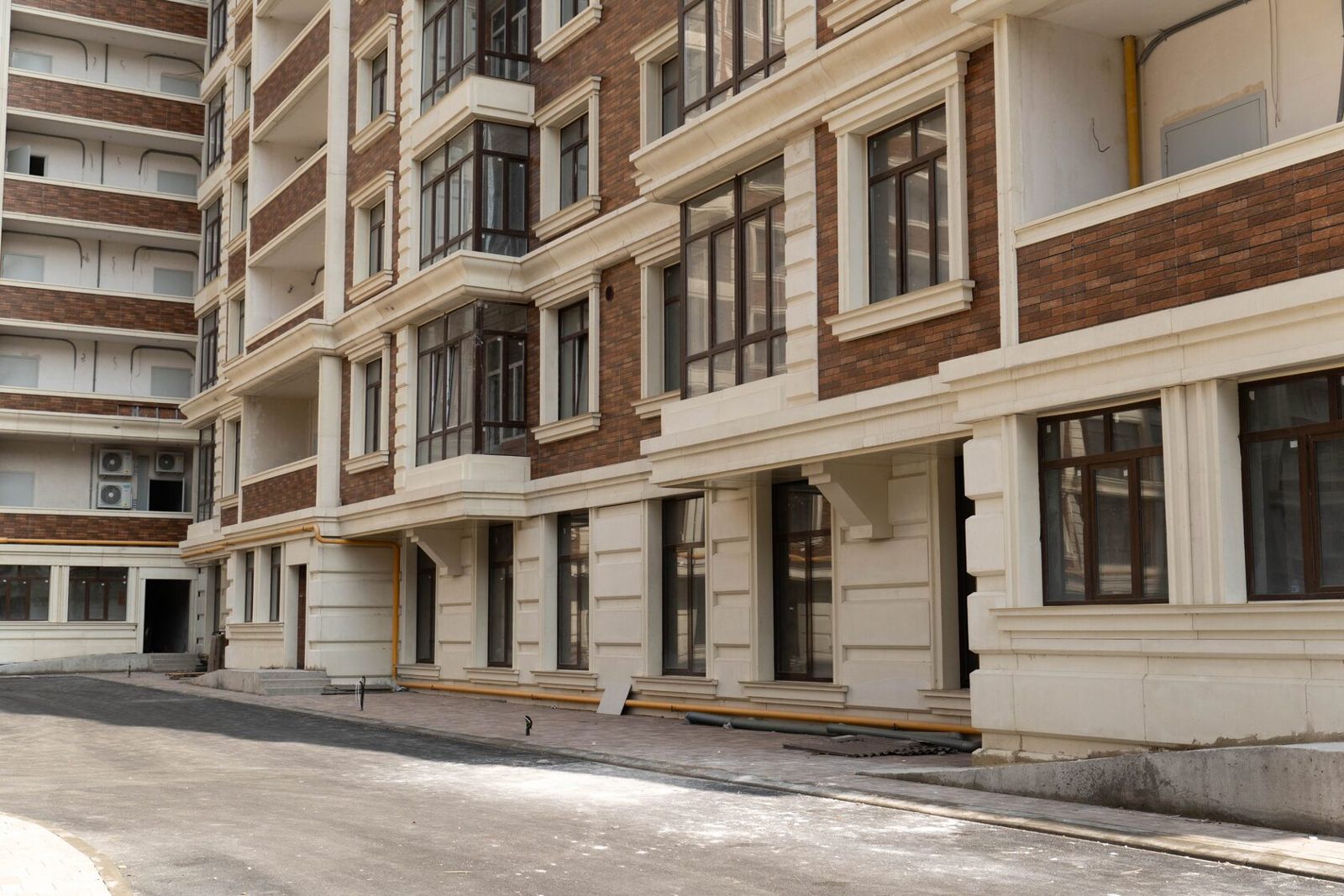
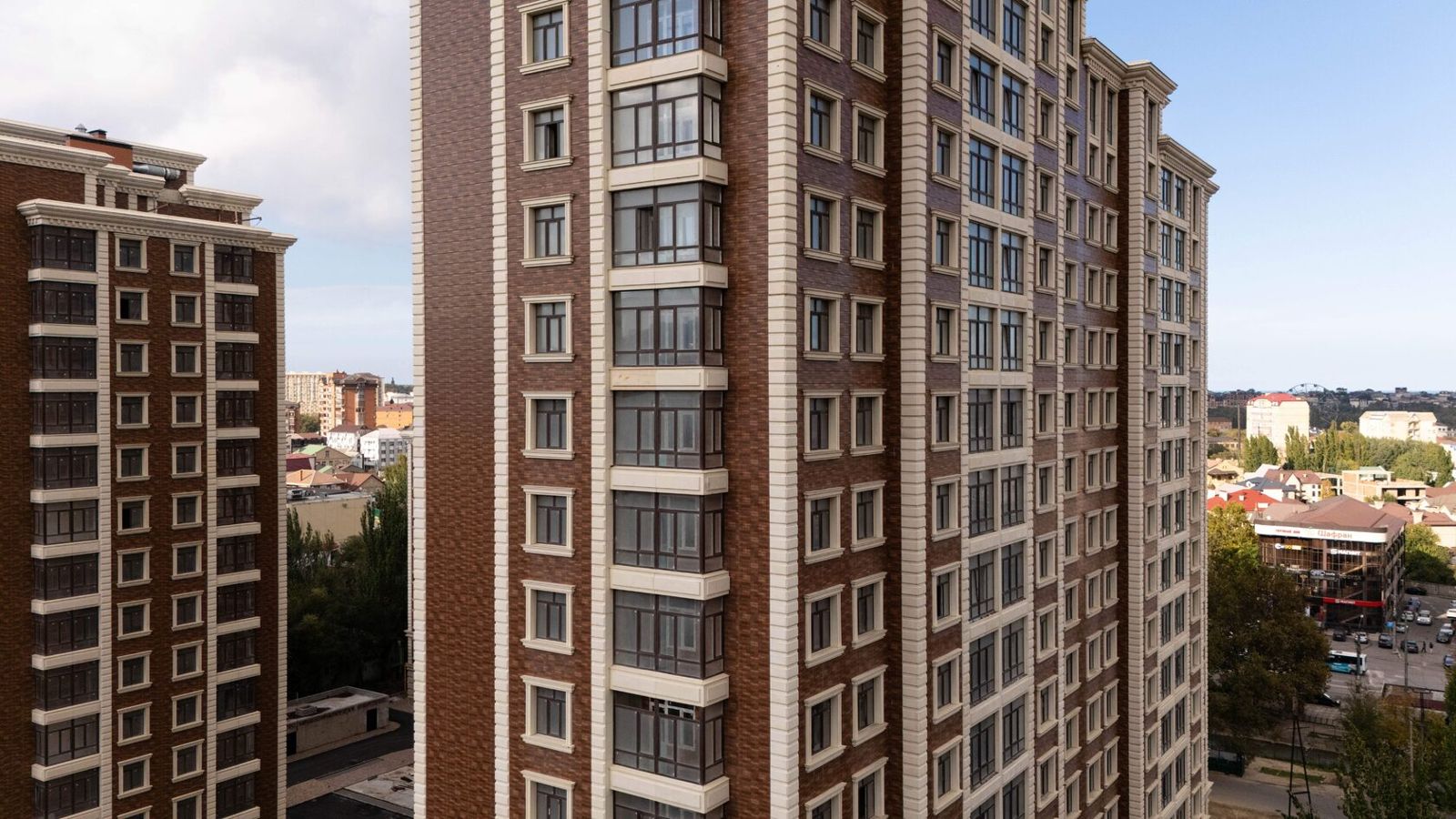
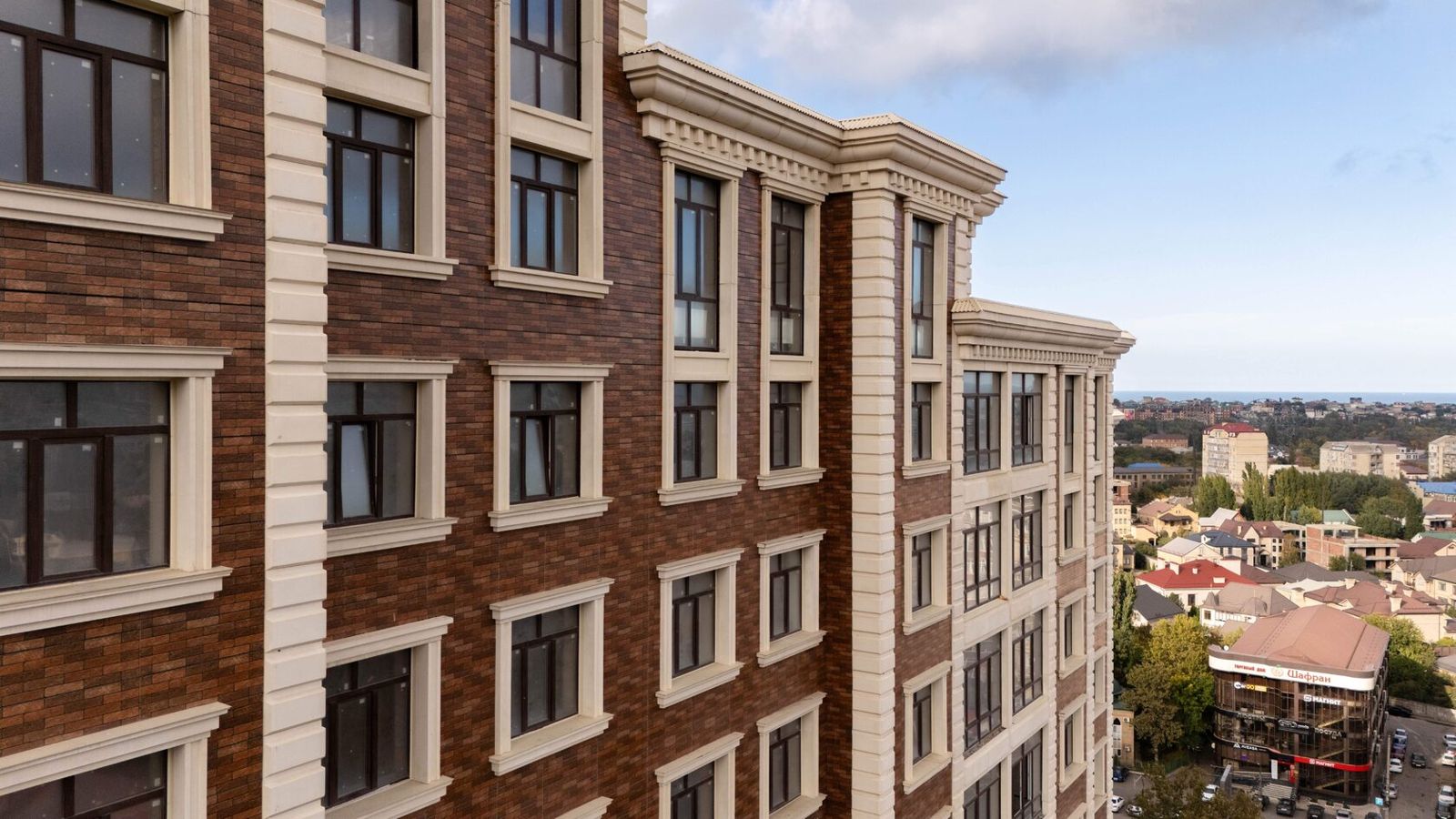
The company has applied GFRC colour solutions on residential projects in Makhachkala. At Dominanta residential complex (18 storeys, 4 buildings) around 14,000 m² of GFRC cladding was installed alongside 13,000 m² of porcelain stoneware; with such a combination, the GFRC shade is chosen with the porcelain stoneware in mind. At Anzhi-City residential complex (16 storeys) the GFRC volume was 18,000 m²; the company carried out design and installation.
More projects are in the TECHNOFORMA projects section. For element formats, see GFRC facade panels.
FAQ
What colour is GFRC without pigment?
The grey colour of cement, or almost white if white cement and light sand are used.
What paint is suitable for GFRC?
Alkali-resistant, vapour-permeable facade coatings for mineral substrates — silicate or silicone; acrylics are used with care depending on service conditions.
Which is more reliable: integral colour or paint?
Integral colour does not peel and does not show at chips; paint gives an exact colour match and bright colours but needs periodic renewal.
Does integrally coloured GFRC fade?
Mineral oxide pigments are lightfast. A change of tone in the first months is more often caused by efflorescence, which is reduced by water-repellent treatment.
Can GFRC be made to look like travertine?
Yes: the shade is matched integrally and the texture of natural stone is cast into the mould. The result is approved on a physical sample.