GRC, GFRC and SFB: Names for Glass Fibre Reinforced Concrete
GRC panels are facade panels made of glass fibre reinforced concrete: the abbreviation GRC (Glassfibre Reinforced Concrete) is used internationally for the same material that in Russia is called SFB. In the USA the variant GFRC (Glass Fiber Reinforced Concrete) is more common. In every case it means fine-grained concrete reinforced with alkali-resistant glass fibre.
When choosing GRC panels, what matters is not the name but the mix design, the forming method and properties confirmed by testing. Different terms in catalogues and designs do not mean different materials, but foreign projects often refer to their own standards, and these have to be translated correctly into Russian requirements.
This article is for architects working with international references and for procurement specialists. For a general overview of the material, see GFRC: material and technology.
Terms and abbreviations
The main terms found in designs, catalogues and technical specifications:
| Term | Meaning | Where it is used |
|---|---|---|
| SFB (СФБ) | Steklofibrobeton, the Russian term for glass fibre reinforced concrete | Russia, CIS countries |
| GRC | Glassfibre Reinforced Concrete | UK, Europe, Middle East, Asia |
| GFRC | Glass Fiber Reinforced Concrete | USA, Canada |
| GRG | Glassfibre Reinforced Gypsum | Glass fibre reinforced gypsum, interiors only |
| AR-glass | Alkali-Resistant glass | Alkali-resistant glass fibre |
| Spray-up | Spraying | Forming method |
| Premix | Premix | Mix with fibre added in advance, vibration casting |
| Stud frame | Steel panel frame | Large-format panels on flexible anchors |
GRG deserves a separate note: it is not concrete but gypsum with glass fibre. It is not used on facades. Confusing GRC and GRG in specifications leads to procurement errors.
Global experience
Glass fibre reinforced concrete has been used worldwide since the 1970s, after alkali-resistant glass fibre with zirconium dioxide appeared. Today GRC is a familiar material for:
• Facades of public and commercial buildings: large-format panels, including those on a steel frame.
• Curved architecture: parametric facades, shells, perforated screens.
• Middle Eastern architecture: in the Middle East GRC is widely used for carved mashrabiya screens, domes, arches and ornaments.
• Restoration and reconstruction of historic facades: lightweight copies of stone decoration.
• Infrastructure: tunnel linings, noise barriers, permanent formwork.
• Landscaping: small architectural forms, planters, benches.
Global experience shows that with the right mix design, process and fixing details, GRC facades perform for decades. It has also shown where the mistakes lie: early panels made with ordinary glass, an unaccounted loss of flexural strength and rigid fixing that ignored thermal movement led to cracking. These lessons formed the basis of standards and practical guidelines.
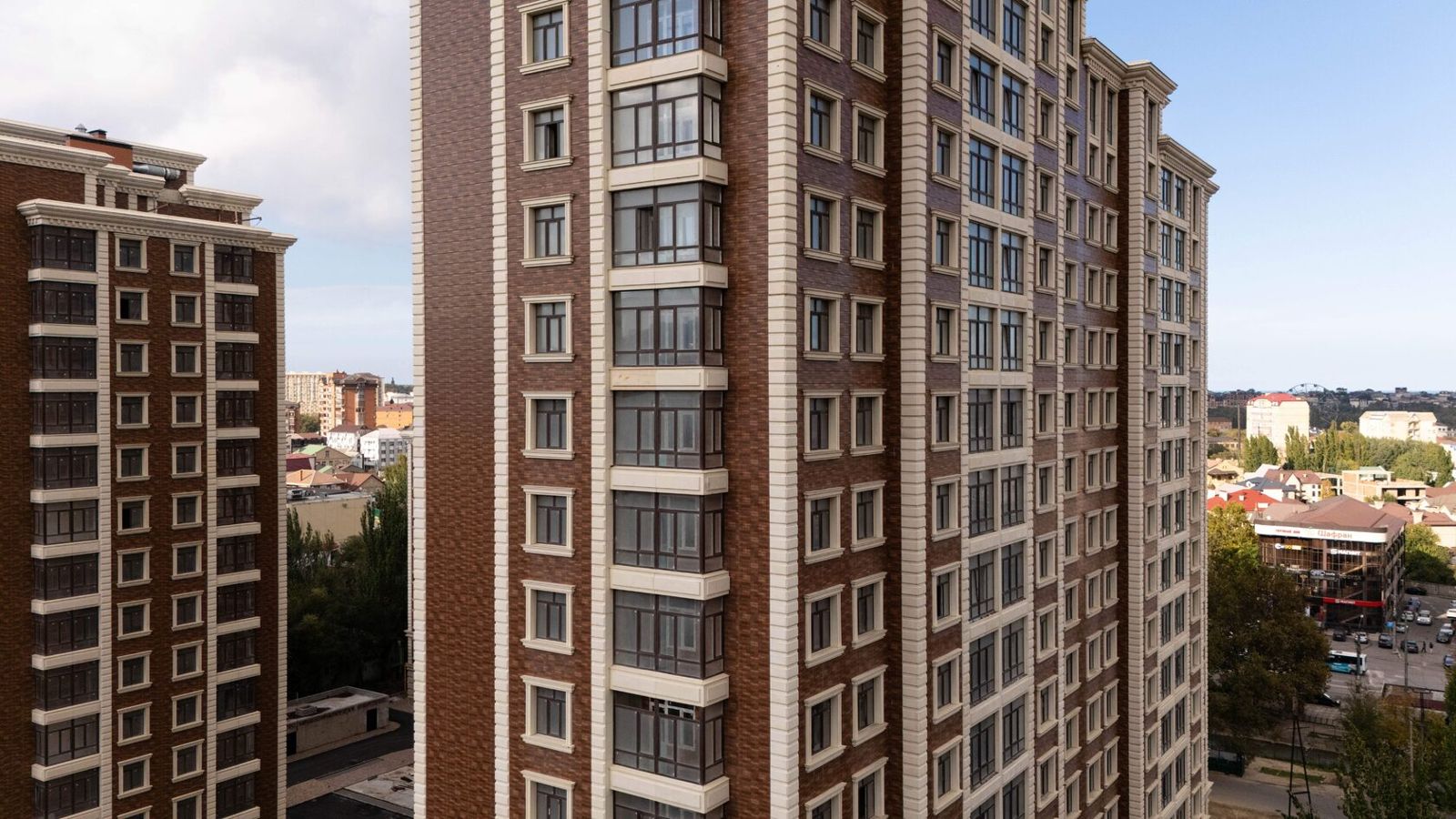
As a guide to how terms relate to product types in international catalogues: "GRC cladding panels" are facing panels; "GRC mouldings" or "cornices" are cornices and profiled decoration; "GRC screens" are perforated screens; "GRC columns" are hollow columns. In a Russian specification all of these are glass fibre reinforced concrete products with the element type stated.
International standards
Outside Russia, the production and use of GRC are governed by standards and by guidelines from industry bodies. The best known are:
• EN 1169: the European standard for factory production control of GRC products.
• EN 1170: a series of European standards on GRC test methods covering density, water absorption, flexural strength, fibre content and other properties.
• EN 15191: classification of glass fibre reinforced concrete performance for precast products.
• PCI MNL-128: recommendations of the Precast/Prestressed Concrete Institute (PCI, USA) for the design, manufacture and installation of GFRC panels.
• GRCA guidelines: from the international association of GRC manufacturers, covering production practice, quality control and design.
The common approach of these documents: controlling fibre content in every batch, regular flexural testing of samples, design based on long-term strength values, and sliding fixing details. If a foreign design refers to these documents, the requirements must be translated into the Russian regulatory framework when the design is adapted.
Why the terms matter in procurement
Knowing the terms helps avoid mistakes at several stages:
1. Working with international references. When an architect sees a design with "GRC cladding" or "GFRC panels", it is glass fibre reinforced concrete and can be manufactured in Russia.
2. Specifications. GRC and GRG must not be confused: the latter is gypsum for interiors.
3. Comparing offers. Imported GRC panels and domestic SFB are the same material; compare properties, not names.
4. Technical requirements. If the brief cites a foreign standard, clarify which values are actually required: flexural strength, fibre content, density, water absorption.
5. Production method. Spray-up and premix give different properties; it is worth stating the method in the specification.
Logistics is a separate issue: large-format panels are expensive and risky to transport over long distances. Production closer to the site reduces the risk of damage and shortens delivery.
Typical mistakes when translating foreign documentation:
• copying properties from a foreign catalogue without test reports for the specific product;
• incorrect unit conversion of inches and pounds per square foot in American documents;
• specifying "GRC" without the forming method and wall thickness, so suppliers offer products that cannot be compared;
• mixing up "panel" and "decorative element", which have different fixing requirements.
Russian equivalents
In Russia the material is called steklofibrobeton, or SFB. Its production and use rely on manufacturers' technical specifications, current Russian standards for concrete test methods and Russian codes of practice (SP) for facade system design, loads and fire safety. If a design requires compliance with specific foreign values, these are fixed in the technical brief and confirmed by test reports.
In composition and technology, Russian SFB follows international practice: cement, sand, alkali-resistant fibre, water and admixtures; forming by spraying or vibration casting. According to TECHNOFORMA Group, which describes itself as one of the largest GFRC manufacturers in Russia and the CIS, its capacity is more than 20,000 m² of GFRC per month and its production site covers more than 2 hectares. According to the company, its material is non-combustible (NG class) and highly frost-resistant.
A practical tip for procurement: if tender documents mention "GRC" or "GFRC", replace it in the Russian specification with "glass fibre reinforced concrete (SFB)" and list the required properties: forming method, wall thickness, flexural strength, water absorption, frost resistance, combustibility. This makes offers from different suppliers comparable and acceptance unambiguous.
A checklist of properties to state in the brief instead of a reference to a foreign standard:
| Parameter | What to specify |
|---|---|
| Forming method | spray-up or vibration casting (premix) |
| Wall thickness | nominal value and tolerance |
| Flexural strength | required value and test method |
| Water absorption, frost resistance | per test reports |
| Combustibility | class under current regulations |
| Colour and texture | per the approved sample |
Examples from TECHNOFORMA projects
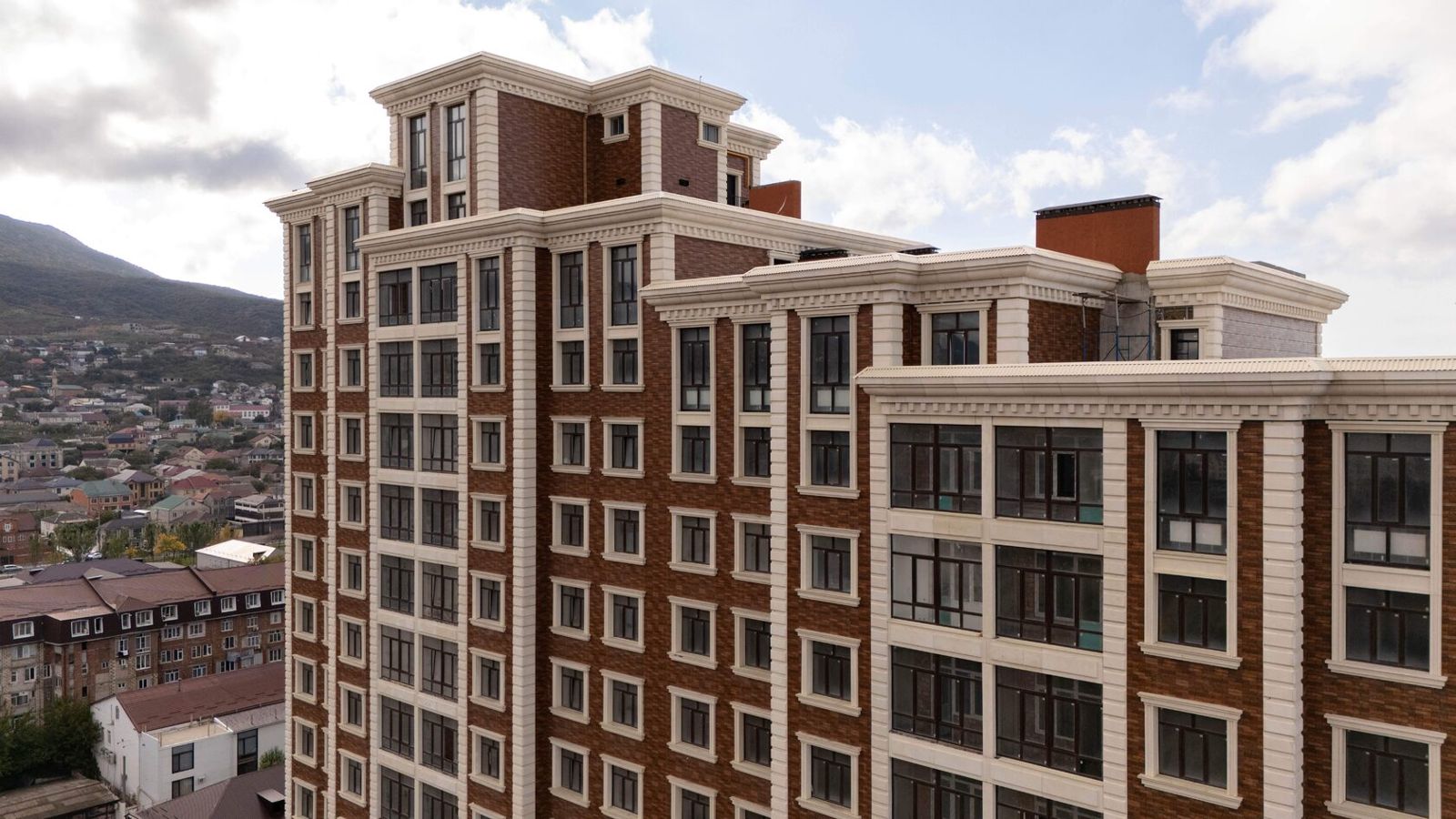
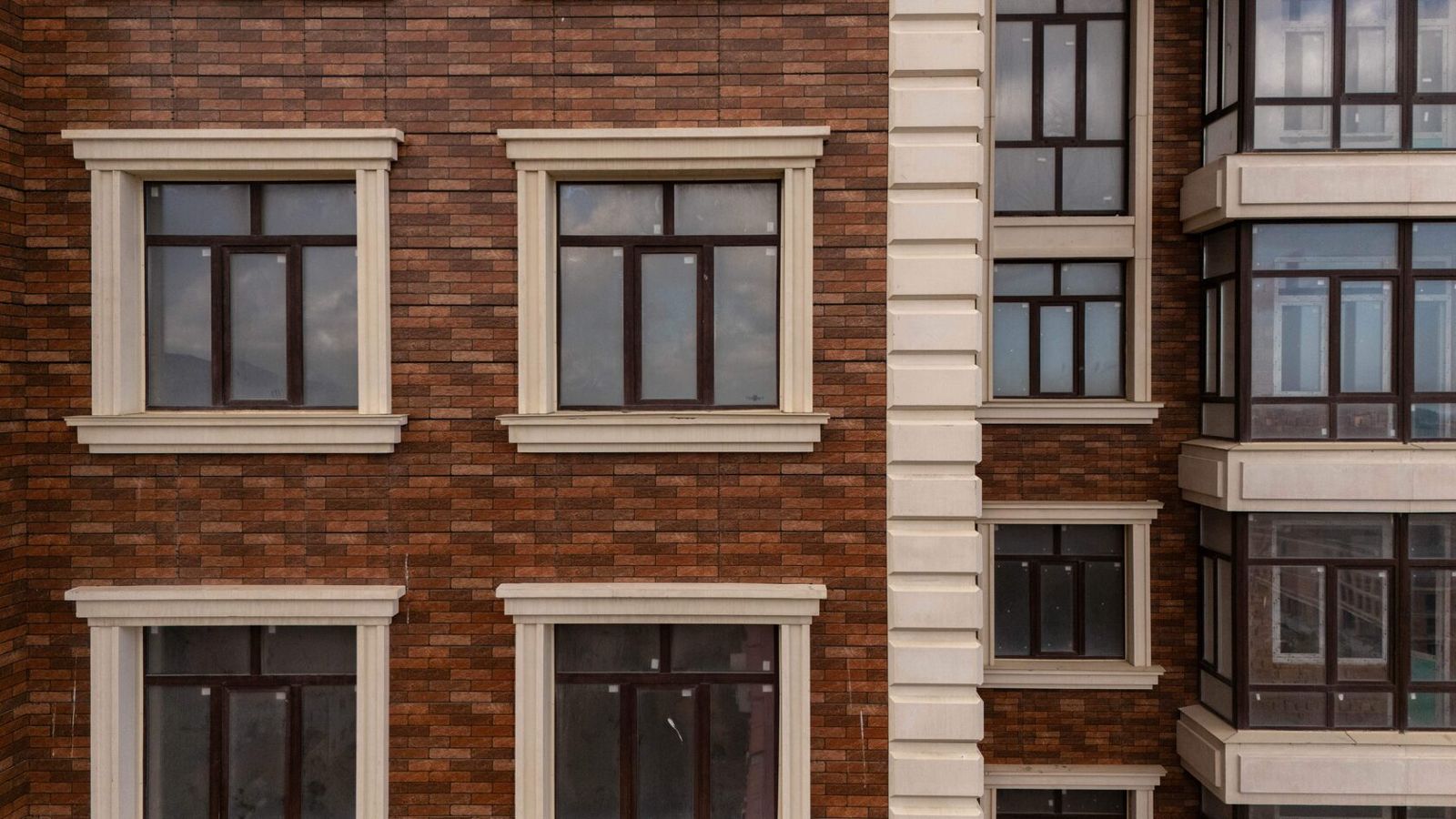
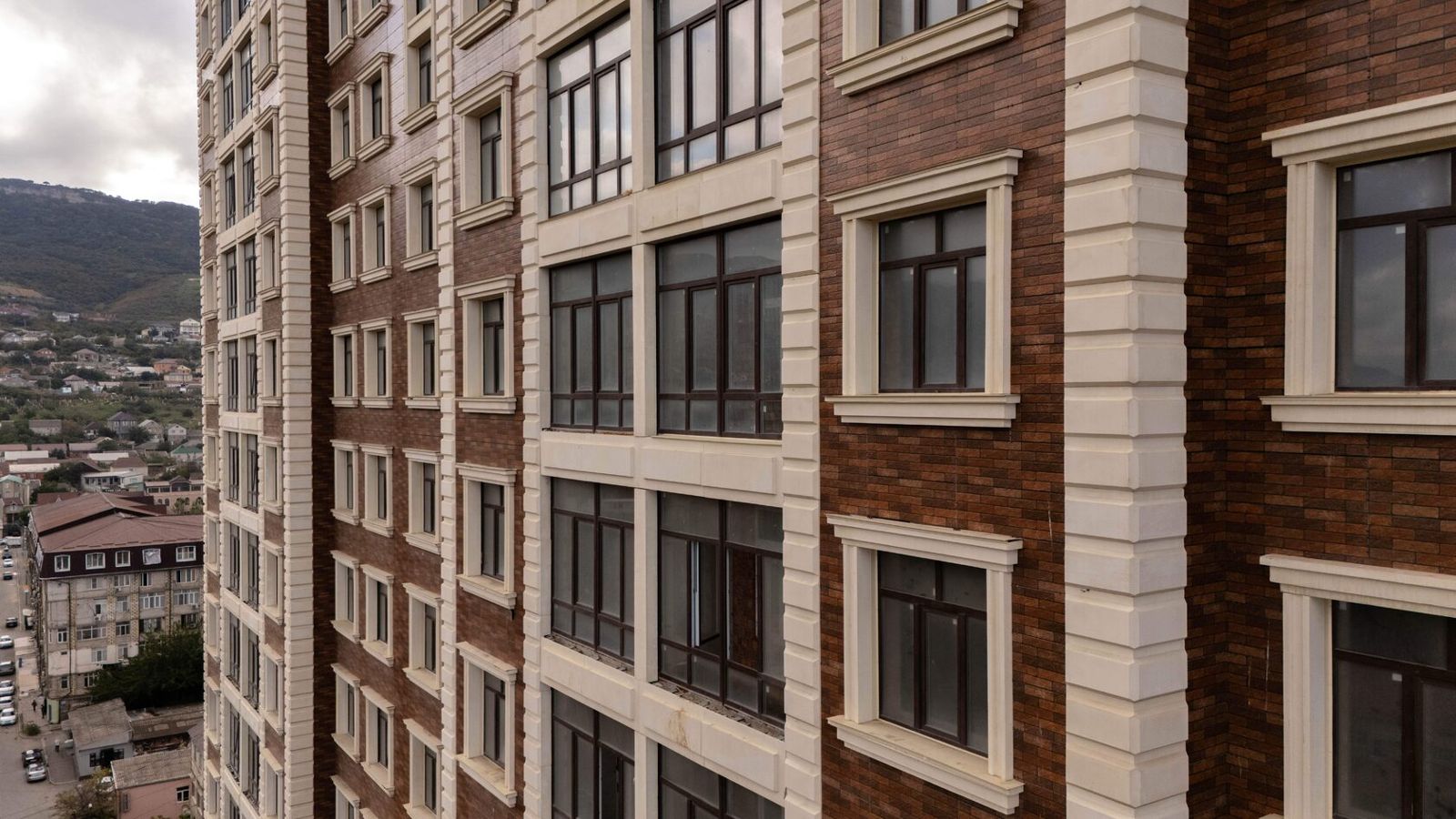
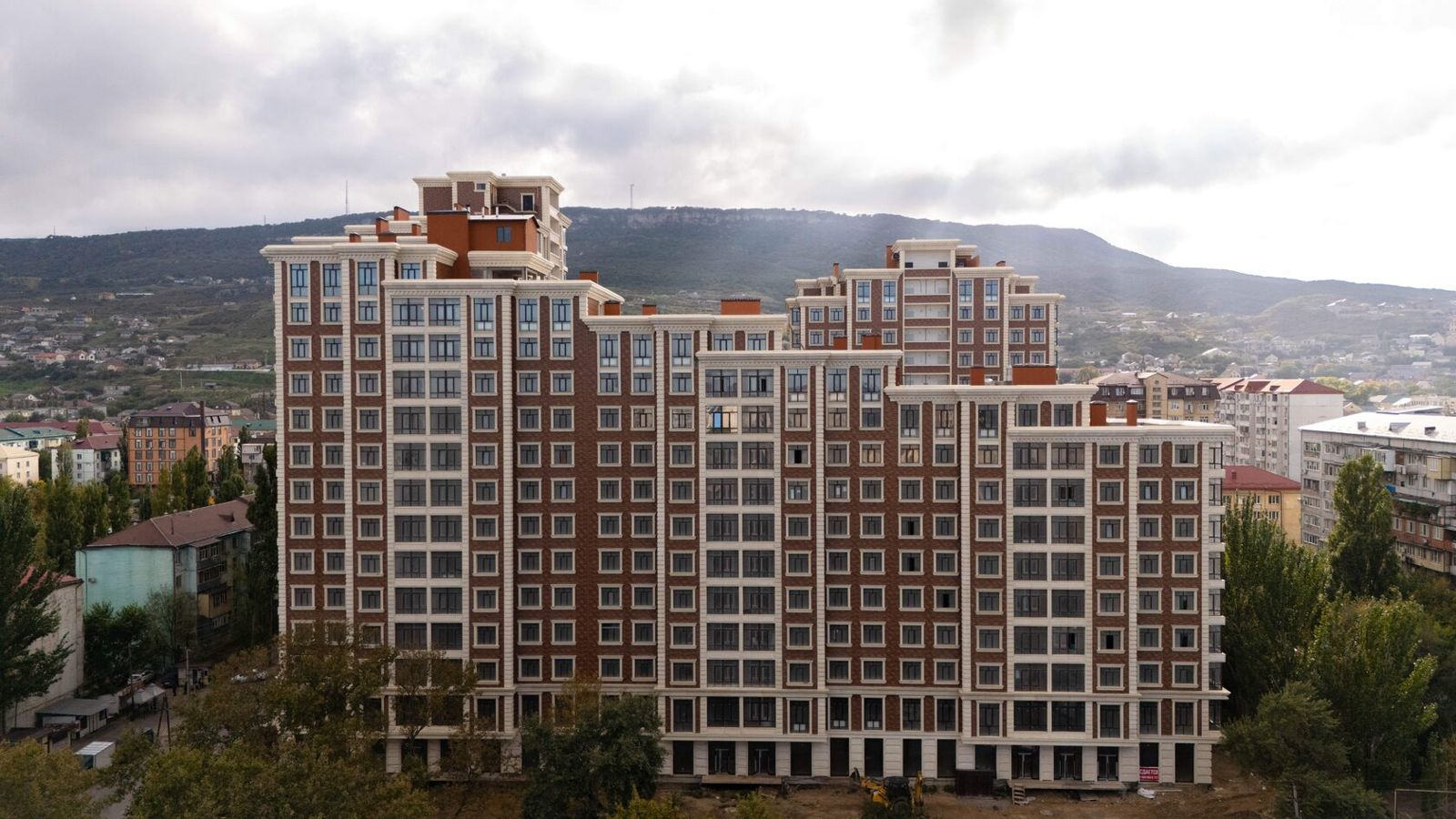
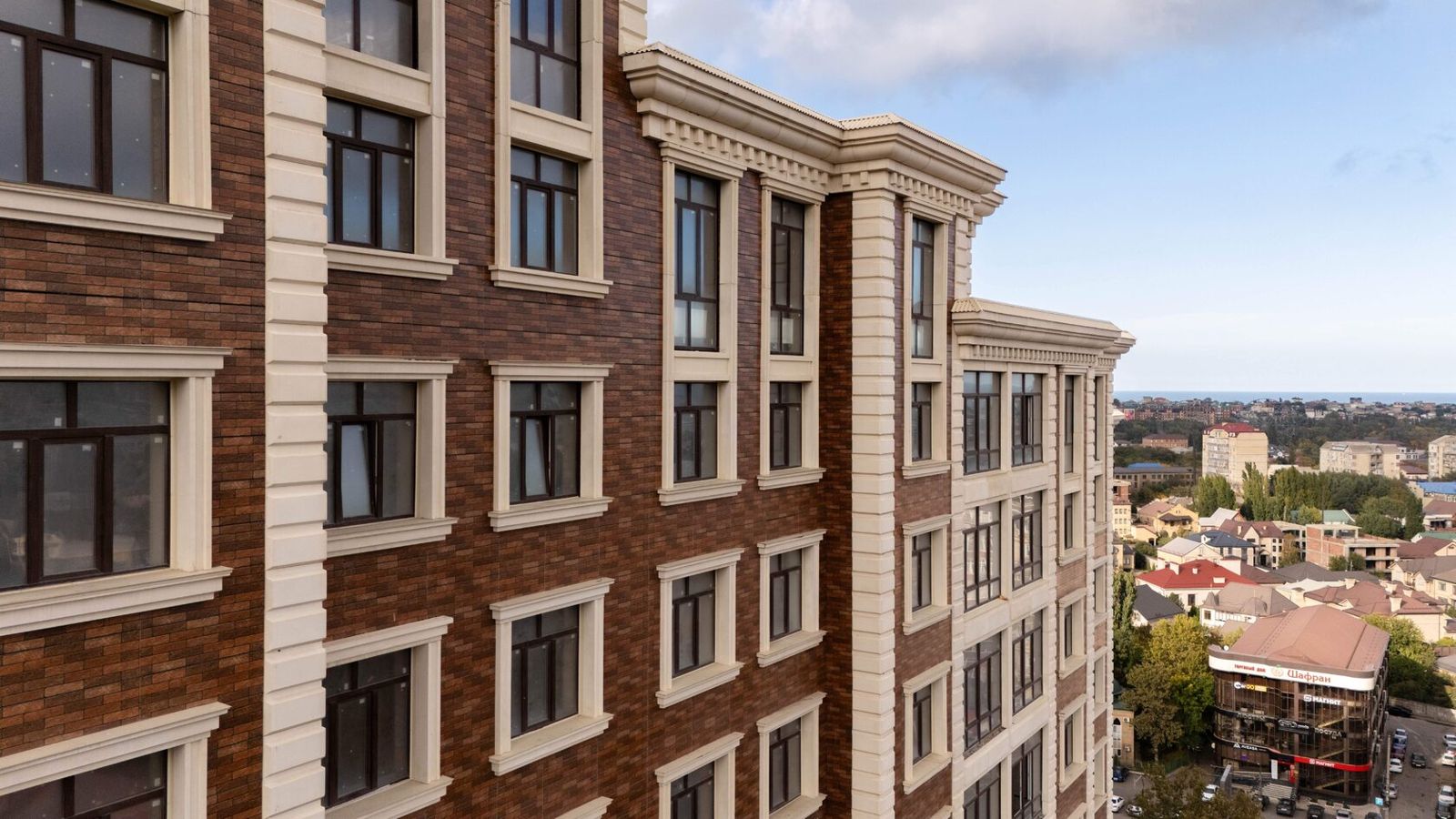
At the Al-Qasr hotel complex in Dagestan, the company carried out the design and installation of 24,000 m² of GFRC cladding, a volume comparable to large international GRC hotel projects. At RUBLEVO BUSINESS PARK in Moscow: 15,000 m² of GFRC combined with 5,000 m² of FRONTEK.
More projects are in the TECHNOFORMA projects section. For surface options, see GFRC textures: smooth, stone-look, etched.
FAQ
What is GFRC?
Glass Fiber Reinforced Concrete is the American name for concrete reinforced with alkali-resistant glass fibre. It is essentially the same material as GRC and the Russian SFB.
Are GRC and SFB the same thing?
Yes. GRC (Glassfibre Reinforced Concrete) is the international designation of glass fibre reinforced concrete; in Russia the abbreviation SFB is used.
What is GRG and can it be used on a facade?
GRG is glass fibre reinforced gypsum. It is an interior material and is not suitable for facades.
Can GRC panels for a foreign design be manufactured in Russia?
Yes, glass fibre reinforced concrete is produced in Russia. The requirements of the foreign design are translated into a technical brief with specific values and confirmed by testing.