Pros and Cons of GFRC for Facades
The main advantages of glass fibre reinforced concrete (GFRC) for facades are freedom of form, low weight with a thin wall, non-combustibility and weather resistance. The main disadvantages are the strong dependence of quality on the manufacturer, the cost of custom moulds in small runs and the demanding design of fixing details.
In other words, the material itself rarely fails; the mix design, the production process and the installation do. That is why the decision "GFRC or not" almost always comes down to two questions: does the architecture justify the cost of moulds, and can the manufacturer be trusted.
This guide is useful for architects and developers choosing cladding for a residential complex or a public building, and for private clients with a classical facade design. For a general overview of the material, see GFRC: material and technology.
Advantages
The advantages of GFRC show above all where the facade is rich in architectural detail:
• Freedom of form. Panels of any curvature, complex cornice profiles, columns, capitals, reliefs and ornaments. The shape is defined by the model, not by the limits of formwork and rebar.
• Low weight. Thanks to fibre reinforcement, the wall of an element is typically 10–20 mm. Hollow columns and cornices weigh several times less than solid equivalents, which reduces the load on the substructure, anchors and wall.
• Non-combustibility. According to TECHNOFORMA Group, its GFRC is rated non-combustible (NG class under the Russian classification). This matters for high-rise housing and public buildings.
• Frost and weather resistance. The mineral material is not affected by UV, moisture or temperature swings; according to the company, frost resistance is improved with admixtures.
• No corrosion. GFRC contains no steel reinforcement that could rust if the cover is damaged.
• Wide range of textures and colours. Smooth surface, stone imitation, acid etching, integral pigment.
• One material for the whole facade. Panels, decorative elements and small architectural forms share one style and colour.
• Serial production. One mould yields dozens or hundreds of identical pieces, which pays off on residential complexes with repeating sections.
In practice the advantages depend on the type of element. As a guide:
| Element | What GFRC offers | Usually compared with |
|---|---|---|
| Facade panels, including curved ones | large format with low weight, shapes beyond the limits of a flat slab | porcelain stoneware, fibre cement, metal cassettes |
| Cornices, string courses, mouldings | complex profile with a large projection, hollow section | stone, polymer decor, run plaster mouldings |
| Columns, pilasters, capitals | hollow shells around a load-bearing column, accurate classical order detailing | stone, gypsum (indoors) |
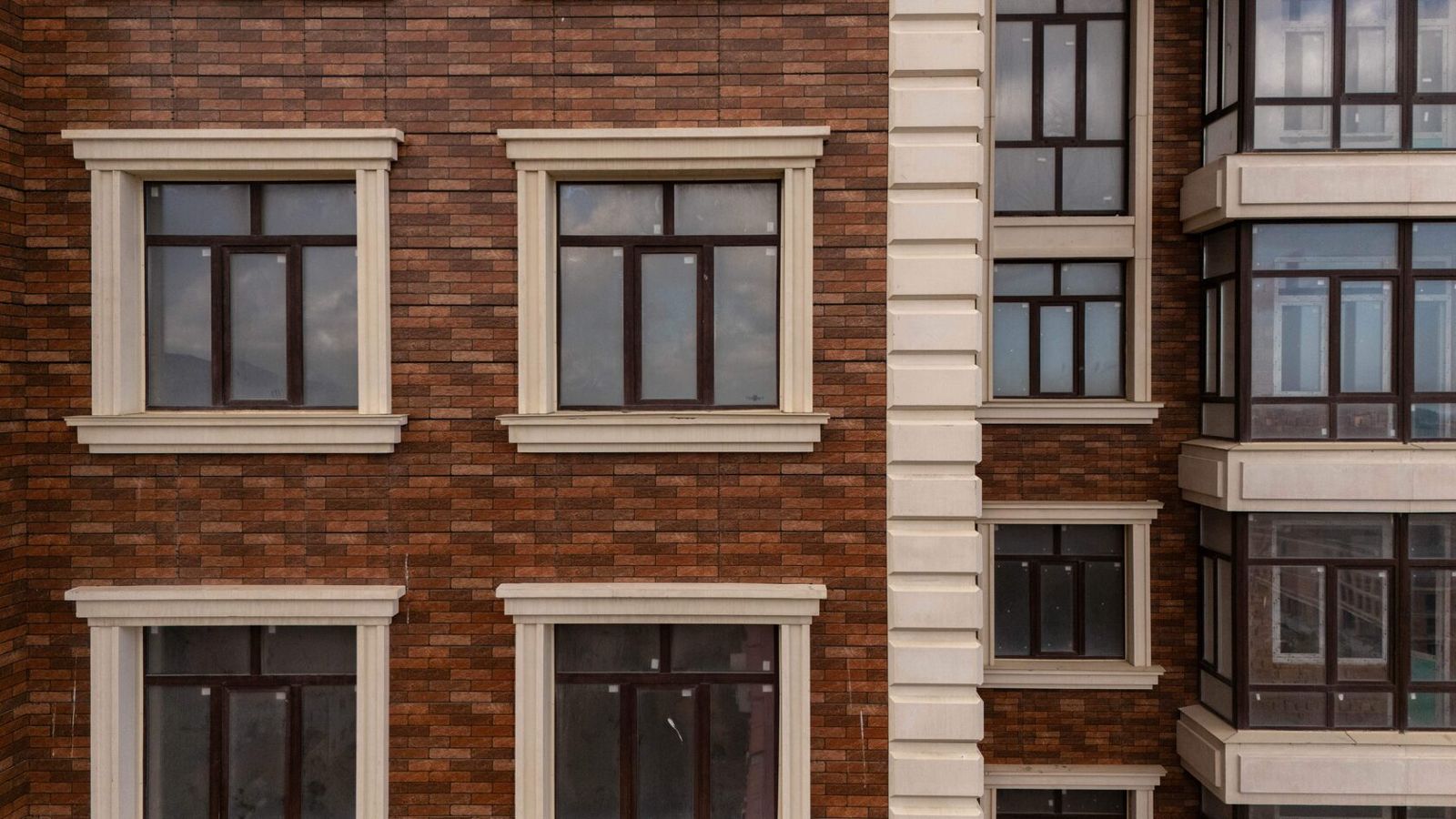
| Window surrounds, pediments over windows, keystones | serial repetition of one element | polyurethane, plaster |
| Balustrades, planters, small forms | outdoor durability, one colour with the facade | concrete, stone |
The textures most often ordered for facades are smooth (for painting or with integral pigment), stone-look (sandstone, limestone, travertine), etched with exposed aggregate, and relief to a custom model. The choice of texture affects not only appearance but also soiling: smooth light surfaces at pedestrian level need a protective impregnation and regular washing, while textured ones hide dust better.
Disadvantages and risks
The disadvantages of GFRC are more often linked not to the material but to how it is produced and used:
• Dependence on process. Ordinary glass fibre instead of alkali-resistant fibre, the wrong fibre content, excess water or drying out in the first day reduce strength. Defects may appear months or years later.
• Flexural strength decreases over time. This property is accounted for in design by using long-term values with a safety margin.
• Mould cost. A unique element needs a model and a mould; with a run of just a few pieces, this noticeably increases the unit price.
• Demanding fixing details. Thin panels are sensitive to errors in the design of fixings, movement joints and water drainage. A wrong detail can lead to cracks.
• Efflorescence and soiling. Like any cement-based material, GFRC without protective treatment can show efflorescence and absorb dirt.
• Repair. Chips and cracks can be repaired, but matching colour and texture perfectly is harder than replacing a standard tile.
• Not a structural material. GFRC is cladding and decoration, not structure.
Some myths that come up in discussions of the material:
• "GFRC is just thin concrete." No: the flexural strength of the thin wall comes from the fibre; without it an element of that thickness would not work. Properties depend on the content and type of fibre, not only on the cement.
• "All GFRC is the same." Products from different manufacturers of the same thickness can differ noticeably in strength, which is exactly why test reports per batch are needed.
• "The glass fibre will dissolve over time." Ordinary glass does degrade in a cement matrix; that is why alkali-resistant fibre is used and the residual loss of strength is built into the design.
• "Since the material is light, the fixings can be simplified." Wind load on a panel does not depend on its weight; fixings are designed for wind, self-weight and thermal movement.
A real disadvantage that is rarely mentioned is lead time: a custom mould and curing take time, so GFRC is poorly suited to a situation where "the cladding is needed in two weeks" unless the elements are standard.
Where GFRC is not the best choice
GFRC is not a universal solution. It loses to other materials in several situations:
• Large flat surfaces without decoration. If the facade consists of plain planes, porcelain stoneware or fibre cement boards are usually simpler and cheaper: they are mass-produced without custom moulds.
• One-off unique elements in small numbers. One or two non-standard pieces are cheaper to make from another material or to cut from stone.
• When genuine natural material is required. If the architect or client wants actual granite, travertine or marble with a natural structure, GFRC remains an imitation.
• Abrasion loads. Steps, floors and paving with heavy traffic are jobs for stone or special concretes.
• Interior decoration in dry rooms. For ceiling mouldings, gypsum or polyurethane is lighter and cheaper; GFRC is justified where strength and moisture resistance matter.
The optimum is often a combination: porcelain stoneware or stone for the planes, GFRC for the architectural details.
How to reduce the risks
Most risks are removed at the stage of choosing the contractor and designing the facade:
1. Check the production. An in-house mould shop, quality control at every stage, test reports on samples for flexural strength and frost resistance.
2. Request documents for the fibre confirming its alkali resistance.
3. Commission a ventilated rainscreen facade design. Panel layout, fixing details, movement joints, drainage from horizontal elements, structural calculation of the substructure.
4. Approve a reference sample of colour and texture before serial production starts.
5. Specify water-repellent treatment of exposed faces: it reduces water absorption and soiling.
6. Entrust installation to one company. When design, production and installation are done by one contractor, responsibility for the result is not diluted.
TECHNOFORMA Group works on a full cycle: design department, in-house mould shops, production, logistics and its own installation teams of more than 100 specialists.
The main risks show up during installation, so it helps to know the typical mistakes at this stage:
| Mistake | Consequence | How to prevent it |
|---|---|---|
| Rigid fixing without sliding supports | cracks from thermal movement | a scheme with one fixed and several sliding supports per the design |
| No joints, or joints packed with mortar | chipped edges, cracks at joints | open joints or joints filled with elastic sealant, of the design width |
| Horizontal surfaces without a fall or drip | standing water, streaks, efflorescence | sloped top faces, drip groove, metal flashing on cornices |
| Installing elements that have not reached strength | chips and cracks during transport and installation | observing curing times and the element's product data sheet |
| Cutting elements to fit with an angle grinder on site | weakened edges, exposed fibre | accurate layout and factory-made infill pieces |
| Lifting from random points | cracks during lifting | lifting loops and the manufacturer's slinging scheme |
Safety measures during installation are standard for work at height: scaffolding or suspended cradles, a fenced zone below the facade, lifting elements according to the slinging scheme, temporary fixing of an element until the fasteners are finally tightened. Large panels are never left hanging on a single fixing point.
Summary comparison
This summary table helps assess whether GFRC suits a specific project:
| Criterion | Pro | Con / limitation |
|---|---|---|
| Form | Almost any, including curved | A unique shape is expensive in a small run |
| Weight | Thin wall, hollow elements | Fixing details need accurate design |
| Fire safety | Non-combustible, NG class (according to the company) | Facade fire safety depends on the whole system, including insulation |
| Durability | Resistant to frost, moisture and UV | Flexural strength decreases over time; accounted for in design |
| Appearance | Any texture and colour | An imitation, not natural stone |
| Quality | Predictable with factory quality control | Strongly depends on the manufacturer's integrity |
| Cost | Cost-effective for repeated elements | Cheaper solutions exist for flat facades |
A short checklist for making the decision in practice:
1. Estimate what share of the facade is architectural detail. If it is small, GFRC makes sense only for those details.
2. Assess repetition: how many identical elements one mould will produce. Dozens or hundreds of repeats are a strong argument for GFRC.
3. Check the load on the wall and substructure: if heavy stone requires strengthening, lightweight GFRC may turn out cheaper for the system as a whole.
4. Compare not the price per square metre of cladding but the cost of the whole facade: elements, substructure, installation, schedule.
5. Ask the manufacturer for test reports, a texture sample and examples of completed projects.
It makes no sense to estimate GFRC cladding "per metre" without a design: the price depends on the complexity of shapes, the number of element types, the texture and the scope of installation. At TECHNOFORMA Group, the cost of construction and installation work is determined after a site inspection.
Examples from TECHNOFORMA projects
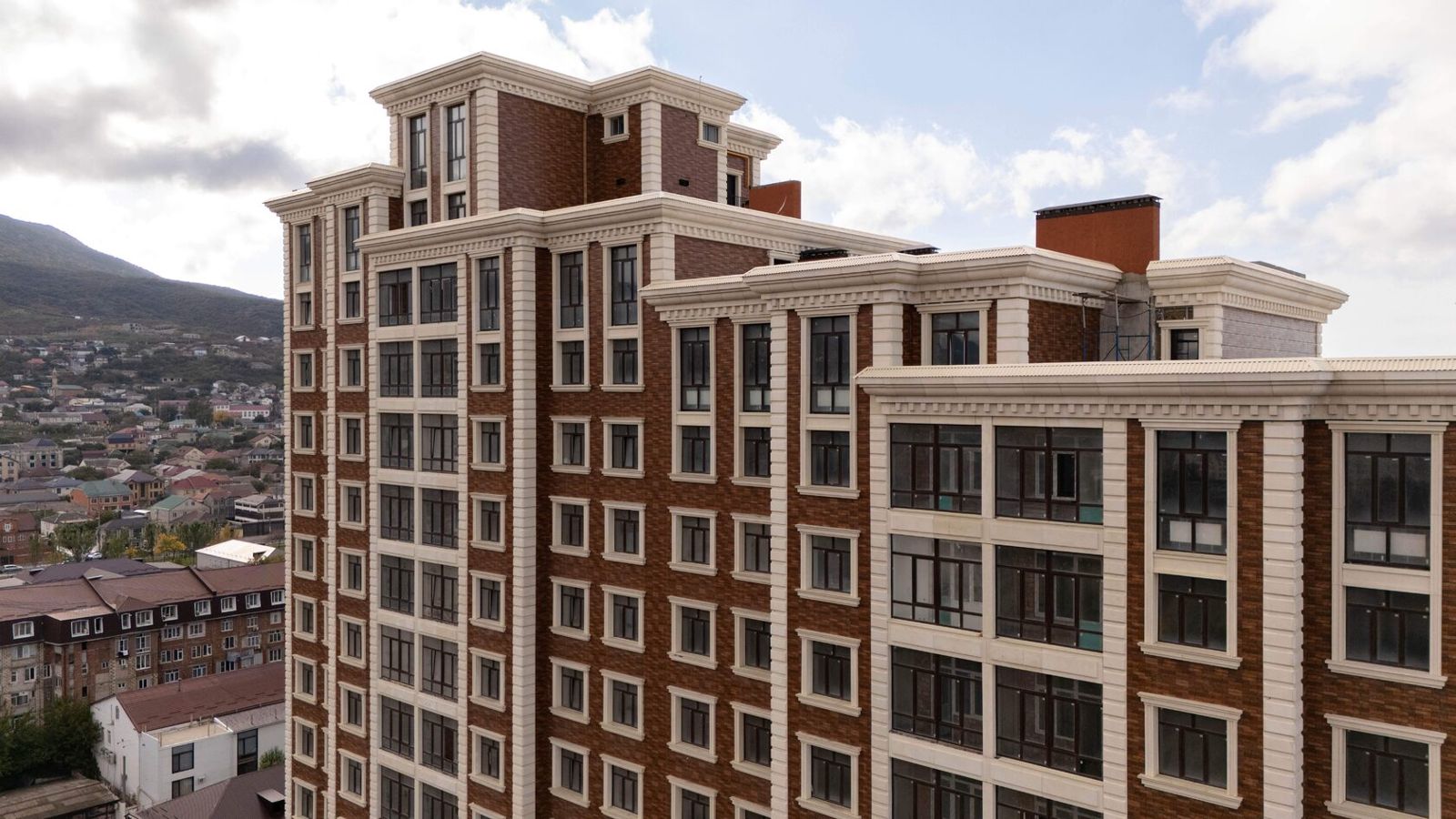
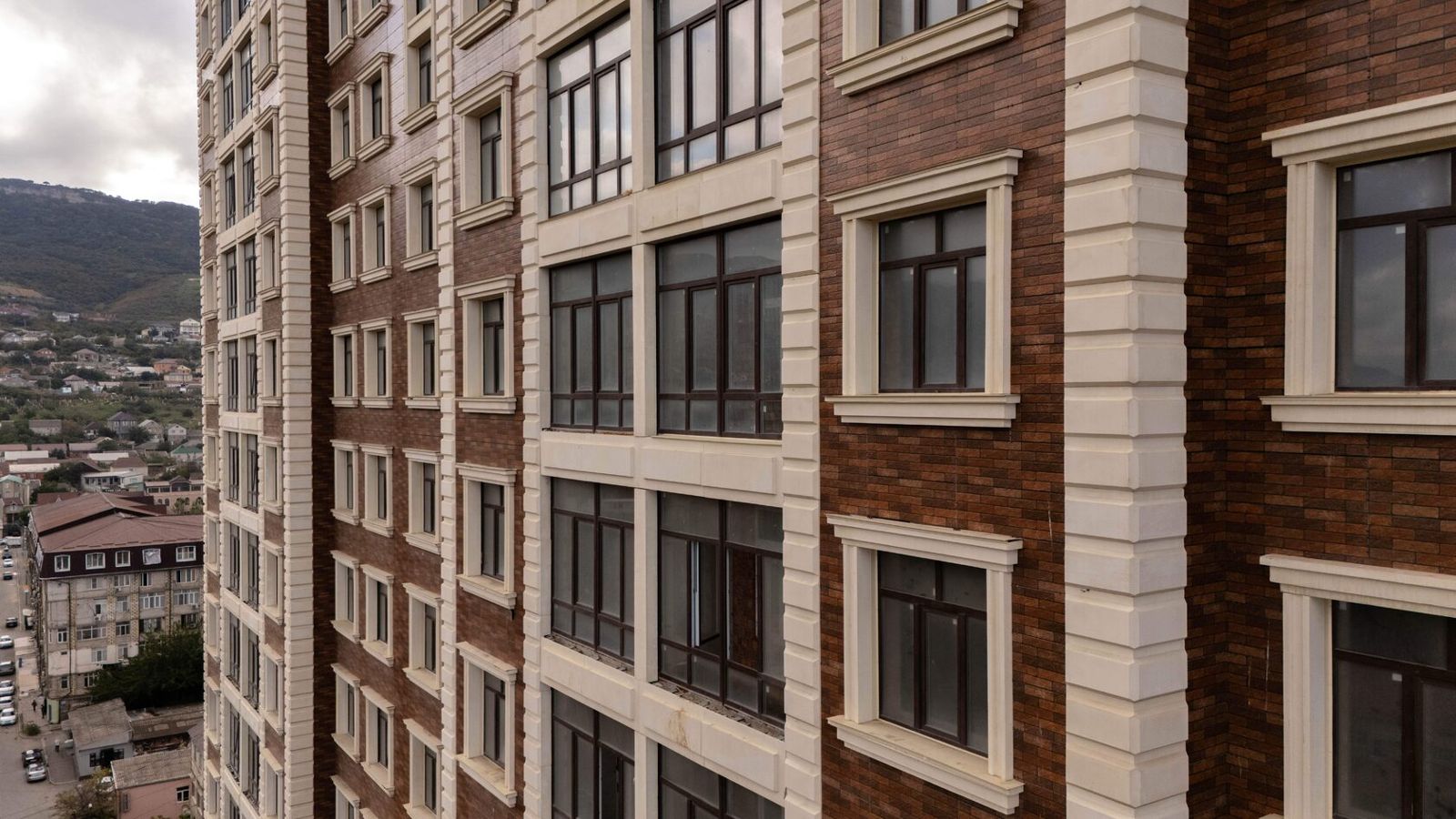
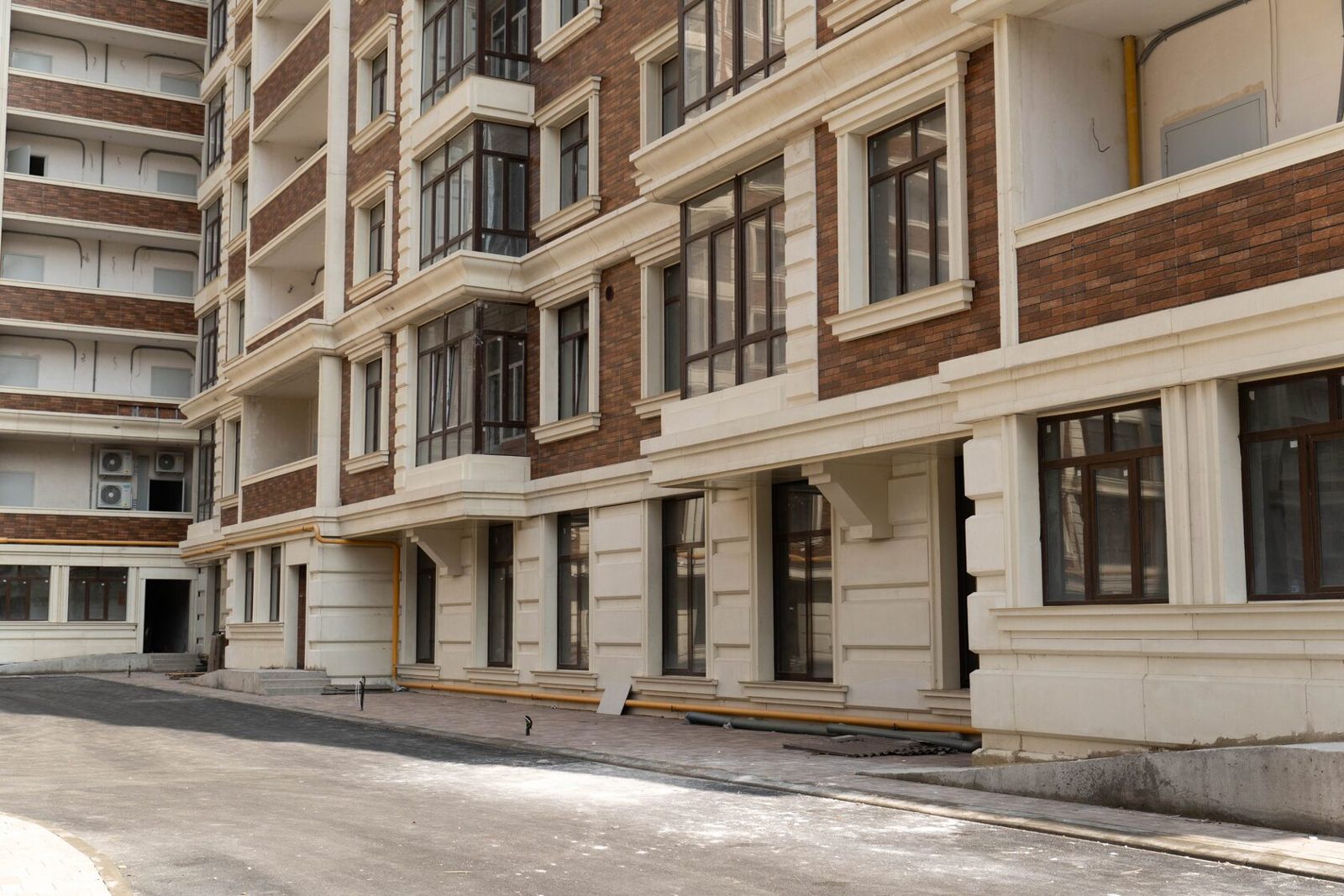
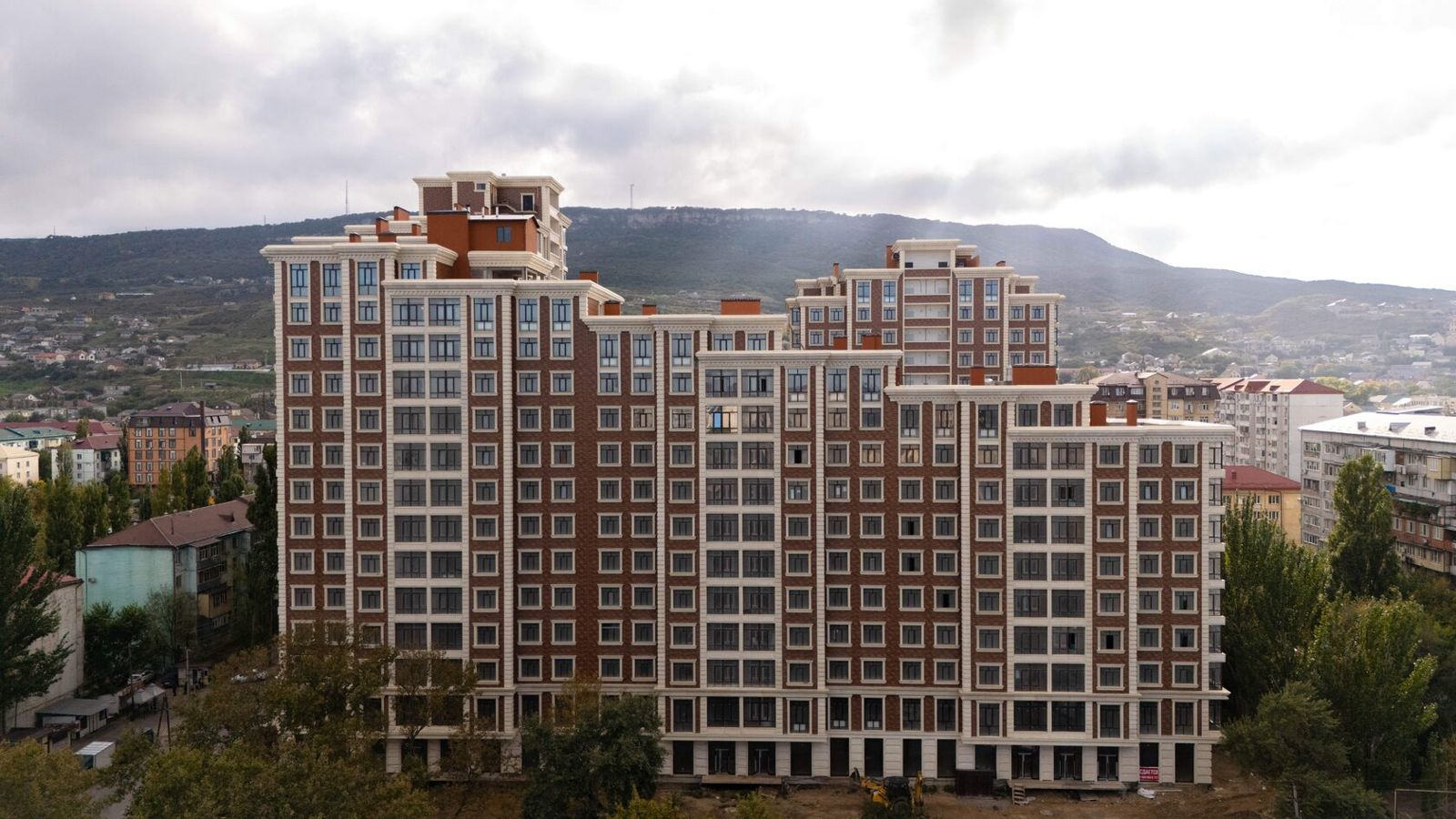
At the Dominanta residential complex in Makhachkala, the company combined 14,000 m² of GFRC with 13,000 m² of porcelain stoneware: architectural elements in GFRC, planes in porcelain stoneware. It is a typical example of using the advantages of GFRC where they make a difference, without overpaying for flat areas.
At the Zolotye Klyuchi residential complex in Makhachkala, 12,000 m² of GFRC were installed back in 2016–2017, which allows the material to be assessed in service. Other projects are in the TECHNOFORMA projects section. For a comparison with similar materials, see GFRC vs fibre-reinforced concrete: what is the difference.
FAQ
What are the pros and cons of a ventilated rainscreen facade?
Pros: moisture removal through the ventilated cavity, external insulation, a wide choice of cladding, easy repair. Cons: higher cost than a render-on-insulation facade and the need for an accurate design of the substructure and details.
What are the pros and cons of shell limestone (coquina)?
Shell limestone is light, porous, easy to work and has a recognisable texture. The downsides are modest strength, high water absorption and properties that depend on the quarry, so on facades it is usually protected with water repellents.
What are the pros and cons of Dagestan stone?
Dagestan limestones and dolomites are valued for their warm tones and good workability. Properties depend on the specific quarry, so density, strength and frost resistance must be checked against the batch documents. TECHNOFORMA Group has extensive experience with Dagestan stones.
What is the main disadvantage of GFRC?
The strong dependence of quality on the manufacturer: the mix design, the alkali resistance of the fibre and the curing regime determine durability, and defects do not show up immediately.
Is GFRC cost-effective for a private house?
Yes, if the facade is rich in decoration such as cornices, columns and surrounds: GFRC gives a stone look without a heavy load on the walls. For a simple flat facade, other cladding options are more sensible.
What are the most common mistakes when installing GFRC?
Rigid fixing without sliding supports, joints packed with mortar, no fall or drip on horizontal elements, cutting elements to fit on site and installing elements that have not reached strength. All of these lead to cracks and chips; they are prevented by a proper ventilated facade design and by following the manufacturer's fixing scheme.