GFRC vs Fibre-Reinforced Concrete: What Is the Difference
The difference between fibre-reinforced concrete and glass fibre reinforced concrete (GFRC) is that of general and specific. Fibre-reinforced concrete is any concrete reinforced with dispersed fibres: steel, basalt, polypropylene or glass. GFRC is a type of fibre-reinforced concrete that uses alkali-resistant glass fibre and a fine-grained matrix without crushed stone.
The type of fibre determines the purpose. Steel fibre increases the crack resistance and impact strength of massive structures — floors, slabs, tunnel linings. Polypropylene mainly reduces shrinkage cracking. Alkali-resistant glass fibre makes it possible to produce thin, light elements with high flexural strength — facade panels and decoration.
This article is for those choosing a facade material who want to understand the difference between offers on the market. A general overview is in GFRC: material and technology.
Types of fibre
Fibres are short filaments evenly distributed in concrete that act as three-dimensional reinforcement. Several main types are used on the market:
• Steel fibre — lengths of wire with hooked ends, crimped or milled. Usually 30–60 mm long. Used in structural concrete.
• Polypropylene microfibre — fine synthetic fibres a few millimetres long. Reduces plastic shrinkage and cracking of screeds, renders and thin layers.
• Polymer macrofibre — thicker synthetic fibres that partly replace steel fibre in floors and shotcrete.
• Basalt fibre — mineral fibre made from molten basalt, used in renders, screeds and some structural concretes.
• Glass fibre — for concrete, only alkali-resistant (zirconia AR glass); ordinary glass breaks down in the alkaline cement environment.
Concretes with these fibres are called steel fibre reinforced concrete, basalt fibre reinforced concrete, polypropylene fibre reinforced concrete and glass fibre reinforced concrete respectively.
Besides the fibre material, its length, diameter, shape and dosage affect the result. Fibres that are too short hold cracks poorly; fibres that are too long ball up during mixing. So manufacturers select fibre for the specific technology: for spray-up, glass fibre is chopped from roving directly in the gun; for vibration casting, ready-chopped fibre is used.
Glass fibre vs steel and polypropylene fibre
Each type of fibre changes the properties of concrete in its own way:
• Steel fibre has a high modulus of elasticity and strength and resists crack opening well in thick sections. Its drawbacks for facades are the heavy weight of the material, the risk of fibre corrosion near the surface (rust spots) and the impossibility of thin walls: steel fibre needs coarse aggregate and a thickness of several centimetres.
• Polypropylene fibre is light and does not corrode but has a low modulus of elasticity. It hardly increases the flexural strength of hardened concrete and works mainly in the first hours of curing against shrinkage cracks. In addition, polypropylene is a combustible polymer.
• Alkali-resistant glass fibre combines high tensile strength with a mineral nature. In a fine-grained matrix at a content of a few percent, it gives high flexural strength at a thickness of 10–15 mm. The material does not corrode and, according to TECHNOFORMA Group, its GFRC is classed as non-combustible (NG).
For thin-walled facade elements it is glass fibre that provides the right combination of strength, lightness and durability. Polypropylene microfibre is sometimes added to GFRC as well, but it cannot replace glass fibre.
What is used where
The applications of different fibre-reinforced concretes barely overlap:
• Steel fibre reinforced concrete — industrial floors, road and airfield pavements, tunnel linings, shotcrete, foundation slabs, structural repairs.
• Concrete with polypropylene fibre — screeds, renders, paving slabs, small elements where reducing shrinkage cracking matters.
• Basalt fibre reinforced concrete — screeds, render and repair mortars, some structural applications.
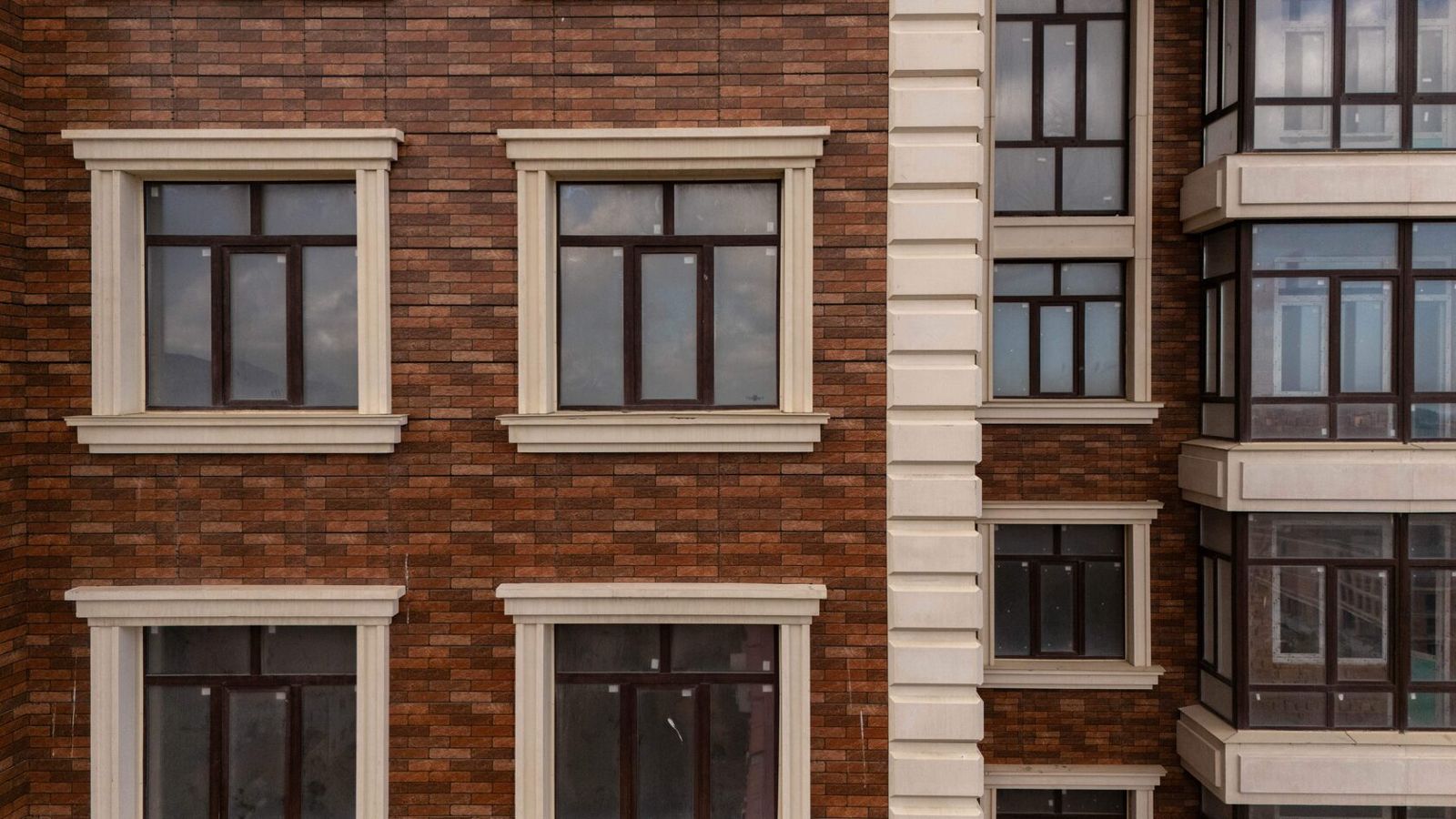
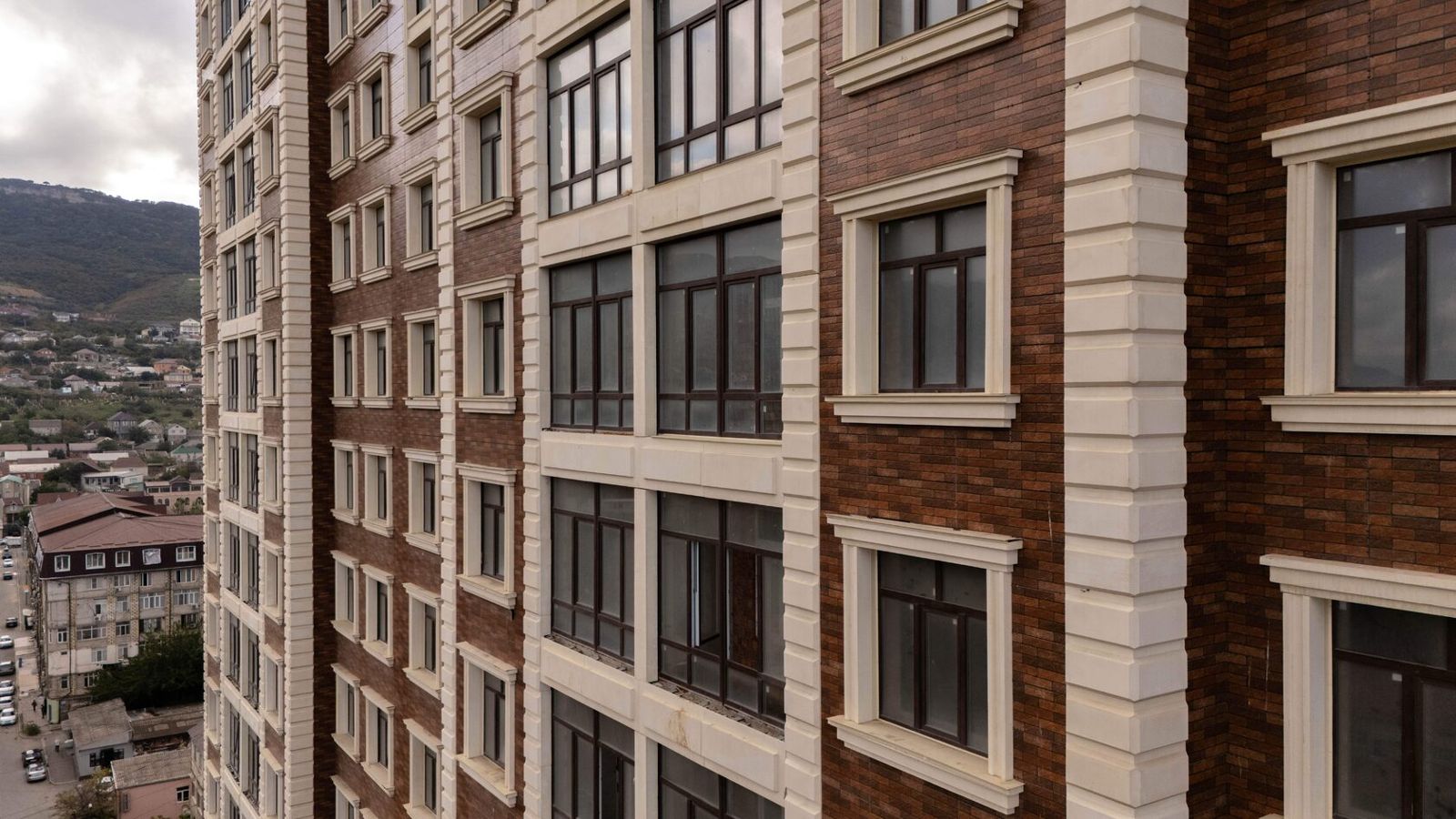
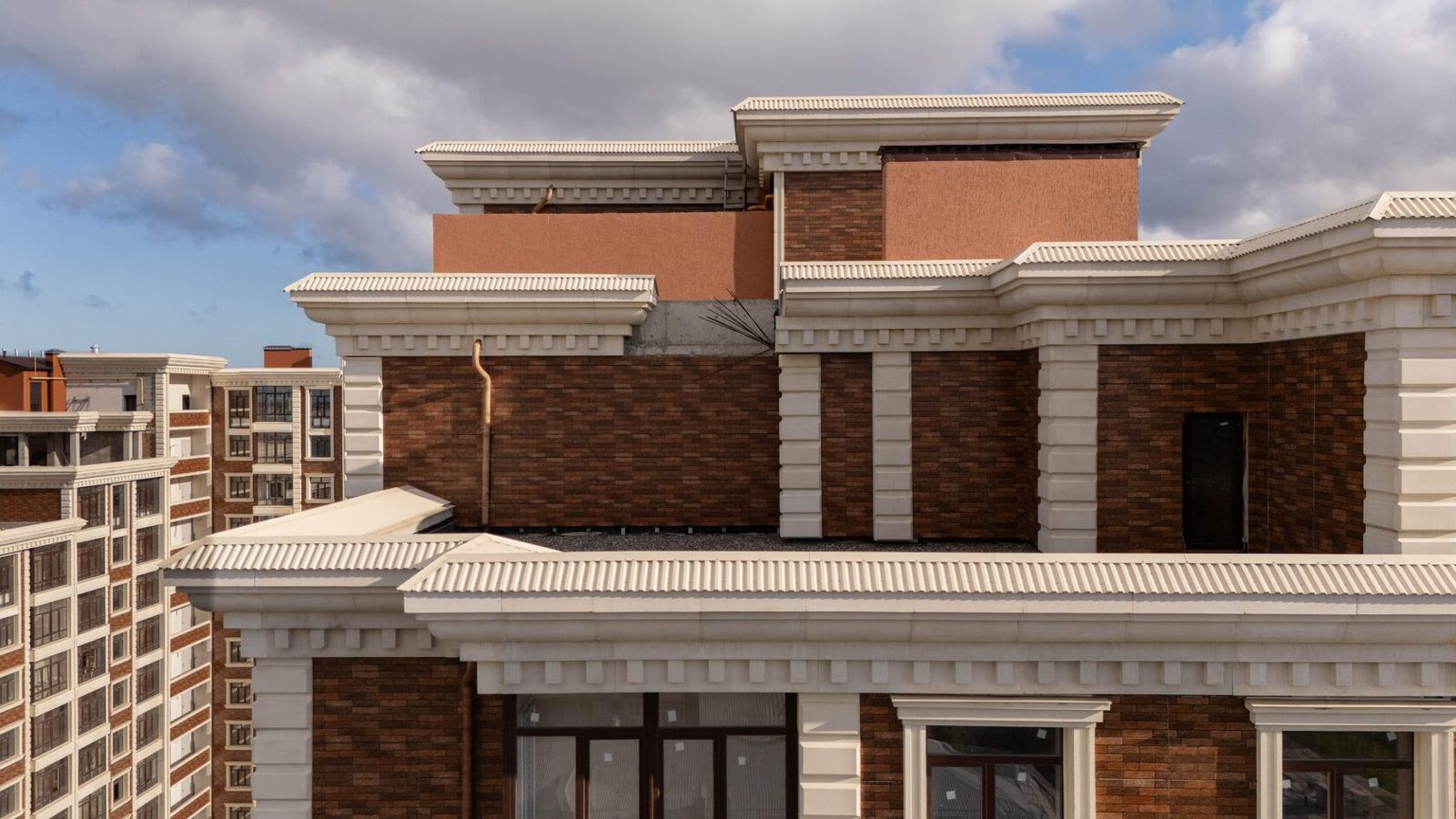
• GFRC — facade panels and decoration, columns, cornices, window surrounds, plinth cladding, small architectural forms, interior elements, permanent formwork, noise barriers.
When people talk about fibre-reinforced concrete for facades, they in fact mean GFRC: the other fibre types cannot produce a thin, light and detailed element.
Comparison table
An indicative comparison of fibre-reinforced concrete types. Specific values depend on the mix design and are given in the manufacturer's documents.
| Parameter | Steel fibre concrete | With polypropylene fibre | GFRC |
|---|---|---|---|
| Fibre | Steel, 30–60 mm | Polymer, a few mm | Alkali-resistant glass, tens of mm |
| Aggregate | Crushed stone, sand | Crushed stone or sand | Fine sand only |
| Typical element thickness | From several centimetres | Depends on purpose | 10–20 mm |
| Flexural strength | Increased in massive sections | Almost as for ordinary concrete | High with a thin wall |
| Fibre corrosion | Possible near the surface | No | No |
| Fibre combustibility | Non-combustible | Combustible | Non-combustible |
| Surface detail | Low | Medium | High |
| Main application | Floors, pavements, tunnels | Screeds, renders | Facades, decoration, landscape elements |
Choosing for a facade
For rainscreen cladding and facade decoration, the choice is usually GFRC. The reasons:
1. Thin wall and low weight — less load on the substructure and wall.
2. Accurate reproduction of shape and texture thanks to the fine-grained mix.
3. No corrosion — no risk of rust stains on the face.
4. Non-combustible cladding material.
When choosing a supplier, check exactly which fibre is used. Under the name "fibre concrete for facades", mixes with polypropylene fibre or ordinary glass fibre are sometimes offered — they are cheaper but do not deliver the strength and durability of genuine GFRC. Ask for documents on the alkali-resistant fibre and flexural test reports.
If the project needs both facade decoration and massive elements — for example, entrance steps or car park floors — it makes sense to use different materials for different purposes rather than one compromise.
Examples from TECHNOFORMA projects
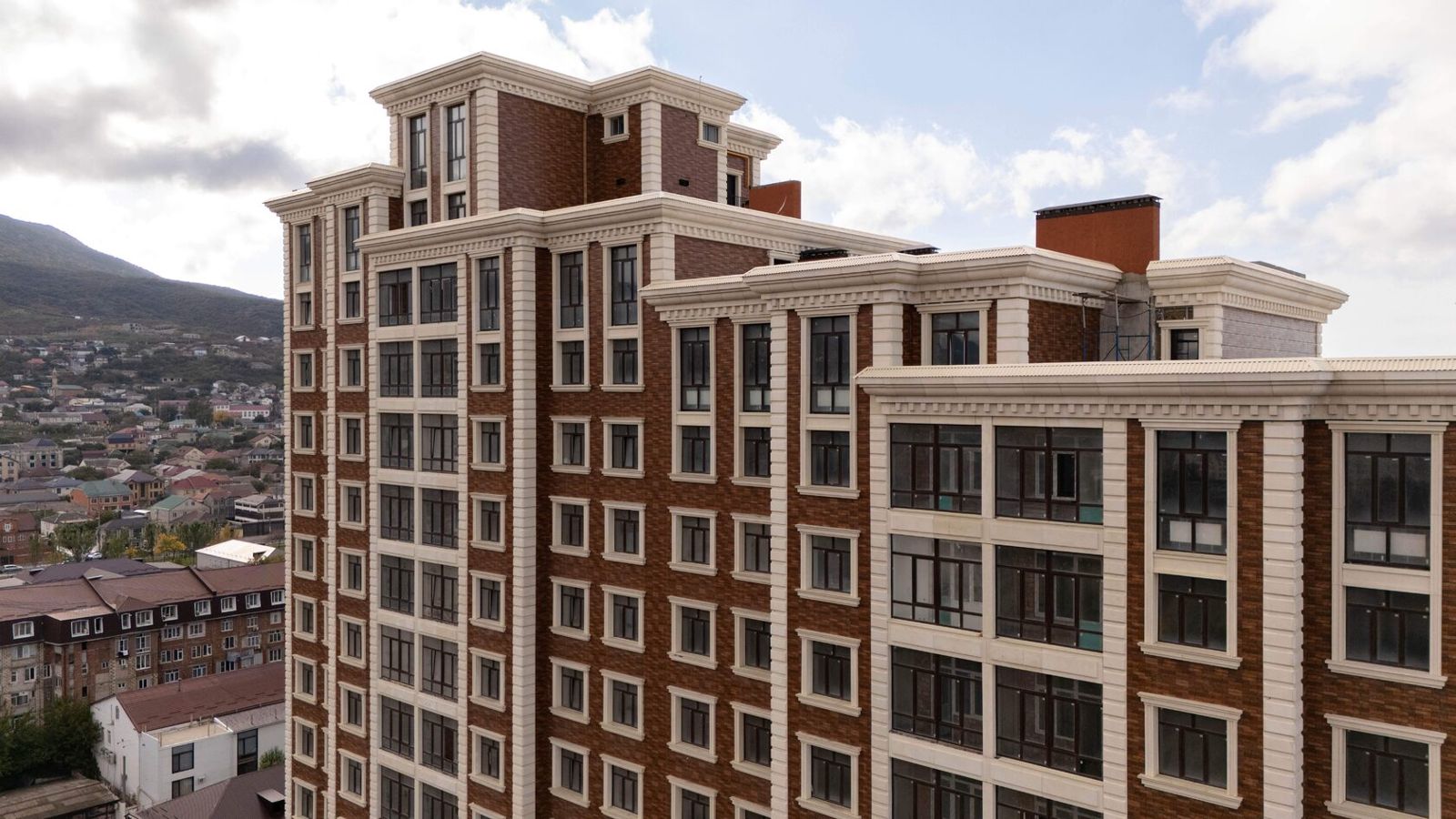
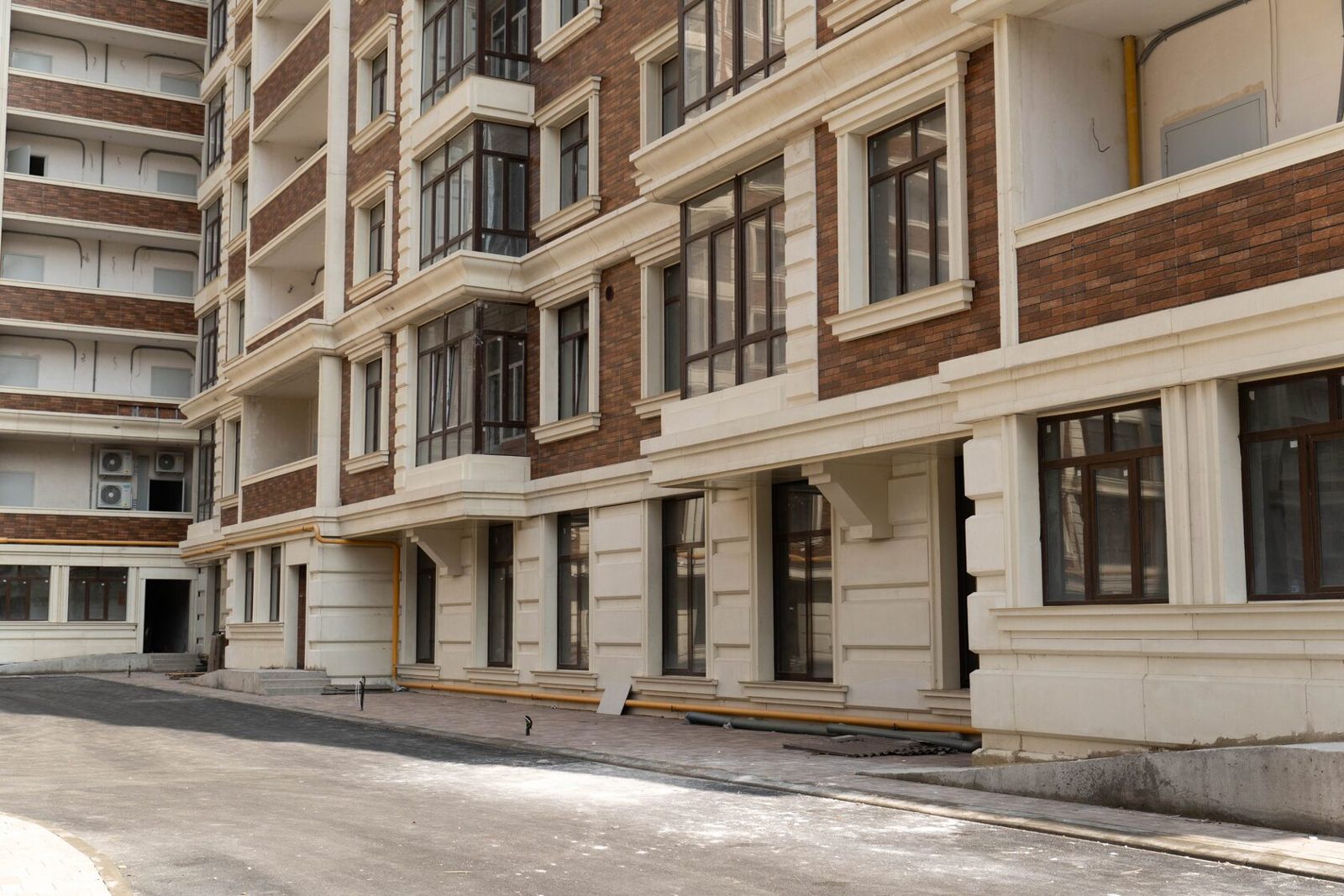
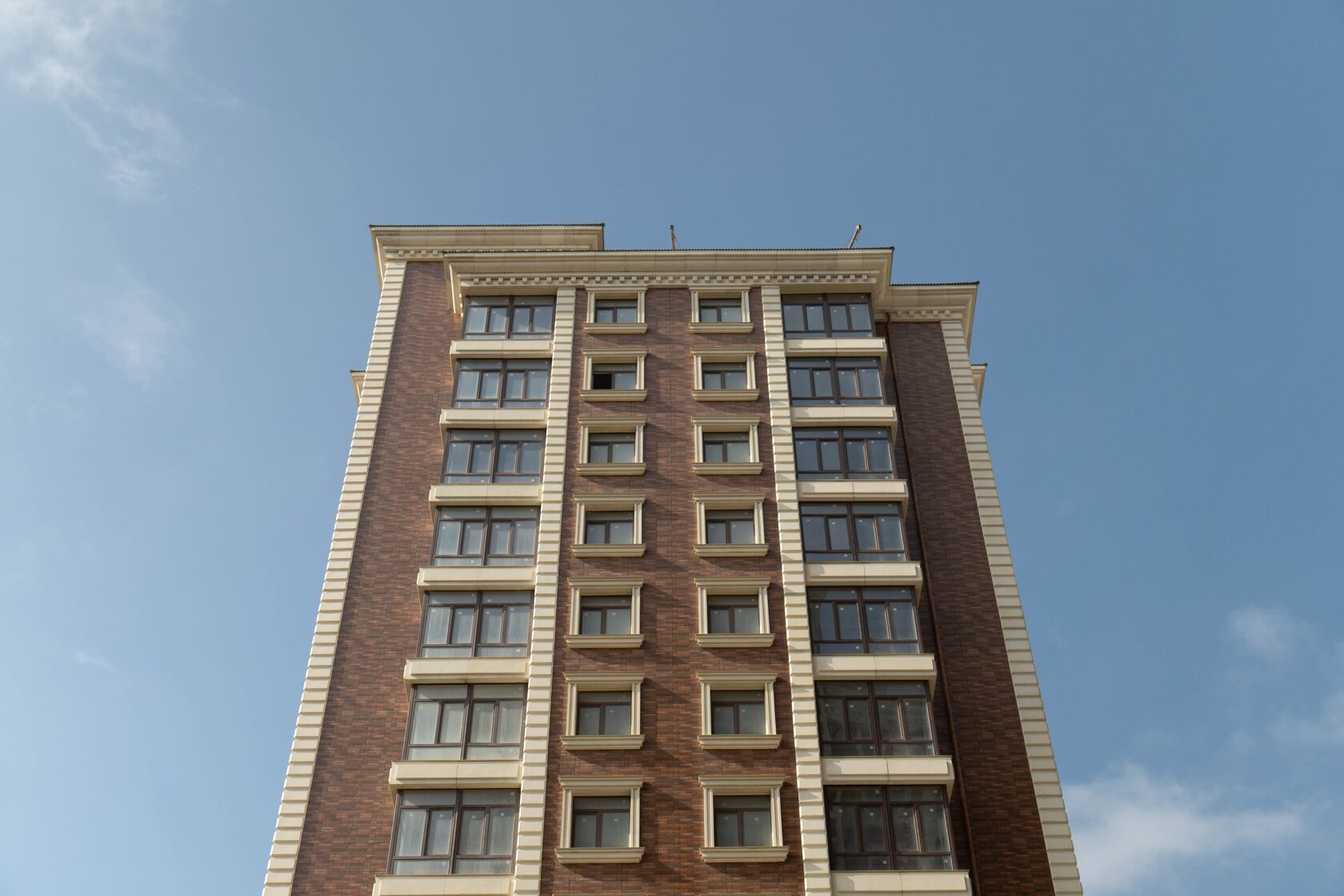
At the Anji City residential complex in Makhachkala the company carried out design and installation of 18,000 m² of GFRC facades on a 16-storey building. At the Belgravia residential complex (16 storeys) — 3,500 m² of GFRC. In both cases the task was to clad a multi-storey building with richly modelled architectural elements, where thin-walled, light and non-combustible elements were required.
More projects in TECHNOFORMA projects. A comparison with polymer materials is in GFRC or polymer concrete for facade decoration.
FAQ
What is fibre-reinforced concrete?
Concrete reinforced with dispersed fibres — steel, polymer, basalt or glass. The fibres increase crack resistance and, depending on the type, flexural strength and impact resistance.
What are the properties of fibre-reinforced concrete?
They depend on the fibre: steel increases the crack resistance of massive structures, polypropylene reduces shrinkage cracking, and alkali-resistant glass gives thin elements high flexural strength.
Which fibre-reinforced concrete is suitable for facades?
For rainscreen cladding and decoration — GFRC with alkali-resistant fibre: it allows thin, light elements with complex shapes and textures.
What is the difference between limestone and shell limestone?
Shell limestone is a type of limestone composed mainly of shells and shell fragments; it is more porous and lighter. Limestone in general can be dense and uniform.
How does travertine differ from marble?
Travertine is a sedimentary rock with characteristic pores, formed from mineral spring deposits. Marble is a metamorphic rock, dense and crystalline, and takes a better polish. TECHNOFORMA Group supplies both.