Frost Resistance of Facade Materials: What the F Grade Means
Frost resistance is the ability of a water-saturated material to withstand repeated freezing and thawing without breaking down or noticeably losing strength. For concrete it is designated by the grade F with a number: F150 means the specimens withstood 150 test cycles with acceptable loss of strength and mass.
The main selection criterion is the conditions the material works in: cladding on the plinth, parapets, cornices and sills gets wetter than the plane of the wall and needs higher frost resistance. The grade is confirmed by a test report, not an advertising claim.
The article is useful for architects, designers, technical supervision and developers choosing facade materials for regions where temperatures cross zero. Related topics: Facade maintenance, standards and repair.
What F means
Water expands by about 9% in volume when it freezes. If the pores of a material are filled with water, the ice presses on their walls, and with each freeze–thaw cycle microcracks accumulate in the structure. Over time the surface starts to scale, and chips and through cracks appear.
The frost resistance grade F is the number of cycles that standard specimens withstand in the laboratory under a set regime. For concrete, the designations F1 (tested in water) and F2 (tested in salt solution, more severe, for structures in contact with de-icing salts) are used. Typical concrete grades are F50, F75, F100, F150, F200, F300 and higher.
Important: the number of laboratory test cycles does not equal the number of years in service. The laboratory regime is harsher than nature — the specimens are fully saturated with water. The grade is a comparative indicator that allows a material to be chosen for its service conditions.
Testing
For concrete, test methods are set by the Russian standard GOST 10060 "Concretes. Methods for determination of frost resistance". The essence of the basic method:
1. cube specimens are saturated with water (or salt solution — for accelerated and special methods);
2. frozen in a freezer at a sub-zero temperature for a set time;
3. thawed in water or solution;
4. after a set number of cycles, strength and mass are measured and compared with control specimens.
The concrete is considered to have passed the test for the grade if the loss of strength and mass does not exceed the permitted values and there is no visible damage to the specimens. There are accelerated methods with freezing at a lower temperature and saturation with salt solution — they give a result faster.
For natural cladding stone, frost resistance is determined by natural stone test methods: after freezing cycles, the loss of strength and the condition of the specimens are assessed. Porcelain stoneware and ceramic tiles have their own methods, where the result is often expressed as "frost resistant" or as a number of cycles without damage.
Requirements for facades
Frost resistance requirements for cladding are set by the design, taking into account the climate of the construction area and the zone on the facade. The logic:
• Wall plane on a ventilated facade — moderate wetting, the cladding dries quickly.
• Plinth — splashes, snow, de-icing salts; higher requirements, for concrete with salt exposure taken into account.
• Horizontal and sloping surfaces — cornices, parapets, window sills, steps: water stands, saturation is at its maximum.
• Wet systems with adhesive-fixed cladding — water that gets behind the tile does not escape, so the requirements for the material and adhesive are higher.
Specific minimum grades for different structures are set by the standards for concrete structures and by the design; they should be confirmed with the designer. The manufacturer confirms compliance with a test report for the batch or mix design.
Frost resistance works together with design protection. Even a high-grade material deteriorates faster if water stands on it for years: that is why horizontal elements are designed with a fall and a drip, joints are sealed, and drainage is arranged so that water does not run in a constant stream over the same area. On a ventilated facade the cladding dries on both sides, which noticeably reduces its saturation compared with adhesive systems.
Comparing materials
The frost resistance of different facade materials depends on porosity, water absorption and structure; the values below are indicative, exact data are in the product data sheet or test report.
| Material | Frost resistance | What it depends on |
|---|---|---|
| Granite, basalt | High | Dense structure, low water absorption; reduced by fissuring |
| Marble | Medium to high | Quarry, grain size, cracks |
| Limestone, dolomite, travertine | Wide range | Density and porosity of the specific quarry |
| Shell limestone (coquina), soft sandstone | Low to medium | High porosity; needs protection and the right zone of use |
| Porcelain stoneware | High | Very low water absorption |
| GFRC | High, improved with admixtures | Mix design, water–cement ratio, admixtures, curing |
| Facing brick, clinker | Medium to high | Firing technology, water absorption |
For porous stones the rule is simple: the higher the water absorption, the more attention to frost resistance and protection from water.
How to verify
How to verify a material's frost resistance before purchase:
• Request a test report from an accredited laboratory: grade, method, date, and which products it covers. Advertising and catalogues are not proof.
• Check against the design — the grade must be no lower than required for the specific facade zone.
• For stone — request data for the specific quarry and block: the same "stone type" from different quarries behaves differently.
• Check water absorption — an indirect but informative indicator.
• If in doubt — take samples from the batch and test them in an independent laboratory.
On a facade already in service, insufficient frost resistance shows as surface scaling, thin flakes coming away and crumbling edges after winter — especially on the plinth and horizontal elements.
Examples from TECHNOFORMA projects
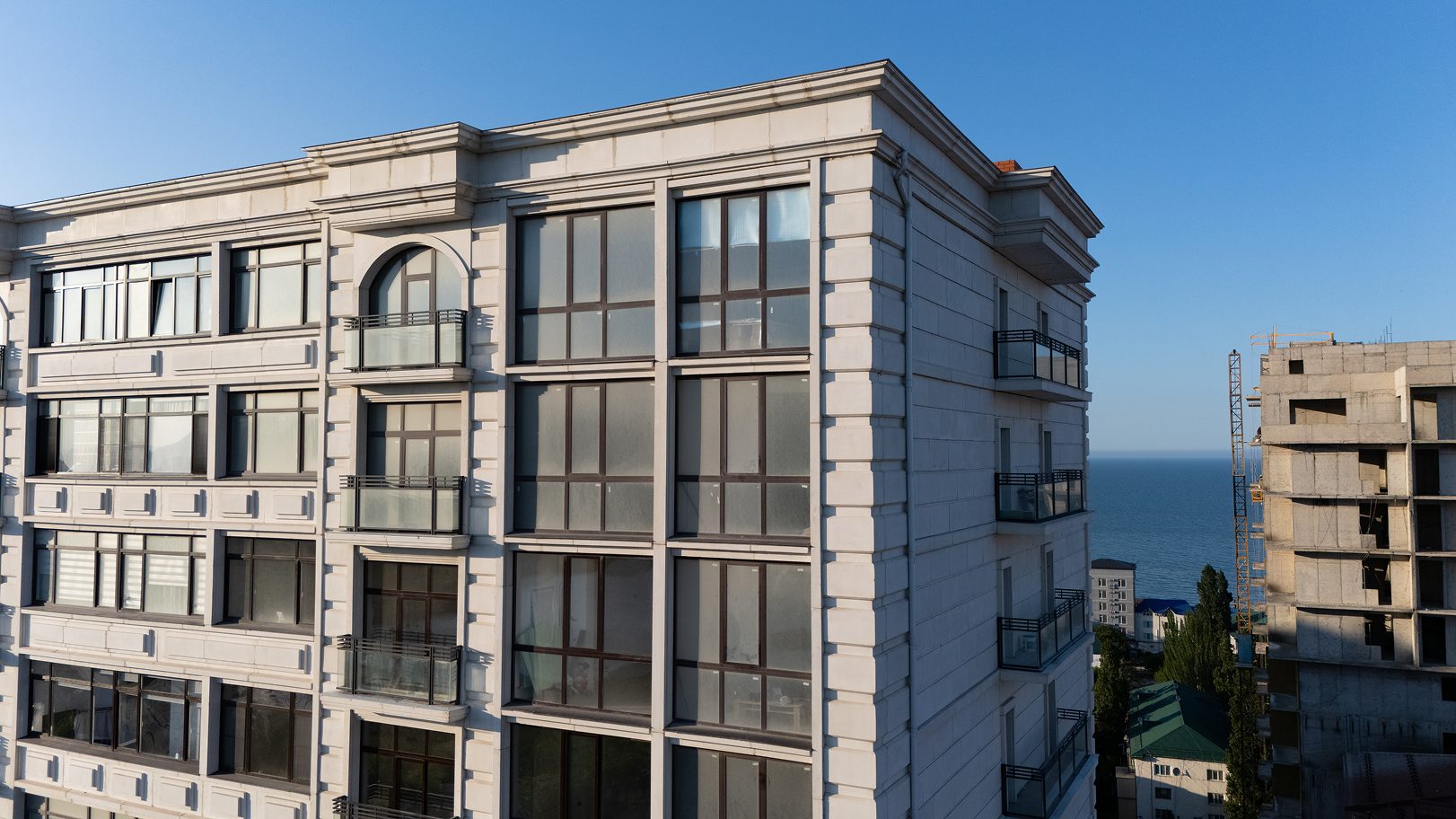
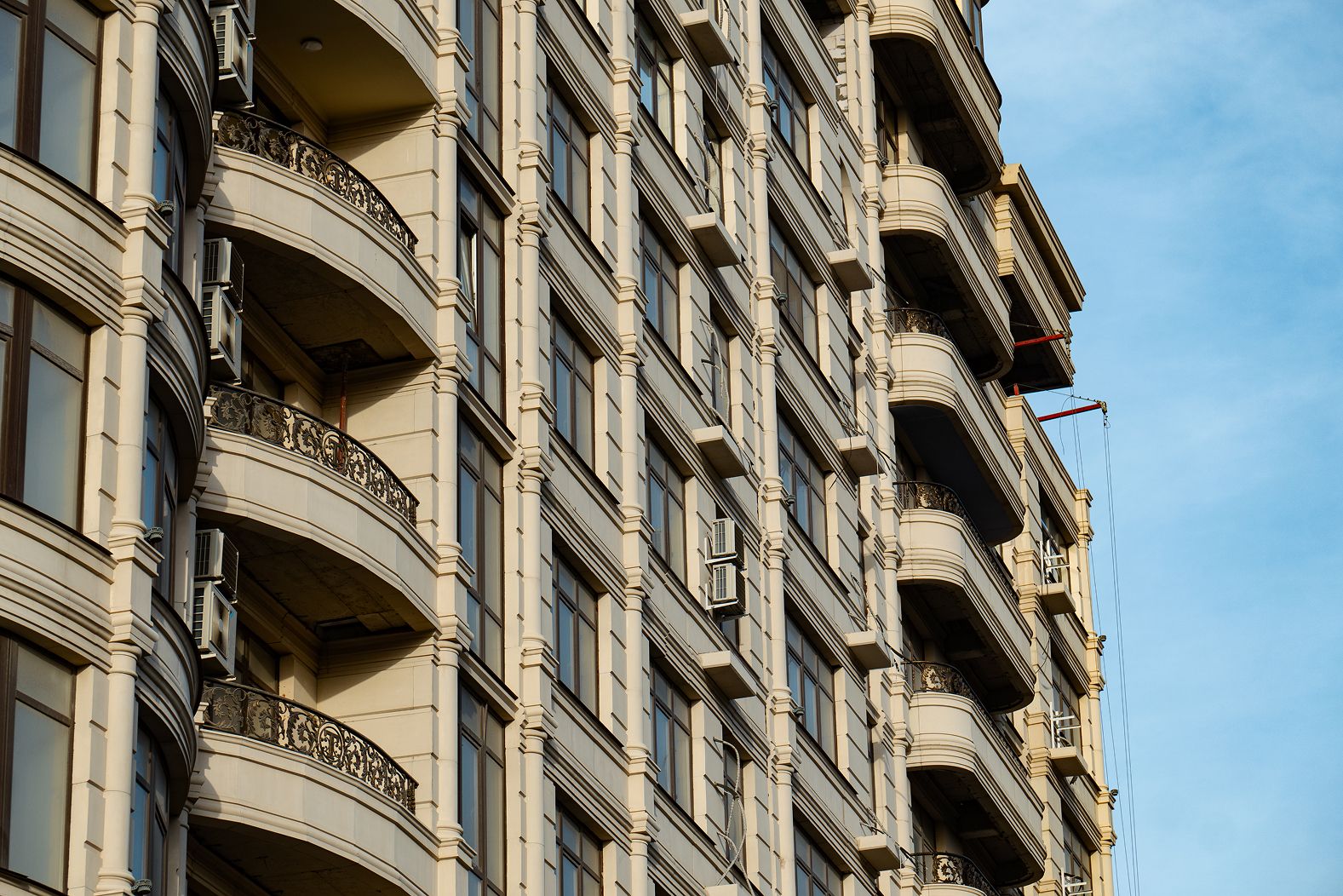
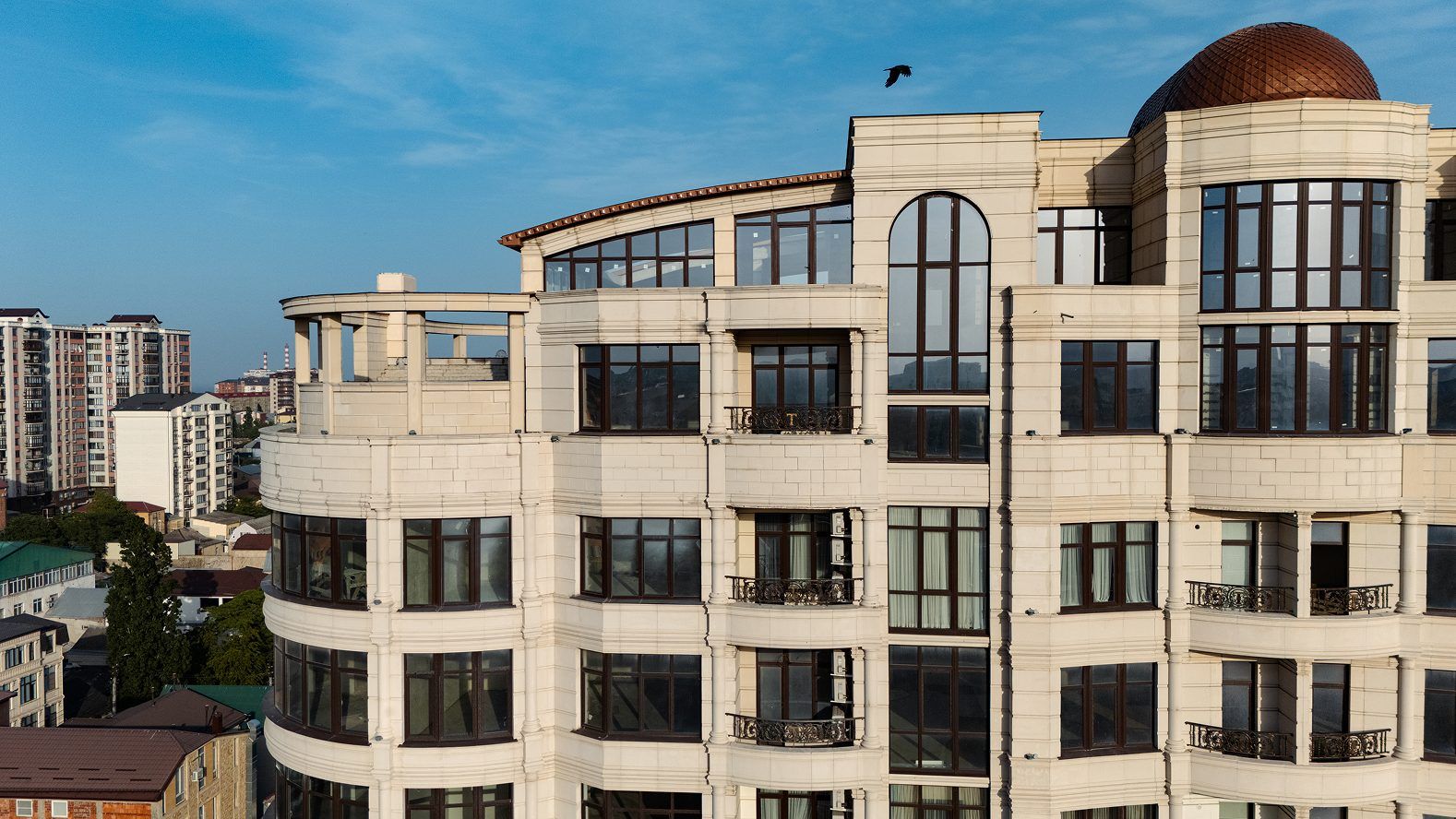
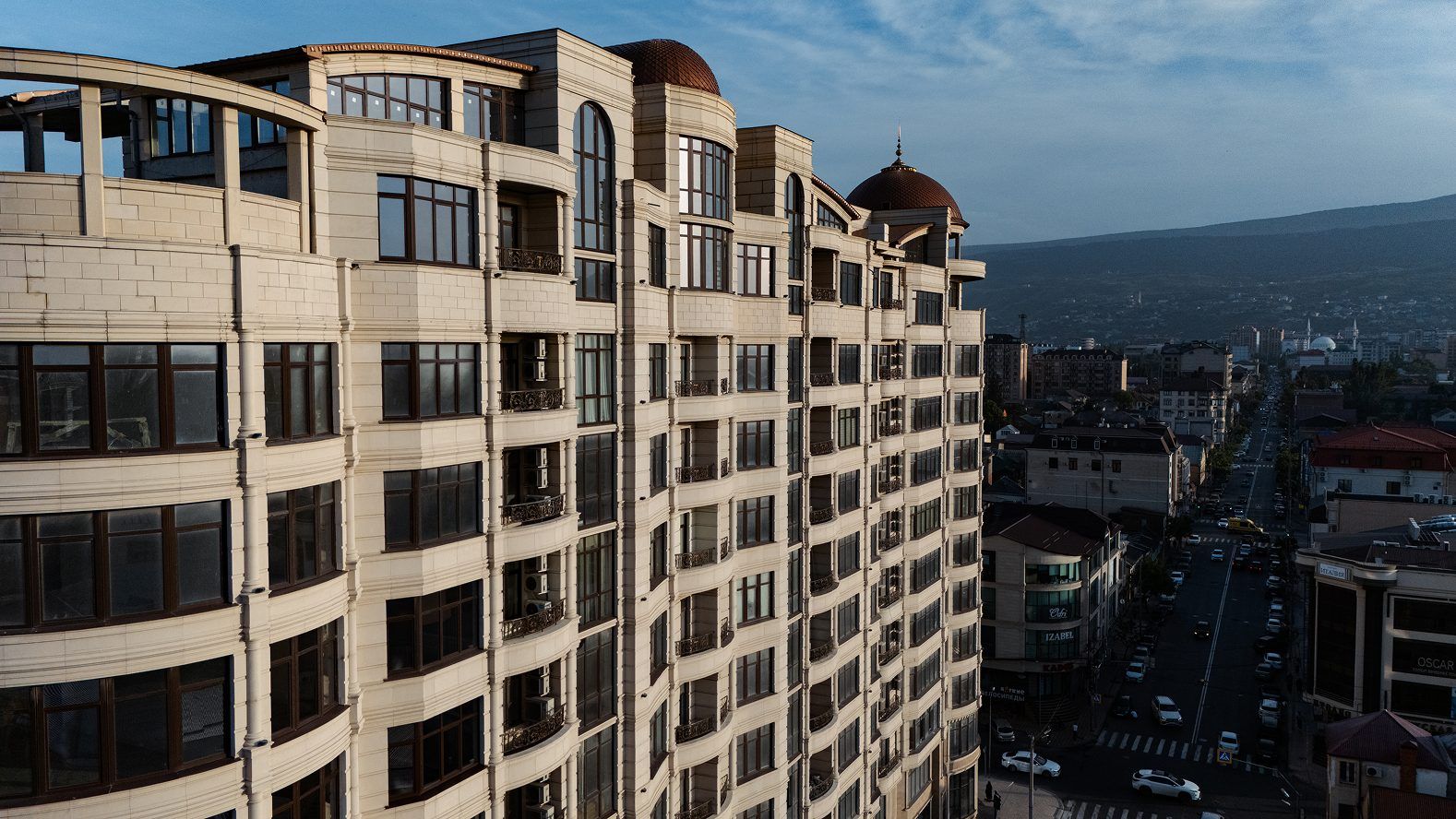
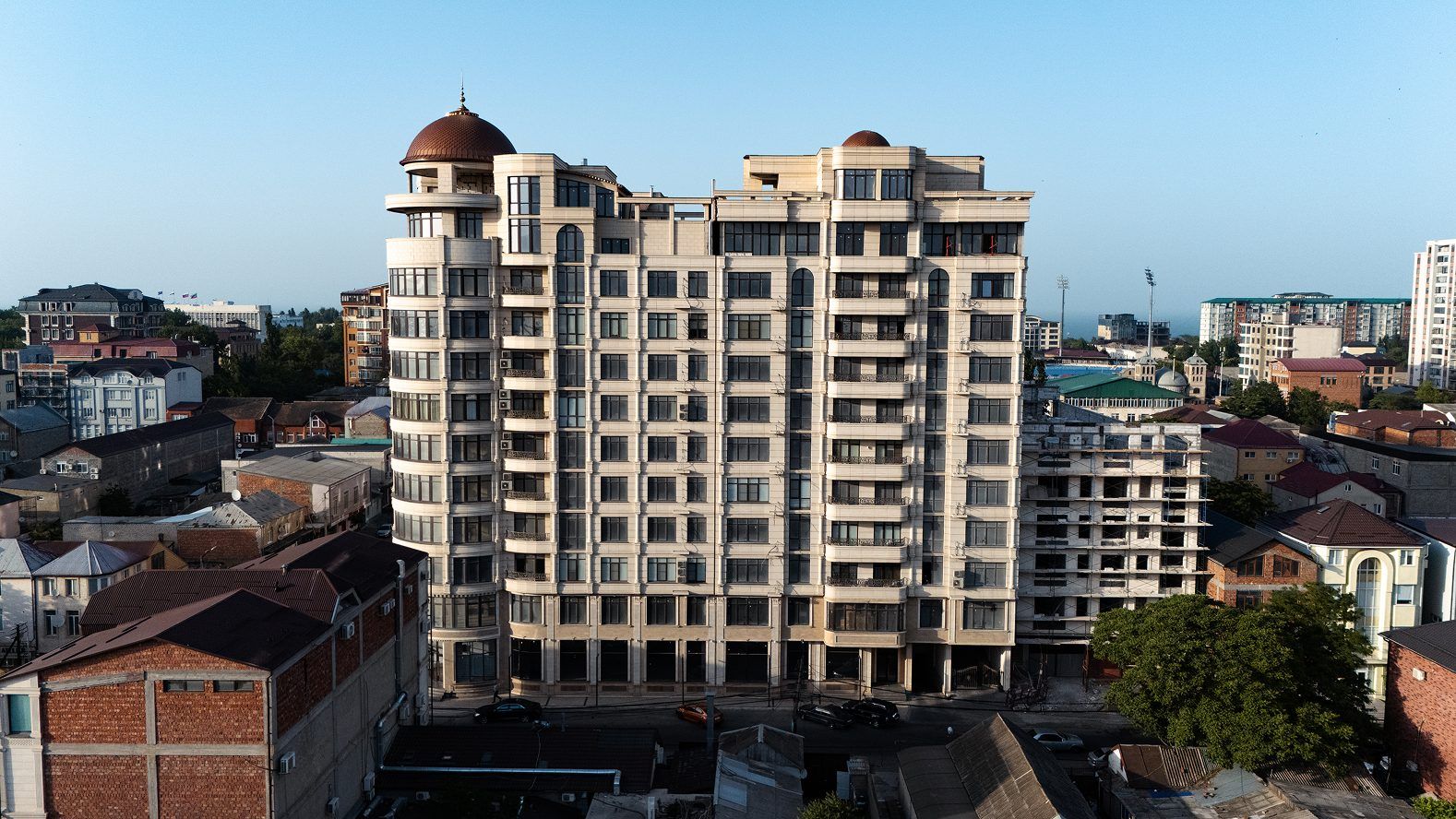
According to TECHNOFORMA Group, the company's GFRC has high frost resistance, which is improved with admixtures; exact values are given in the product documentation. The company also supplies natural stone — granite, basalt, marble, limestone, sandstone, travertine and other stones. Examples of projects in different climatic conditions:
• RUBLEVO BUSINESS PARK business centre in Moscow — 15,000 m² of GFRC and 5,000 m² of FRONTEK.
• Dinastia club house in Kislovodsk — 6,000 m² of GFRC, 700 m² of granite and 700 m² of porcelain stoneware.
All projects are under TECHNOFORMA projects. Frost resistance is closely linked to how much water a material absorbs — see Water absorption of facade materials and why it matters.
FAQ
What does the frost resistance grade F mean?
The number of freeze–thaw cycles that water-saturated specimens withstand in the laboratory without exceeding the permitted loss of strength and mass. For example, F150 means 150 cycles.
How many years will an F100 material last?
There is no direct conversion from cycles to years: the laboratory regime is harsher than natural conditions. The grade is a comparative indicator for choosing a material for its service conditions.
Which stone is the most frost resistant?
Dense stones with low water absorption — granite, basalt. For limestone, travertine, sandstone and shell limestone, frost resistance depends heavily on the quarry.
What is the difference between F1 and F2 for concrete?
F1 is determined with water saturation, F2 in salt solution. F2 matters for structures in contact with de-icing salts, such as plinths and steps.
How can the frost resistance of cladding be verified?
Request an accredited laboratory test report for the specific product and check the grade against the design; if in doubt, test samples from the batch.