Plaster Mouldings or GFRC: Exterior and Interior
Gypsum plaster mouldings or glass fibre reinforced concrete (GFRC): the choice depends above all on where the element will be installed. Plaster is the classic material for interior mouldings: it is easy to work, reproduces fine detail precisely and performs well in dry heated rooms. Outdoors, plaster does not work: it absorbs water, loses strength and breaks down when it freezes.
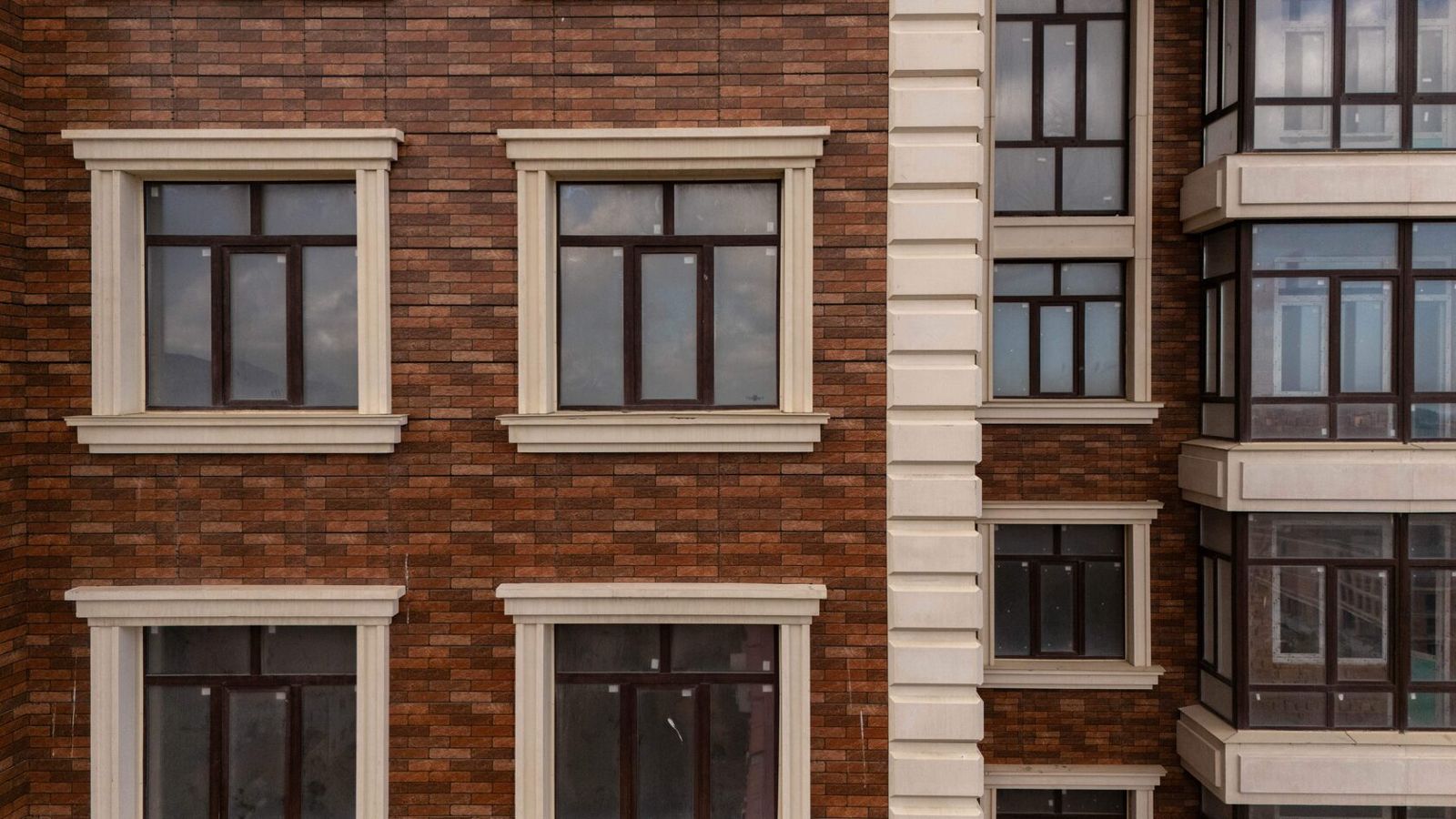
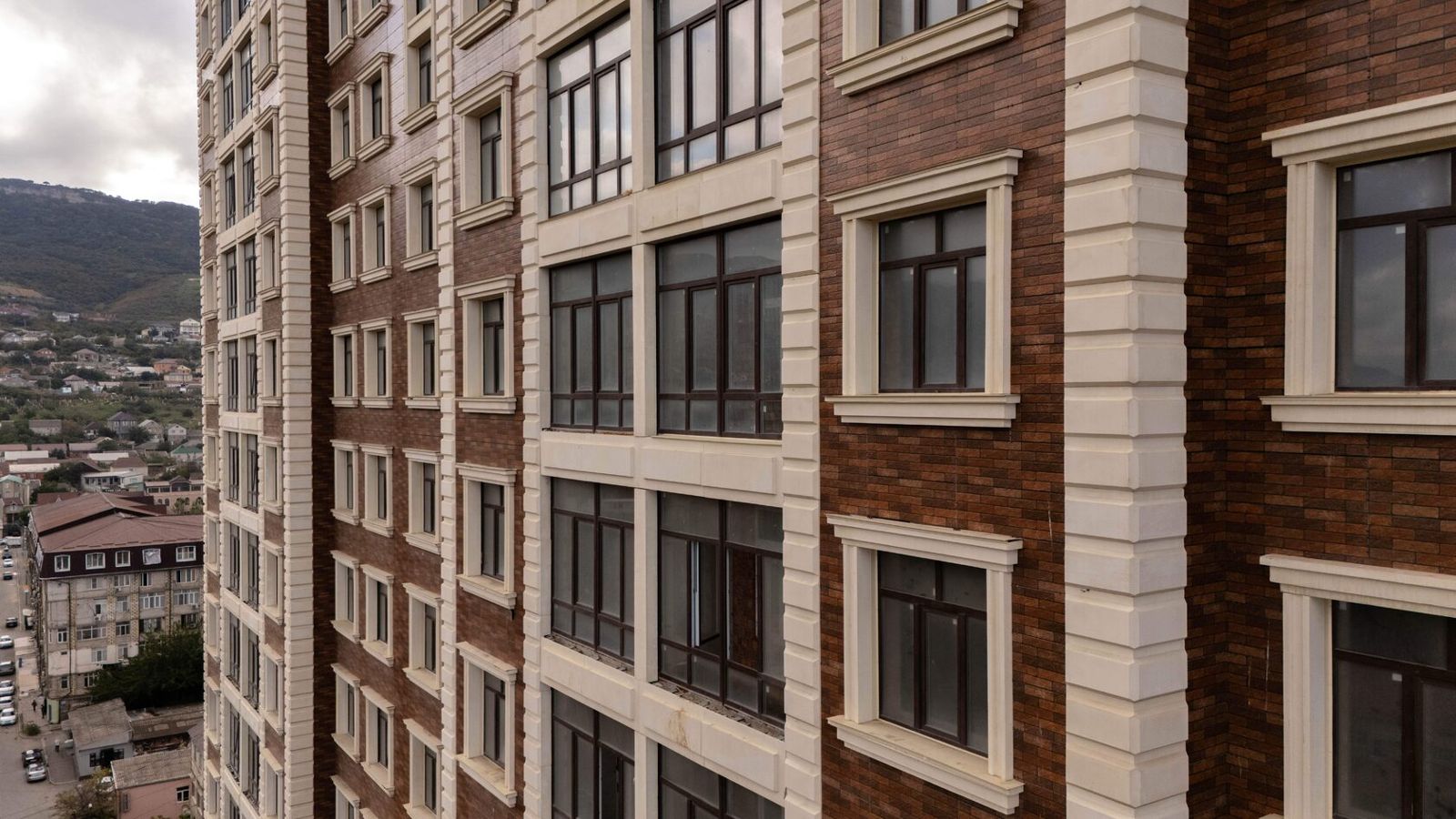
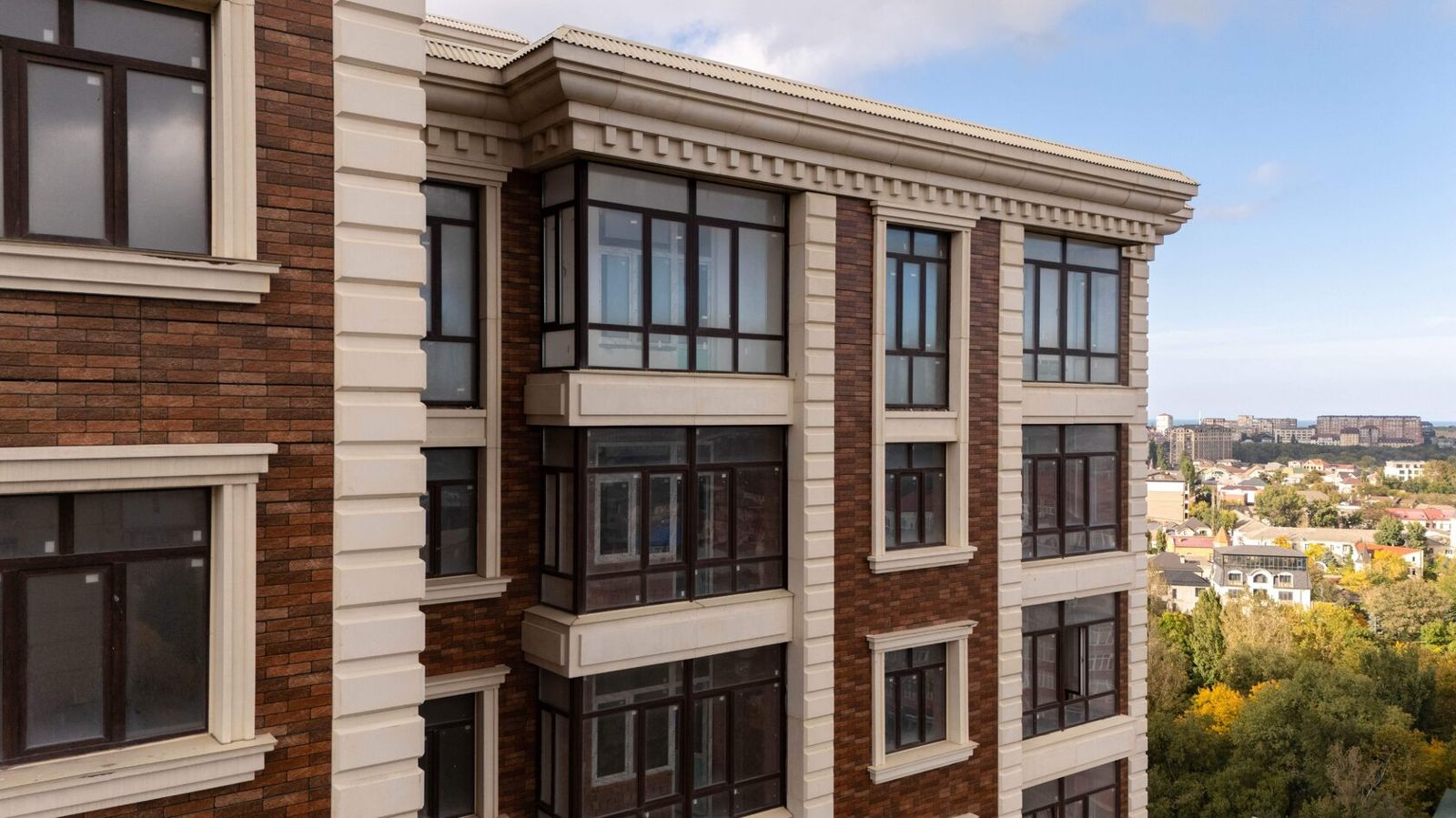
GFRC is suitable for both facades and interiors. It is a cement-based material with alkali-resistant glass fibre, strong, moisture- and frost-resistant and, according to TECHNOFORMA Group, non-combustible (Russian class NG). If decoration is needed outside or in a wet room, choose GFRC; for ceiling mouldings in a living room, plaster remains a sensible option.
For a general overview of GFRC, see GFRC: material and technology.
Why plaster is not for exteriors
Plaster is an excellent interior material, but not a facade material. The reasons:
• Solubility and water absorption. Set gypsum partly dissolves in water and absorbs it readily. In rain the surface washes out and details lose their sharpness.
• Loss of strength when wet. Wet plaster is much weaker than dry plaster.
• Low frost resistance. Water in the pores expands on freezing and destroys the material: cracks, delamination and crumbling appear.
• Brittleness. Without reinforcement, plaster elements split easily from impacts and vibration.
• Metal corrosion. Damp plaster promotes corrosion of steel cast-in fixings and fasteners.
Protective coatings and water repellents only postpone the problem: any damage to the coating lets water into the plaster. That is why facade mouldings were historically made of stone, lime mortars and concrete, and today of GFRC, less often of polymer materials.
To complete the picture, here is how other moulding materials behave on a facade:
| Material | Facade use | Limitations |
|---|---|---|
| Gypsum plaster | Not suitable | Softens when wet and is destroyed by frost |
| Expanded polystyrene with reinforced coating | Low-rise houses | Combustible core, vulnerable to impact, fine detail is lost |
| Polyurethane | Limited | Combustible, thermal movement, needs painting |
| Glass fibre reinforced plastic | Individual elements | Combustible, coating fades, hard to achieve a stone texture |
| GFRC | Suitable | Heavier than polymers, fixings need calculation |
| Natural stone | Suitable | Heavy, expensive for complex profiles |
GFRC in interiors
GFRC is used in interiors where plaster is not enough:
• Large elements. Columns, pilasters, portals and arches in halls and lobbies where strength and impact resistance are needed.
• Wet rooms. Swimming pools, spa areas, hammams and washrooms in public buildings. Plaster quickly loses its properties here, while GFRC is unaffected by moisture.
• Entrance areas and transition zones with changes in temperature and humidity.
• Areas with mechanical loads. Wall panels in corridors, stair halls and public spaces.
• Decoration with a concrete or stone texture. Architectural concrete, relief wall panels, fireplace surrounds.
For ceiling mouldings, thin cornices and ceiling roses in dry rooms, plaster is usually simpler and cheaper: it is lighter, easy to finish on site and fills well. A combination where the facade and lobby are GFRC and the ceilings are plaster is common.
Weight and installation
Element weight depends on the design. Plaster mouldings are usually solid or have small cavities and are fixed with gypsum adhesive or filler; large elements are additionally secured with screws and threaded rods. For ceilings, the weight of plaster cornices and roses is an important factor: heavy elements need a reliable substrate.
GFRC elements are made thin-walled (usually 10–20 mm), and three-dimensional elements are hollow. So a GFRC column or portal weighs a moderate amount despite the strong material. Installation:
• in interiors, with adhesives and mechanical fixings to the wall or slab; large elements on cast-in fixings and brackets;
• on facades, on the substructure of a ventilated rainscreen facade or on anchor fixings with load calculations.
| Parameter | Plaster mouldings | GFRC |
|---|---|---|
| Where used | Interiors, dry rooms | Facades and interiors, including wet areas |
| Strength and impact resistance | Low | High |
| Moisture resistance | Low | High |
| Frost resistance | None | High |
| Element design | Solid or with cavities | Thin-walled, hollow shells |
| Installation | Adhesive, filler, screws | Fixings, cast-in fixings, substructure |
| Combustibility | Non-combustible | NG (according to the company) |
As a guide: the weight of a GFRC element is determined by wall thickness and surface area, not by overall size. A hollow column or cornice in thin-walled GFRC weighs several times less than a solid element of the same size in plaster or concrete. The manufacturer gives the exact weight of each element in the shop drawings; it is needed to design the fixings.
Texture and colour
Plaster gives a very smooth white surface and reproduces the finest ornamental detail, which is why restorers and interior decorators like it. It can be painted with any interior paint after priming; joints are filled with gypsum filler and become invisible.
GFRC offers more texture options:
• a smooth surface for painting;
• a concrete texture with natural pores;
• imitation stone: travertine, limestone, sandstone;
• an acid-etched or sandblasted surface with exposed aggregate;
• relief built into the mould.
GFRC colour is set by through-colouring with pigments on white or grey cement or by painting with vapour-permeable coatings. Through-coloured elements do not need repainting, and chips do not reveal a different colour. In interiors, a protective anti-soiling impregnation is worth specifying, especially where the surface is often touched.
Another practical difference is repair. A chip on a plaster element is filled with plaster and touched up in half an hour. A chip on GFRC is restored with a cement-based repair mortar matched in colour and texture; if the element is through-coloured, the repair requires careful pigment matching, so it is useful to keep some mix from the same batch.
How to choose
A simple selection scheme:
1. Exterior, facade, veranda, small architectural forms: GFRC only (or stone); plaster is ruled out.
2. Wet rooms such as pools, spas and washrooms in public buildings: GFRC.
3. Large elements in public interiors such as columns, portals and lobby cladding: GFRC, thanks to its strength and impact resistance.
4. Ceiling mouldings and small decoration in dry living rooms: plaster or polyurethane.
5. A unified facade and interior style: the same profile can be made in different materials from one model, GFRC outside and plaster inside.
If facade mouldings must follow a historical original, a model and mould are made from measurements or photos, and the element is then cast in GFRC.
Consider the cost of ownership too. Plaster outdoors will need constant repair and eventually replacement, and in a wet interior it has to be restored after leaks and condensation. GFRC costs more than plaster to buy, but under the same conditions it does not need regular repair. In dry living rooms, on the other hand, paying extra for GFRC usually makes no sense.
When ordering GFRC elements for an interior, agree in advance with the manufacturer on texture and colour using a sample, the fixing method for the specific substrate (brick, concrete, plasterboard on a frame) and the protective impregnation. Heavy elements on partitions may require the substrate to be strengthened.
Common mistakes: ordering plaster mouldings for an open terrace or unheated veranda; installing plaster elements in a pool area relying on moisture-resistant paint; choosing polymer decoration for a multi-storey building without checking fire requirements; hanging heavy elements on plasterboard without cast-in fixings or calculations.

Examples from TECHNOFORMA projects
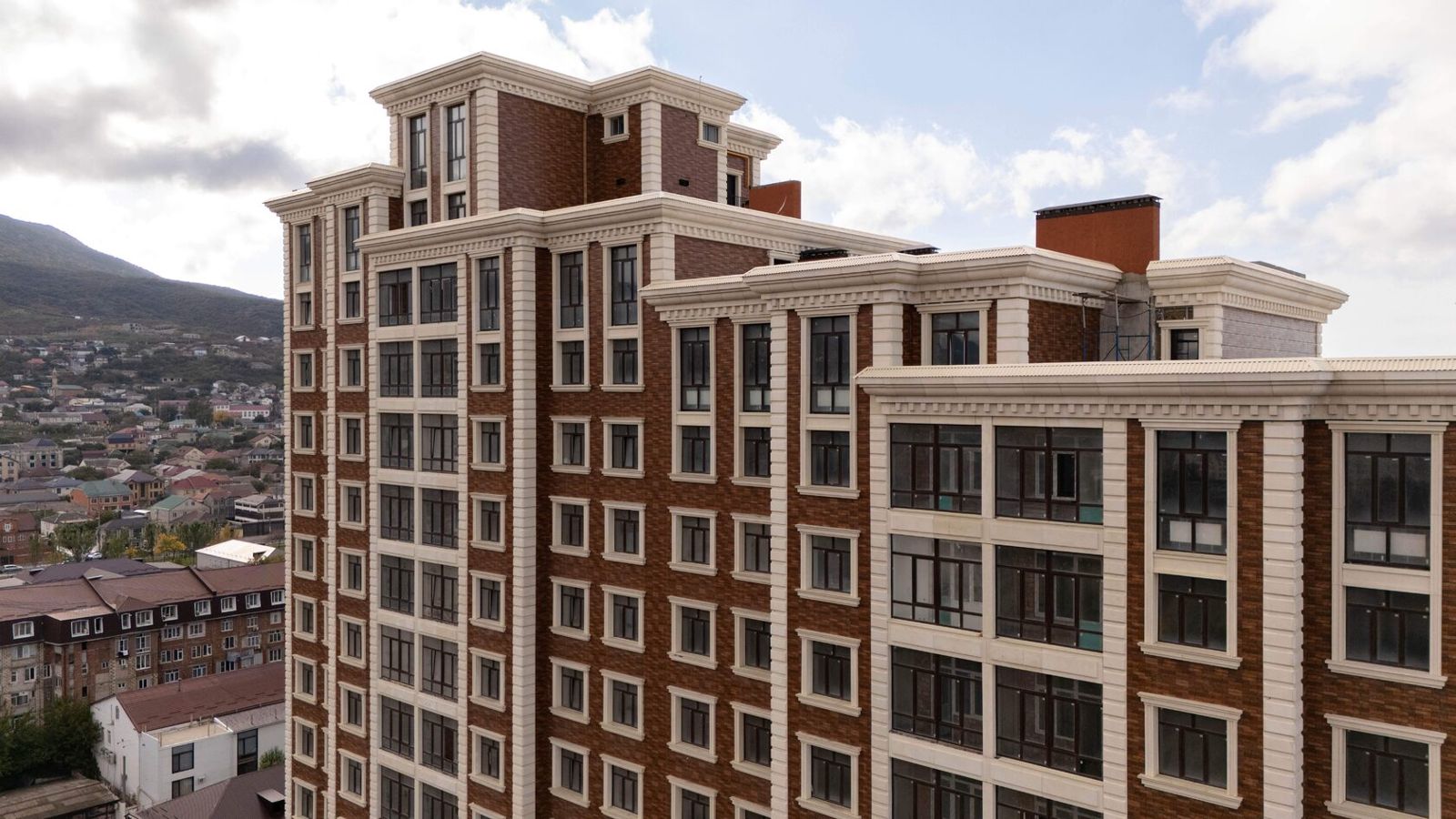
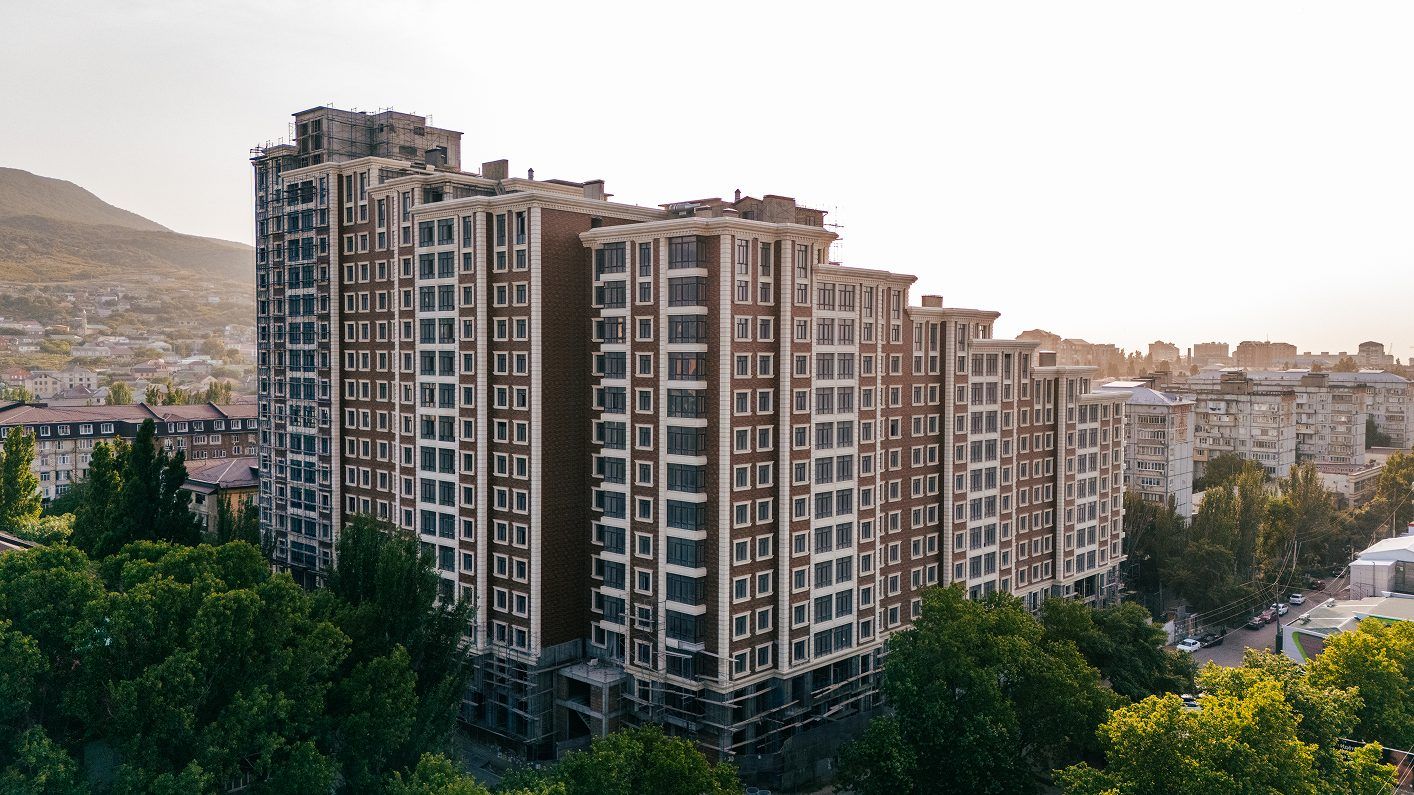
At the Dynasty club house in Kislovodsk, the company designed and installed 6,000 m² of GFRC cladding plus 700 m² of porcelain stoneware and 700 m² of granite. The classical facade decoration here is made of a material designed for exterior use. At the Bogatyreva residential complex in Makhachkala: 5,000 m² of GFRC.
More projects are in the TECHNOFORMA projects section. For a comparison with a natural material, see GFRC or natural stone for facades.
FAQ
What are facade mouldings made of?
Today facade mouldings are most often made of GFRC, less often of polymer materials or natural stone. Plaster is not suitable for exteriors.
Can plaster mouldings be used on a facade?
No: plaster absorbs water, loses strength when wet and breaks down when it freezes. Protective coatings only delay the damage.
Is GFRC suitable for interiors?
Yes, especially for large elements such as columns, portals and wall panels, and for wet rooms such as pools and spa areas.
Which is heavier, plaster mouldings or GFRC?
It depends on the design. GFRC elements are thin-walled and hollow, so large elements can weigh about the same as plaster ones or less, while being stronger.
What is the most durable material for facade mouldings?
Of the available materials, natural stone and GFRC are the most durable; GFRC is lighter and allows complex profiles to be repeated in series.
Can the same model be used for plaster and GFRC mouldings?
Yes, moulds for different materials can be made from one master model: GFRC elements go outside and plaster ones inside. But because wall thickness and fixing methods differ, the GFRC mould and fixing details are designed separately.