GFRC or Natural Stone for Facades
GFRC or natural stone for a facade is a choice between authenticity and freedom of form. Natural stone offers a natural structure that cannot be fully replicated and, with the right choice of stone, lasts a very long time. GFRC (glass fibre reinforced concrete) makes it possible to create complex facade sculpting — cornices, columns, curved panels — with low weight and serial production, and its texture can imitate stone.
The main criterion is the architectural task. Wall surfaces, plinths, steps and accent zones are often made of stone; complex three-dimensional decoration of GFRC. Many projects combine the two.
TECHNOFORMA Group works with both materials: it manufactures GFRC and has worked with natural stone for more than 15 years. For a general overview of GFRC, see GFRC: material and technology.
Appearance and texture
Natural stone is unique: pattern, inclusions and shades vary from block to block. Granite and basalt give a dense granular surface, marble offers veining and depth of colour, travertine its characteristic pores, shell limestone (coquina) and limestone a warm porous texture. Stone can be polished, honed, bush-hammered, sawn or split. Over the years stone develops a noble patina.
The variety of stones is a strength but also a challenge: within one project slabs must be matched by colour, and for large volumes supply from a single quarry must be secured.
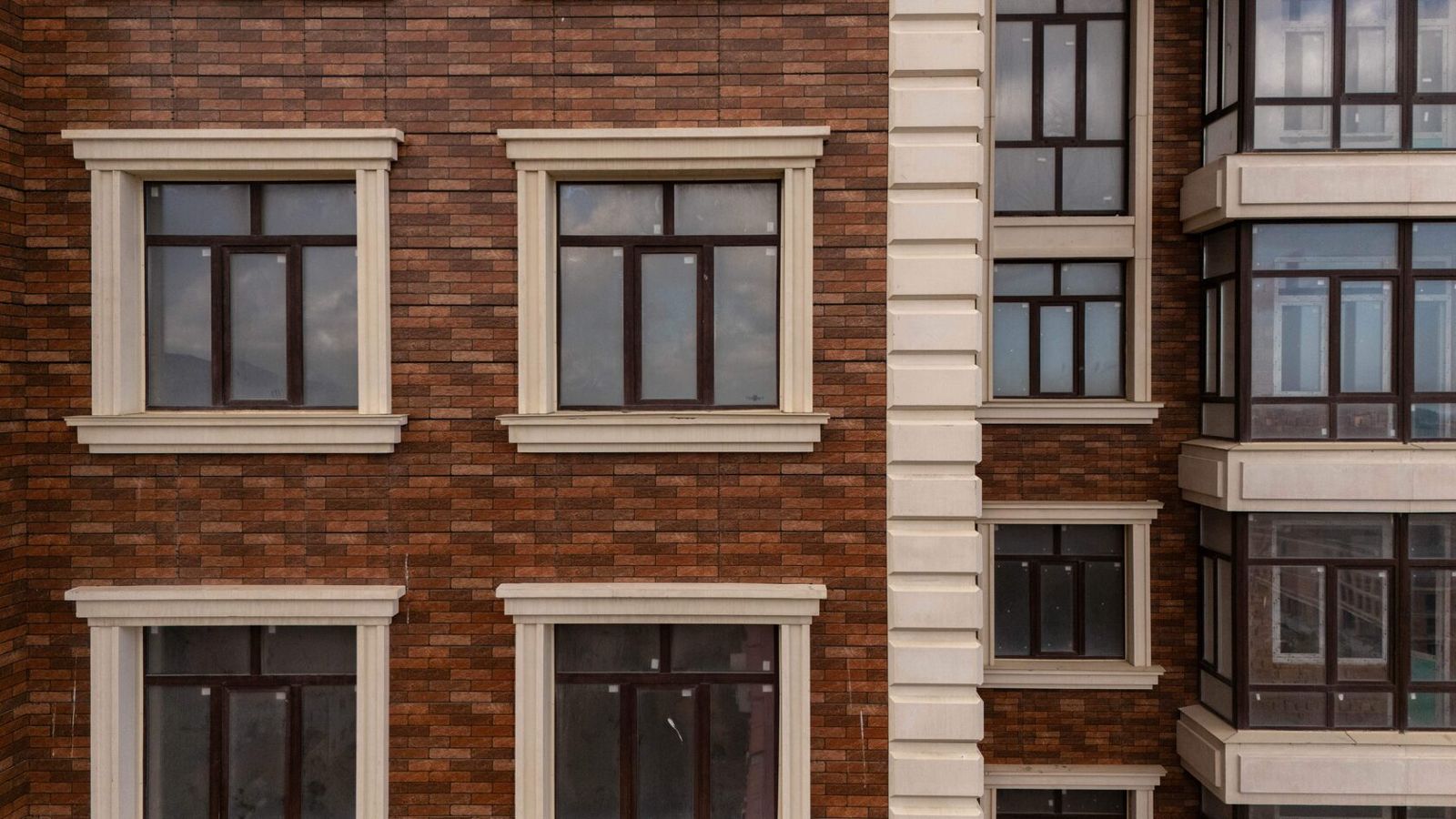
GFRC reproduces shape and texture from a model. It can be smooth, relief, acid-etched, integrally pigmented, and can imitate travertine, limestone or sandstone. The advantage is uniformity: all products in a series match in colour and texture. The limitation is that it is an imitation: on close inspection an experienced eye will distinguish concrete from natural stone, especially for stones with a pronounced crystalline structure such as granite and marble.
Weight and substructure
Stone is usually installed on facades as 30–40 mm slabs on clips fixed to a ventilated rainscreen facade substructure. The weight of 1 m² of cladding depends on the density of the stone: granite is around 2,600–2,800 kg/m³, while limestone and shell limestone are noticeably lower and vary greatly between quarries. A 30 mm granite slab weighs about 80–85 kg/m².
A 10–15 mm GFRC panel weighs roughly 20–35 kg/m², and hollow three-dimensional elements are several times lighter than their stone counterparts.
| Parameter | Natural stone | GFRC |
|---|---|---|
| Typical cladding thickness | 30–40 mm | 10–20 mm |
| Weight per 1 m² | ≈ 60–110 kg, depends on the stone | ≈ 20–40 kg |
| Element format | Limited by slab strength and weight | Large-format panels, three-dimensional elements |
| Substructure | Reinforced, with close spacing | Lighter, other things being equal |
| Three-dimensional decoration | Heavy, solid | Hollow shells |
Values are indicative; exact data for stone depend on the quarry, and for GFRC on the mix design and product construction. For walls with low load-bearing capacity, lighter cladding can be the deciding factor.
Durability
The durability of natural stone depends on the rock type. Granites and basalts are very dense, with low water absorption and high frost resistance — among the most durable cladding materials. Marbles on facades lose their polish over time due to rain. Soft porous stones — shell limestone, some limestones and sandstones — need water-repellent treatment and careful selection for climates with frequent freeze-thaw cycles.
Well-made GFRC is resistant to frost, moisture and UV; according to TECHNOFORMA Group, its frost resistance is improved with admixtures. A feature of the material is a gradual reduction in flexural strength over time, which is taken into account in design calculations. GFRC durability depends heavily on the mix design, the alkali resistance of the fibre and properly designed details.
In both cases details matter: falls and flashings on horizontal surfaces, correct joints and proper fixings made of corrosion-resistant steel.
Repairability also differs. A damaged stone slab can be replaced, but matching a slab of the same pattern and shade a few years later can be difficult. A GFRC product can be reproduced from the same mould and mix if the manufacturer has kept the tooling and documentation.
Cost and lead times
In both cases the cost depends on the project, and no prices are given in this article. TECHNOFORMA Group calculates the cost from drawings or after a site survey. The main factors:
• For stone — the stone type and quarry, thickness, surface finish, profile complexity, cutting waste and logistics. Rare stones ordered specially cost more than common ones.
• For GFRC — the number of unique moulds, run size, texture and colour, whether a frame is required, and volume.
Lead times also depend on different things. For stone — whether it is in stock or has to be imported. TECHNOFORMA Group imports stone from India, Turkey, China and Iran, keeps stock from these countries and arranges supply to order from anywhere in the world; its stone warehouses and production base are in the Moscow Region. For GFRC — time for models and moulds, sample approval and production capacity; the company's GFRC production capacity is over 20,000 m² per month (according to the company).
When to combine them
Combining stone and GFRC is a common architectural solution that makes use of the strengths of each material:
• Stone plinth and entrance, GFRC on the upper floors. At lower levels, where the facade is closest to people and exposed to mechanical impact, granite does the work; above it, lightweight decoration.
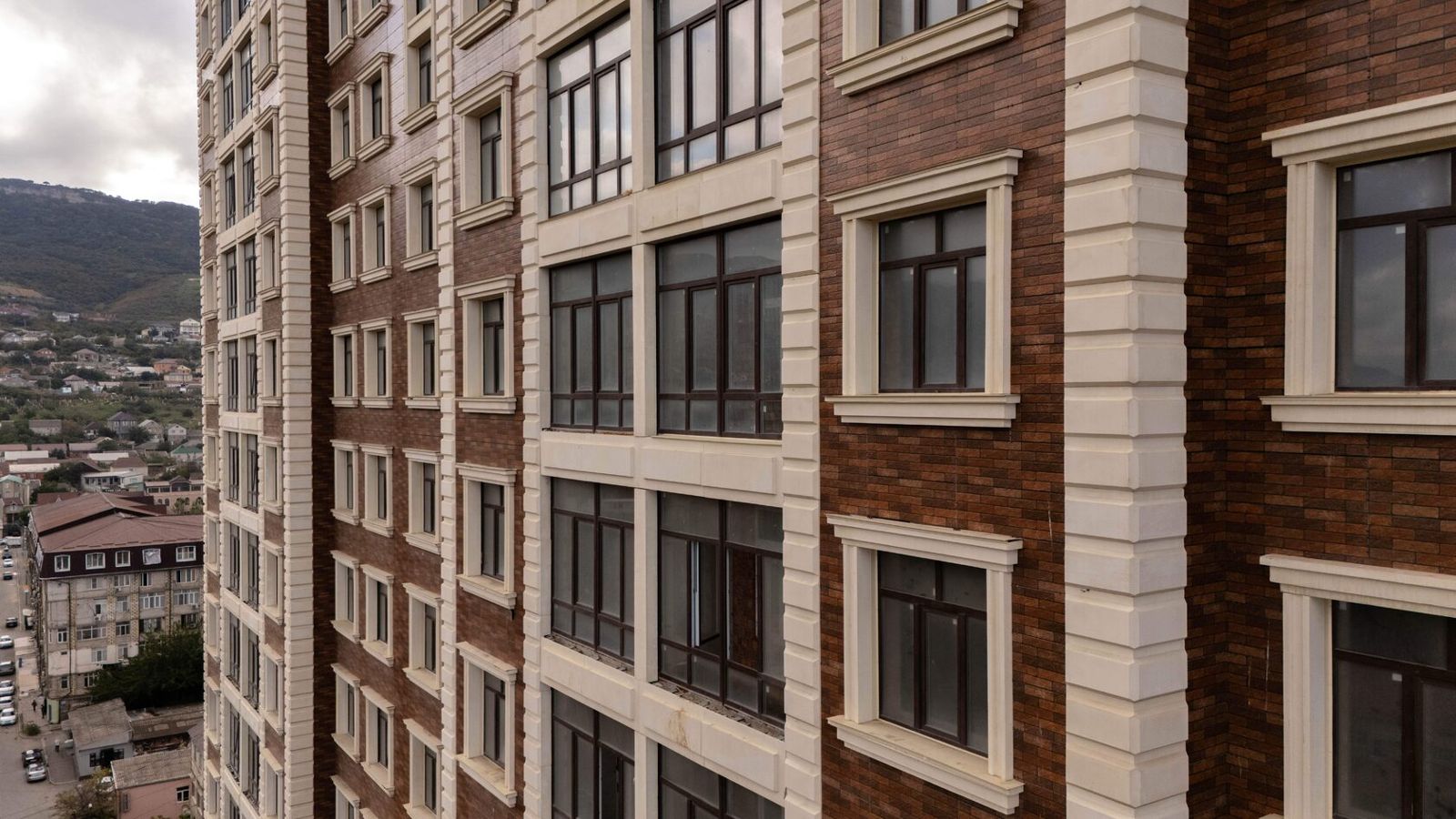
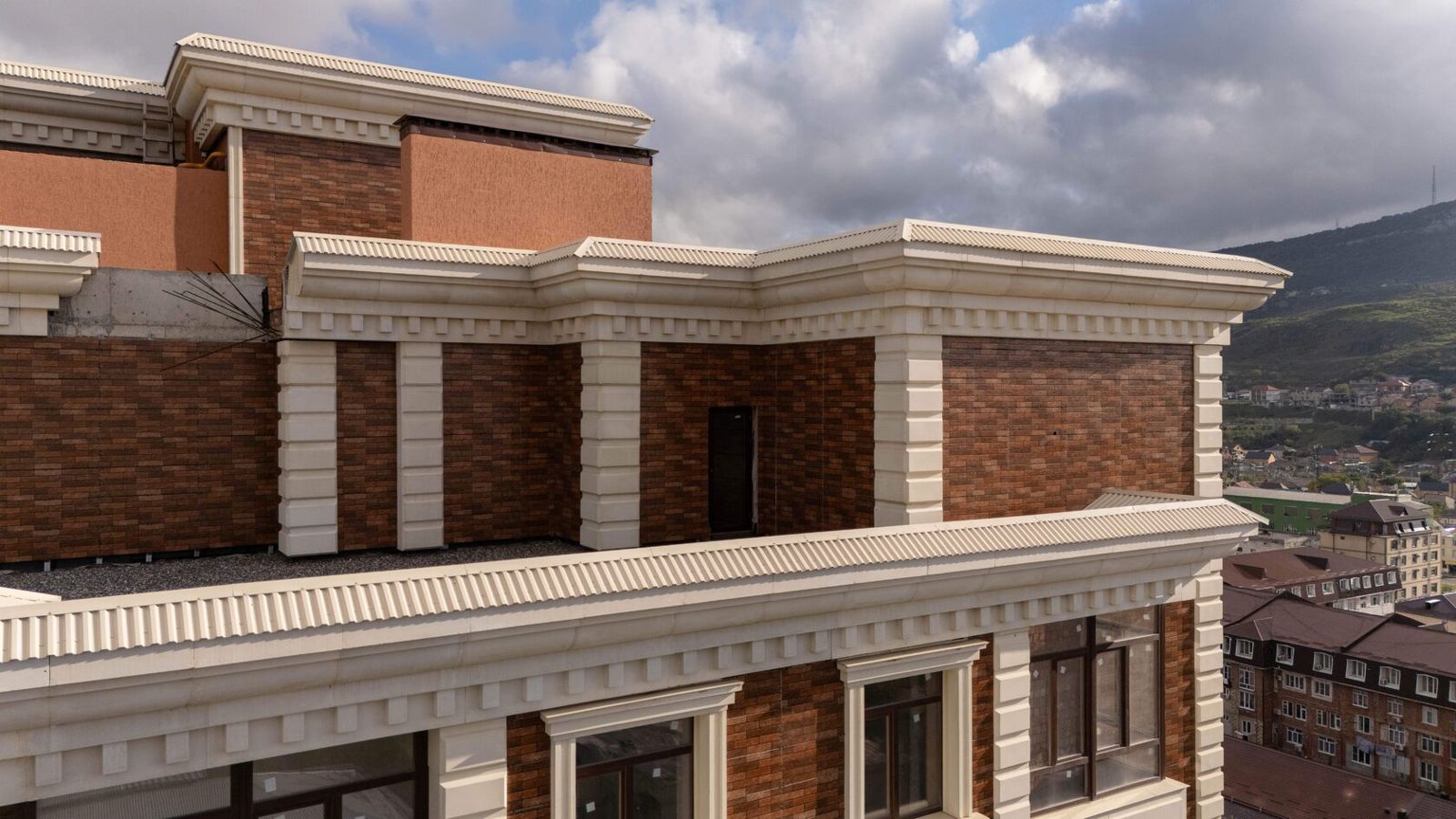
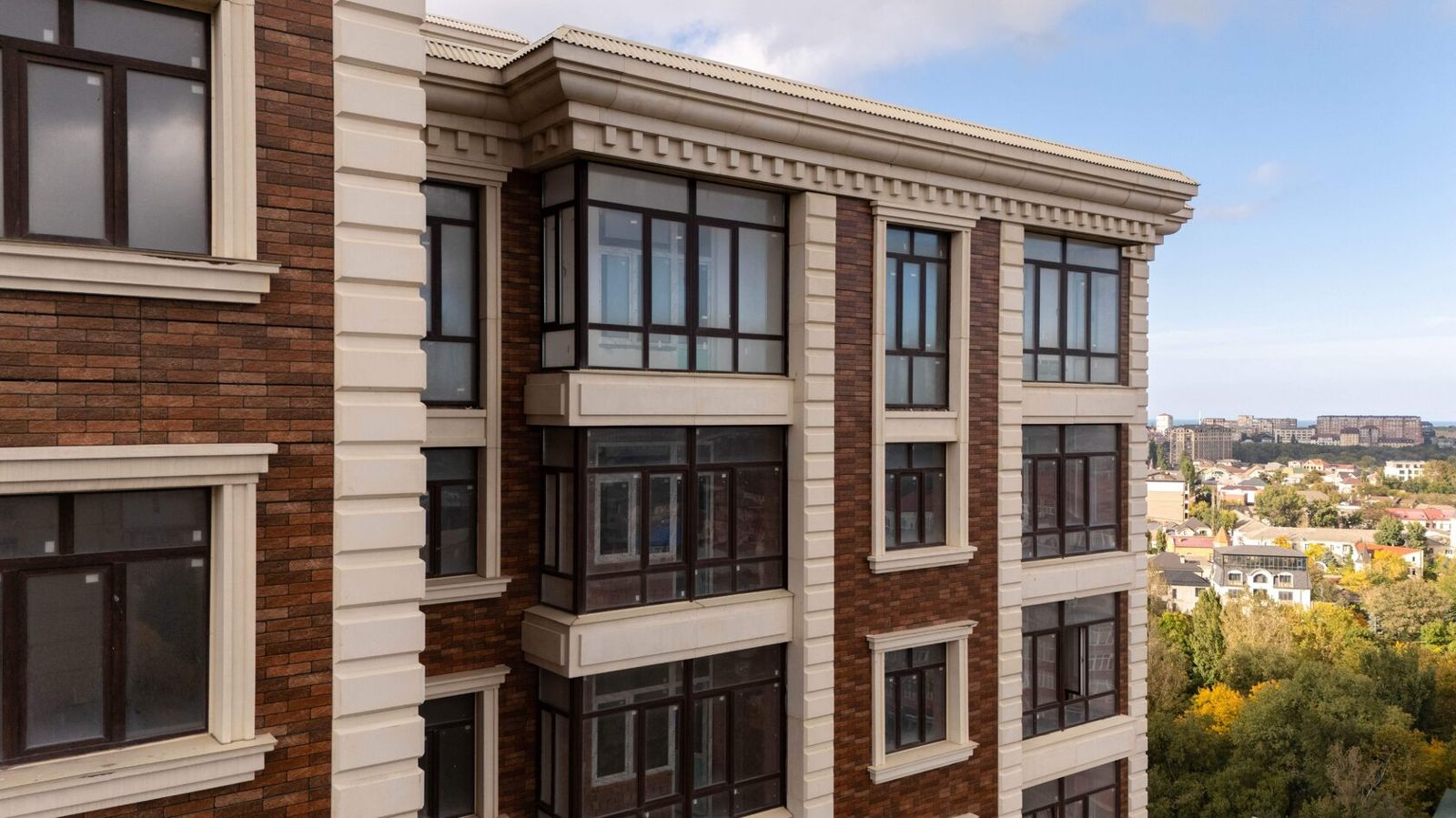
• Stone wall surfaces, GFRC architectural details. Cornices, pilasters and window surrounds match the colour and texture of the stone but are made as light hollow elements.
• Steps, paving and parapets in stone; balustrades and planters in GFRC.
When combining materials, it is important to match the GFRC colour and texture to samples from the specific stone batch in advance and to design the substructure for materials of different weights. It is easier when one contractor supplies both stone and GFRC: they are responsible for the compatibility of solutions. For stone, TECHNOFORMA Group provides design, 3D visualisation, layout, measurements by its own surveyors, installation and design supervision.
Examples from TECHNOFORMA projects
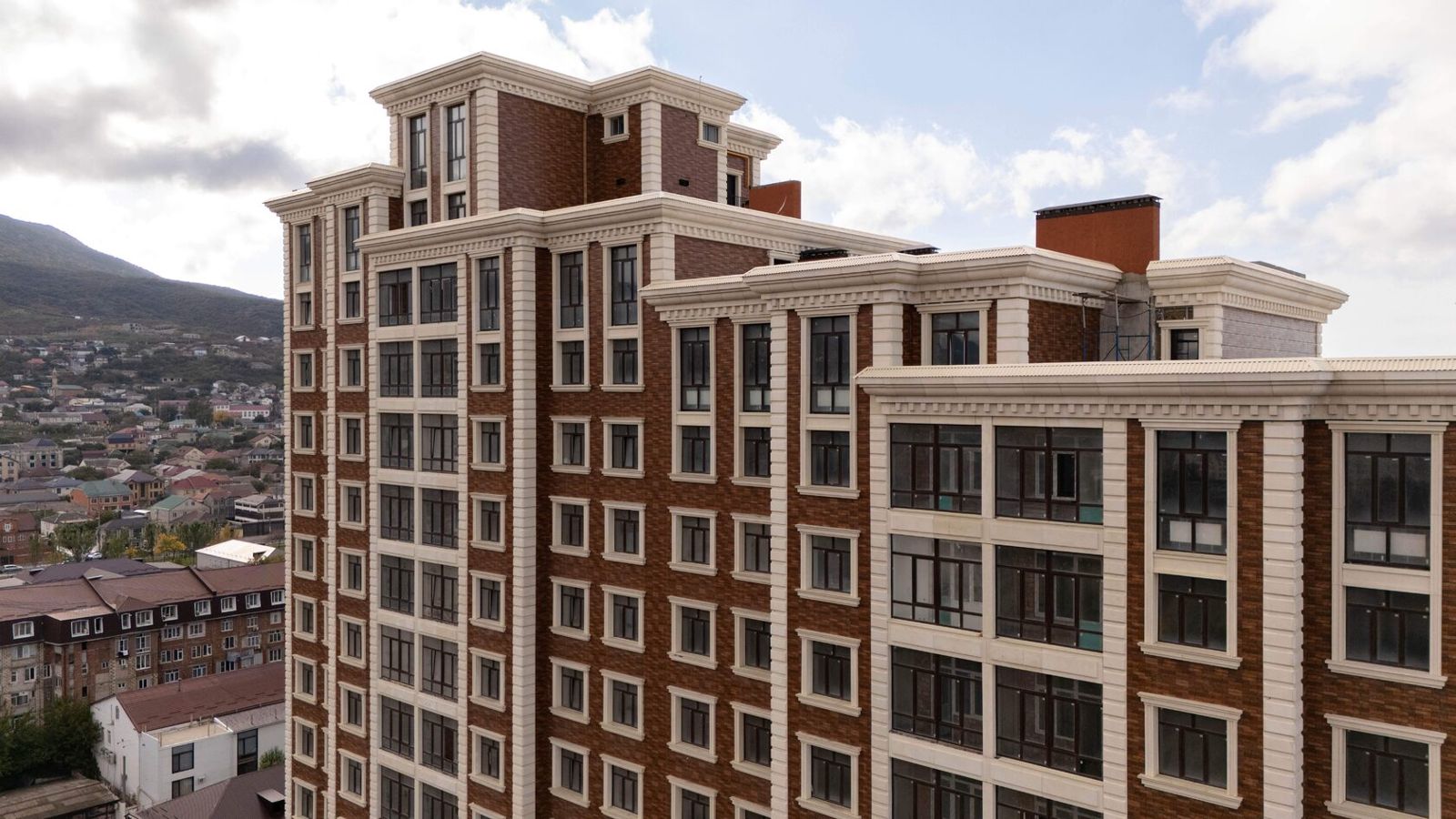
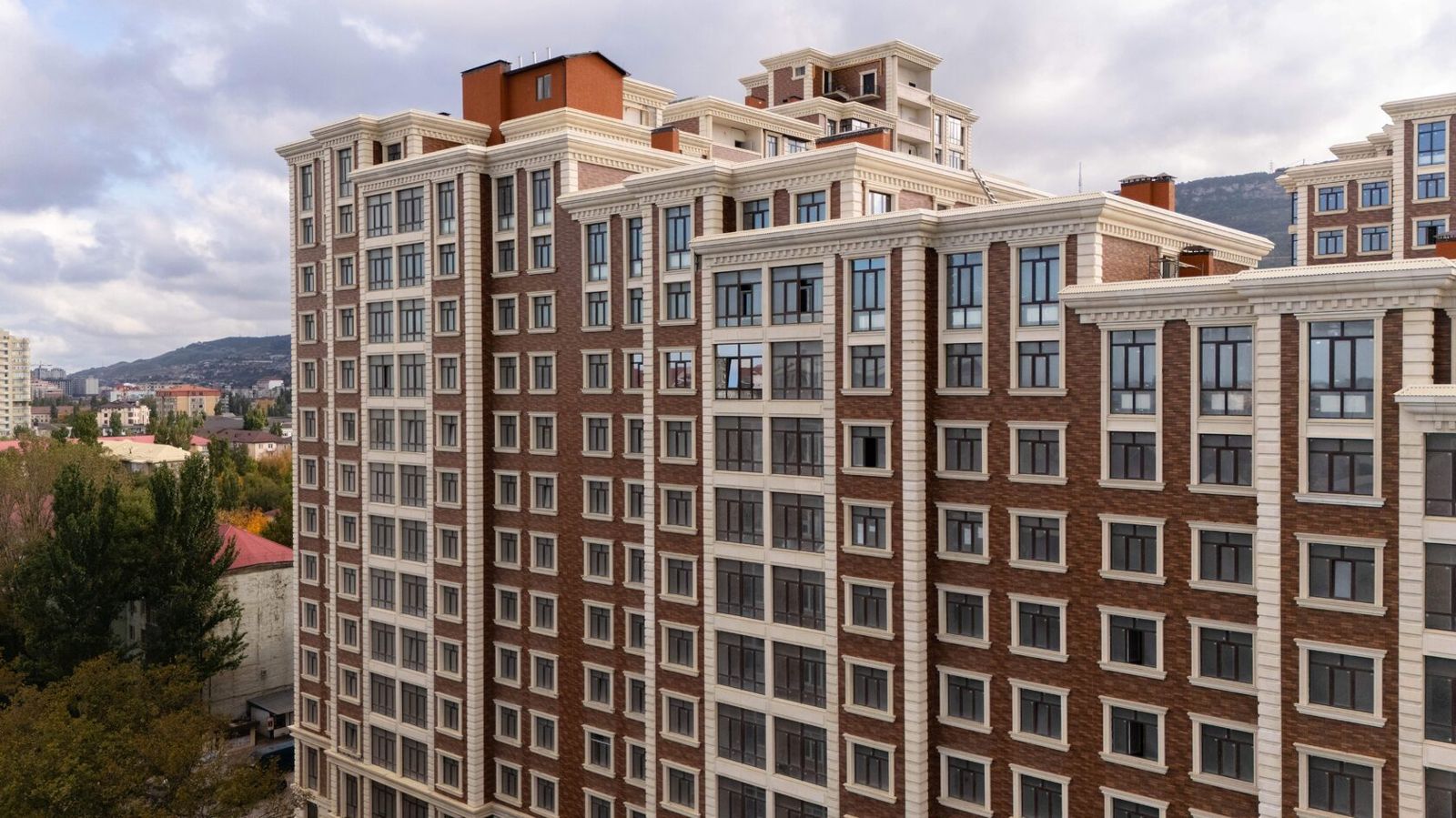
At Dinastiya club house in Kislovodsk the company combined materials: 6,000 m² of GFRC, 700 m² of granite and 700 m² of porcelain stoneware. Design and installation were carried out from January 2024 to June 2025. At Dominanta residential complex in Makhachkala, GFRC (14,000 m²) works alongside porcelain stoneware (13,000 m²).
More projects are in the TECHNOFORMA projects section. Another comparison is in Architectural concrete and GFRC: the differences.
FAQ
Which natural stone should I choose for a house facade?
For plinths and areas under load — dense stones such as granite and basalt. For walls — limestone, dolomite, sandstone or travertine, taking into account the frost resistance of the specific quarry. TECHNOFORMA Group supplies these stones, as well as marble, onyx and shell limestone.
Is travertine a natural stone?
Yes, travertine is a sedimentary rock formed from mineral spring deposits. It has a characteristic porous structure.
Can GFRC imitate stone?
Yes, GFRC can reproduce the texture and colour of travertine, limestone and sandstone. However, it is an imitation: it does not fully replace the natural structure, especially of granite and marble.
Which is better — artificial or natural stone?
Natural stone is unique and durable but heavy. Artificial materials, including GFRC, are lighter and more uniform and allow complex decoration. Combining them is often optimal.
Which stones does TECHNOFORMA Group supply?
Shell limestone, granite, basalt, dolomite, limestone, marble, onyx, sandstone and travertine. The stone is imported from India, Turkey, China and Iran; the company also has extensive experience with Dagestan stones.
Can a ventilated rainscreen facade be clad with natural stone?
Yes, stone slabs are installed on clips on the substructure of a ventilated rainscreen facade. The substructure is designed for the greater weight of the stone.