Cleaning Stone and Concrete Facades
Cleaning a stone or concrete facade means removing atmospheric, biological and salt deposits without damaging the surface of the material. Proper cleaning not only restores the colour but also extends the life of the cladding: dirt and deposits retain moisture and accelerate deterioration.
The main criterion for choosing a method is the combination of contamination type and material. The same acid wash that is safe for granite dissolves marble, limestone and travertine. That is why any method is first tested on a trial area.
The article is written for property managers, building owners and maintenance contractors. More articles: Facade maintenance, standards and repair.
Types of dirt
Facade contamination varies in nature, and each type needs its own removal method.
| Contamination | Appearance | Where it occurs |
|---|---|---|
| Dust, soot, exhaust | Grey or black film, "black crusts" on stone | Facades along roads, cornices, niches sheltered from rain |
| Efflorescence | White patches and salt streaks | Concrete, masonry, stone after wetting |
| Biological growth | Green and black patches, moss, lichen | North-facing sides, plinth, areas below leaks |
| Rust | Orange streaks | Below metal elements, anchors, railings |
| Graffiti, paint | Coloured tags | Lower tiers, plinths |
| Construction residue | Mortar runs, cement laitance, sealant | After installation or repair |
Contamination is often combined: soot binds with salts to form a dense crust that water cannot wash off.
Methods
Cleaning methods from the gentlest to the more aggressive:
• Low-pressure water and brushes — dust, fresh dirt; safe for all materials.
• Pressure washing — effective, but pressure and distance are matched to the material: on soft stones and decoration a strong jet washes out the binder and leaves grooves.
• Steam and hot water — greasy and biological dirt, sealant residue and chewing gum.
• Chemical cleaning — specialist products with dwell time and subsequent rinsing.
• Soft abrasive cleaning (low-pressure micro-abrasive) — dense crusts on strong materials; it removes part of the surface, so it is not used on polished stone or fine relief.
• Poultices — pastes that draw salts and stains out of the pores; slow but gentle, used in restoration.
• Laser cleaning — spot cleaning of valuable decoration.
Harsh sandblasting of stone and concrete is undesirable: the surface becomes rough, the pores open, and the facade gets dirty again faster than before cleaning.
Chemicals
Chemicals are chosen by the type of contamination and the sensitivity of the material.
• Acidic products — efflorescence, cement laitance, rust. Can be used on granite, basalt, porcelain stoneware and sandstone with quartz cement. Prohibited on carbonate stones — marble, limestone, travertine, dolomite, shell limestone (coquina), onyx — which dissolve in acid. On concrete and GFRC, only mild special products with prompt neutralisation, otherwise the cement matrix is destroyed.
• Alkaline products — soot, grease, organic matter, paint residue. Suitable for most materials but require thorough rinsing.
• Neutral detergents — routine washing, sensitive materials.
• Biocides — moss, algae, lichen; after treatment and dwell time the growth is washed off.
• Graffiti removers — gel products matched to the type of paint.
Procedure: trial area, wetting the surface before application (so the product does not soak in deeply), dwell time as instructed, thorough rinsing. Surrounding surfaces, windows and metal are protected with film.
Limitations
Limitations of cleaning:
• Temperature. Wet methods only at stable above-zero temperatures so that the water can evaporate before frost. Washing in winter risks frost damage.
• Surface condition. Cracks, delamination and weak joints are repaired or protected first: water under pressure gets behind the cladding and into the insulation.
• Rainscreen facades. The jet must not drive water into the joints and the ventilated cavity; insulation that gets wet during washing loses its thermal performance.
• Polished stone — abrasives and acids remove the polish.
• Listed buildings — methods are agreed with restorers and heritage protection authorities.
• Environment and safety — collecting run-off, protecting plants, fencing off the work zone below the facade.
It is worth assessing separately whether cleaning is needed at all. The natural patina on stone often does no harm to the material and is perceived as part of the building's character, while aggressive cleaning for a "like new" look can remove more than dirt. On valuable facades the aim is to remove what destroys the material (salts, crusts, biological growth), not to achieve a uniform colour at any cost.
For rainscreen systems it makes sense to combine cleaning with a scheduled inspection: joints, fixings and the condition of the cladding are checked from the same gondola or platform, reducing the overall cost of access.
Protection after cleaning
After cleaning, the surface is more open than before and takes up moisture faster. That is why cleaning is usually finished with protection:
• Water-repellent treatment — silane-siloxane impregnations reduce water absorption, efflorescence and deposits while keeping vapour permeability.
• Anti-graffiti coatings on lower tiers: sacrificial (washed off together with the paint and reapplied) or permanent.
• Joint repair and sealing of junctions.
• Removing the causes — fixing sills, downpipes and leaks that caused the deposits.
The impregnation is applied to a dry surface after allowing it to dry following washing. For stone, choose products that do not change the colour, or check the "wet stone" effect on a trial area.
Examples from TECHNOFORMA projects
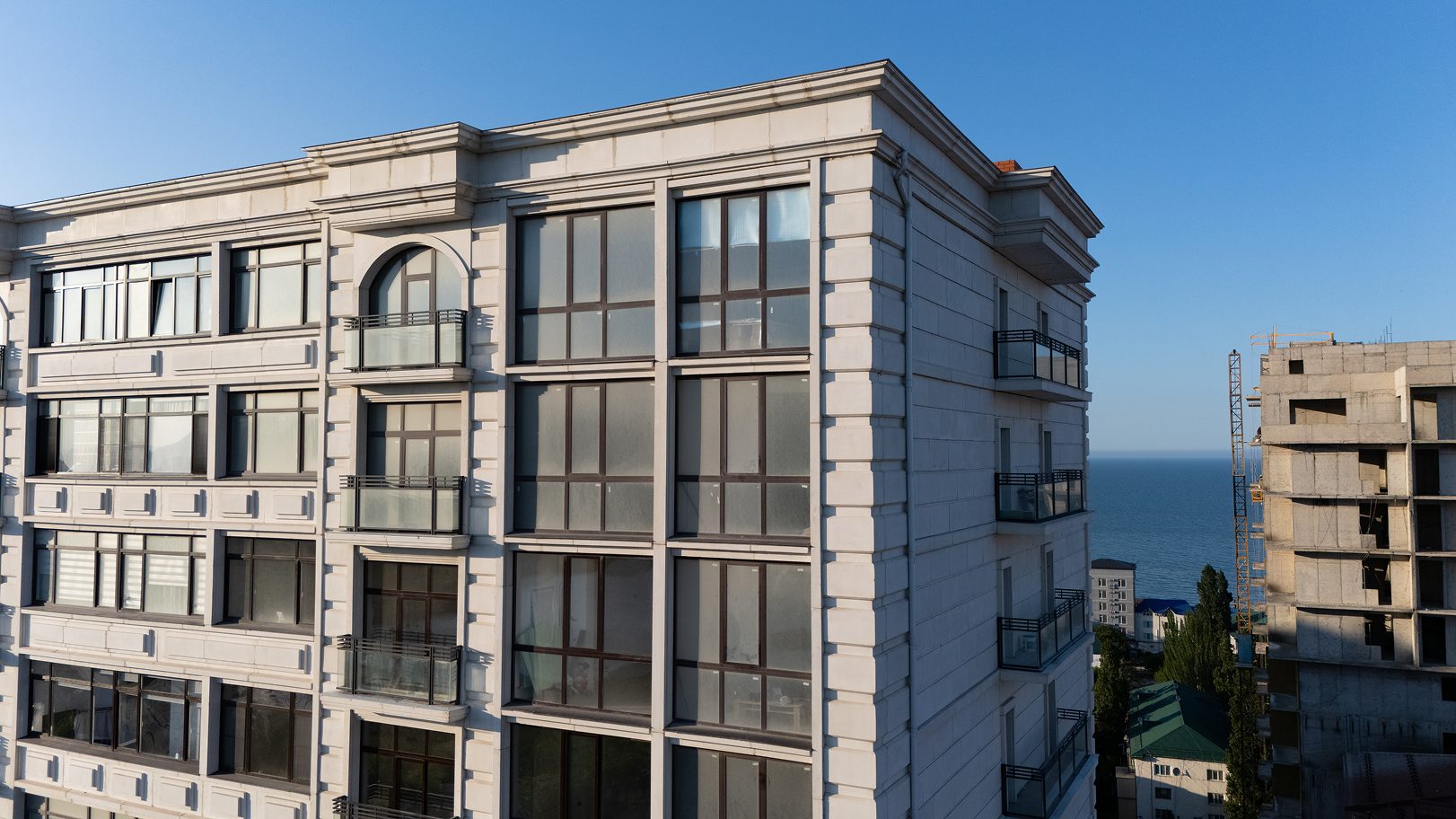
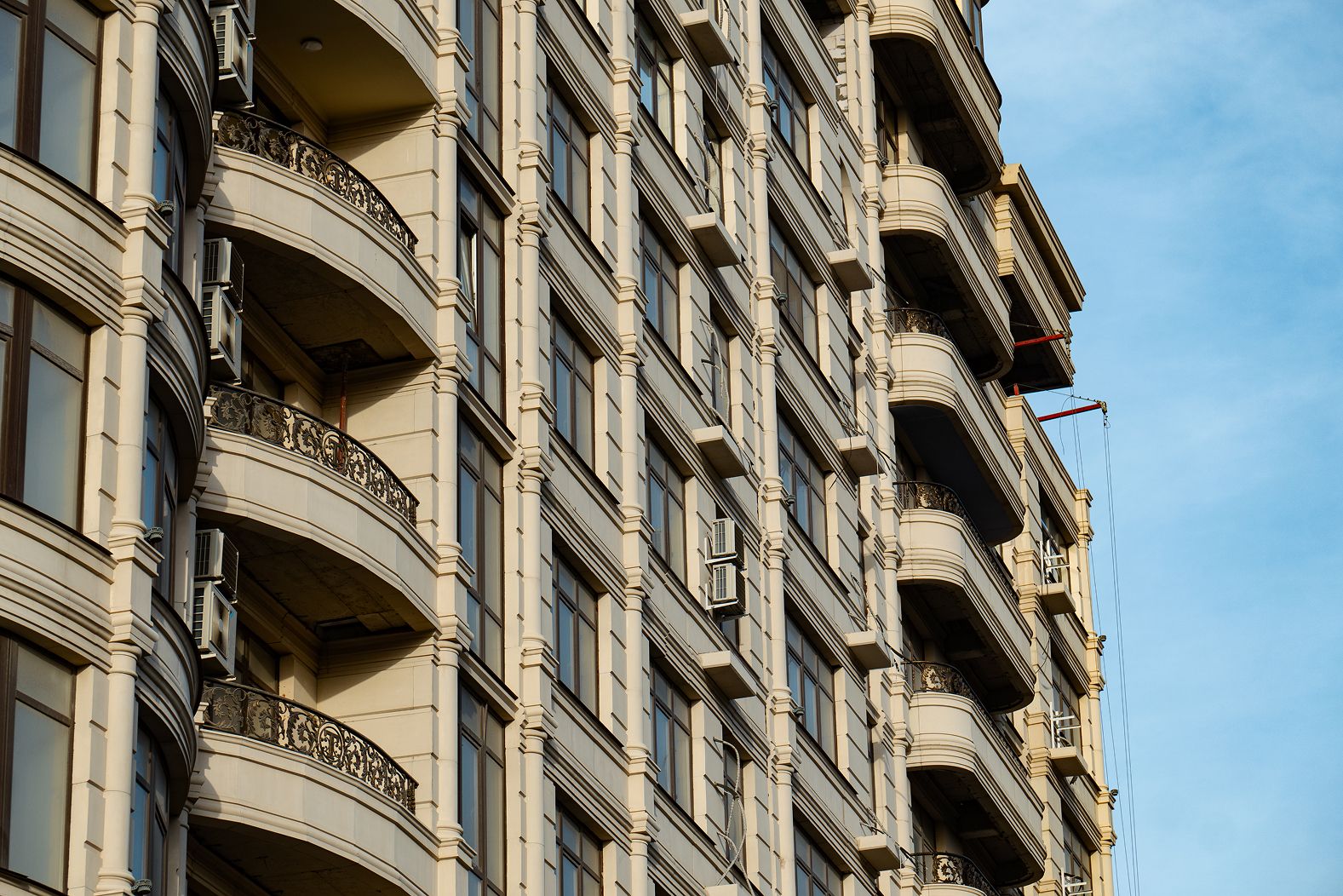
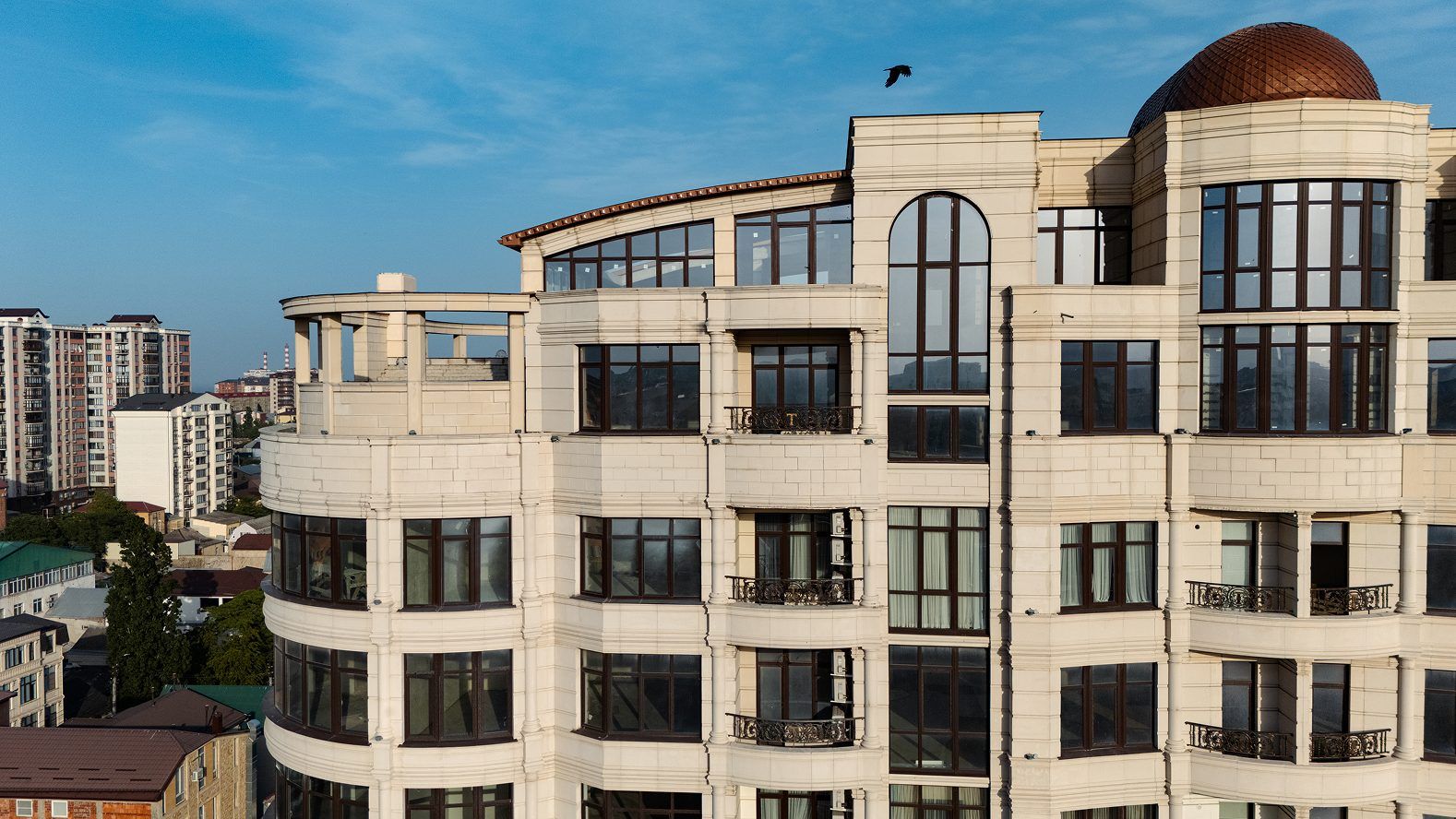
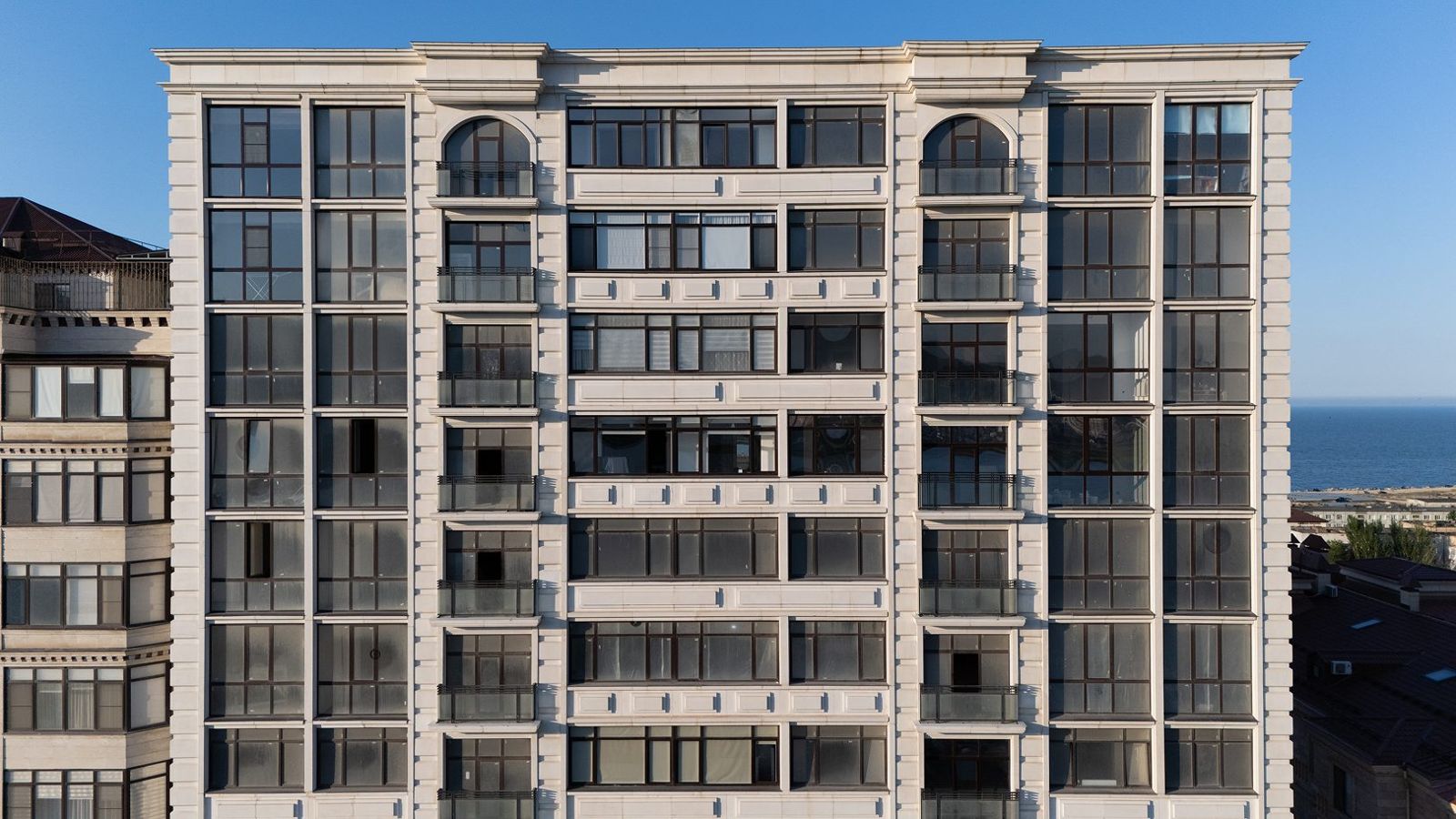
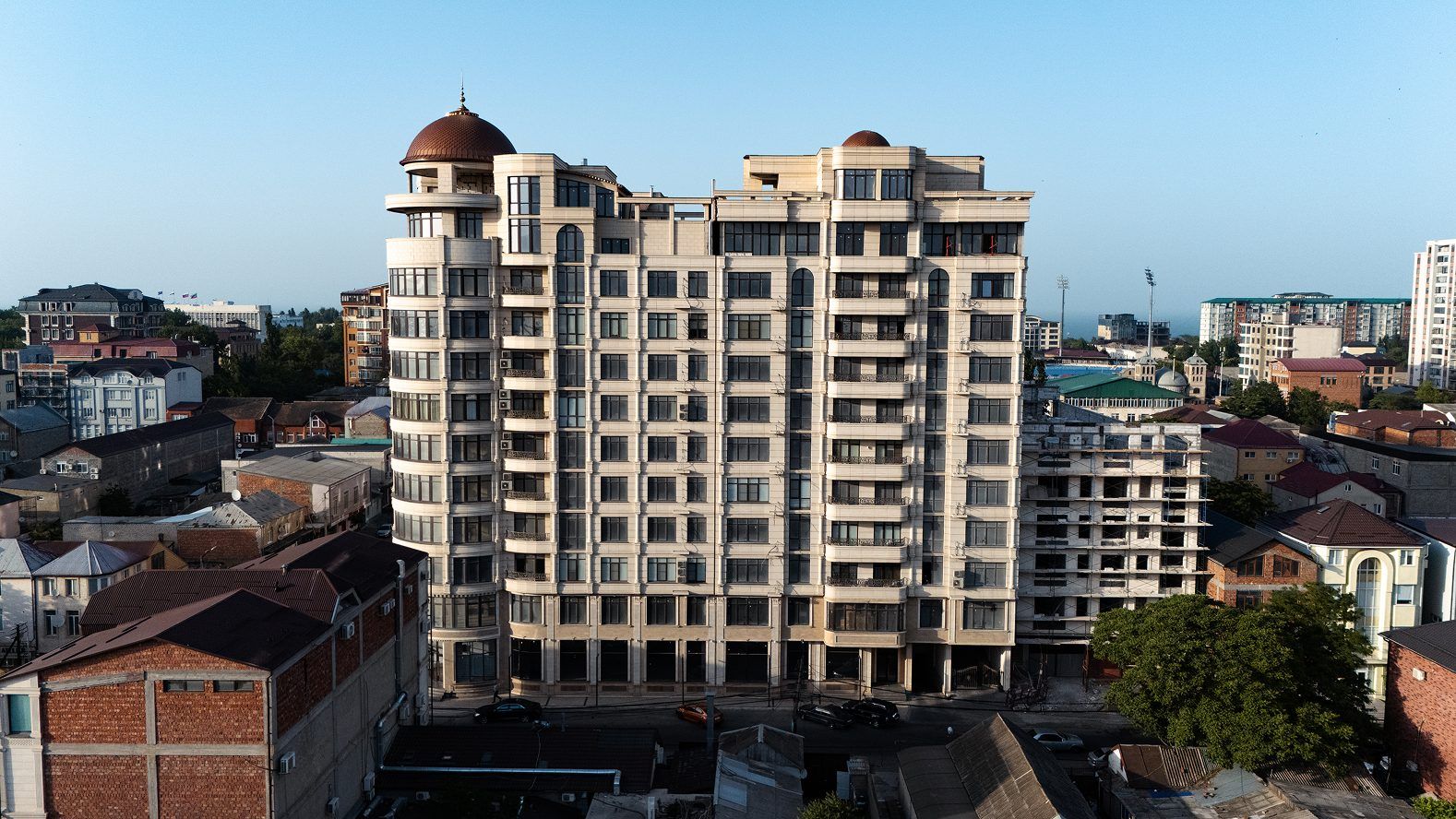
TECHNOFORMA Group supplies natural stone — granite, marble, limestone, travertine, sandstone, dolomite, shell limestone and other stones — and clads facades in stone, GFRC and porcelain stoneware. An example of a facade with stone and concrete:
• Dinastia club house in Kislovodsk — 700 m² of granite, 6,000 m² of GFRC and 700 m² of porcelain stoneware; design and installation.
On such facades the combination of materials calls for a separate cleaning approach for each: granite tolerates more active products than concrete elements, and adjacent surfaces are protected from each other during treatment. The company supplies stone from its warehouse in the Moscow Region and to order, so when a damaged slab is replaced, material from the same quarry and with the same finish is selected.
All projects are under TECHNOFORMA projects. If cleaning is part of work on a historic building, continue with Restoring a historic facade: decoration and stone.
FAQ
How can stone on a facade be cleaned without damage?
Start with low-pressure water and soft brushes, then choose chemicals for the stone and contamination on a trial area. Acids are ruled out for carbonate stones.
Can marble and travertine be washed with acid?
No. Marble, limestone, travertine, dolomite, shell limestone and onyx dissolve in acid; neutral and alkaline products are used for them.
How is efflorescence removed from concrete?
With a dry brush, then with special efflorescence removers followed by rinsing. At the same time the source of moisture is eliminated, otherwise the efflorescence will return.
Is impregnation needed after facade cleaning?
It is advisable: water-repellent treatment reduces absorption of the surface opened up by cleaning and slows down re-soiling and efflorescence.
Why should a facade not be sandblasted?
The abrasive removes the surface layer, opens the pores and roughens the surface, after which the facade gets dirty faster and resists frost worse.