Falling Facade Cladding: Causes and Prevention
If tiles fall off a facade, it is almost always due to one of three causes: loss of bond between adhesive-fixed cladding and the substrate, failure of a fixing in a rainscreen system, or deterioration of the material itself from water and frost. A falling element is not a cosmetic defect but a threat to people's lives, so the first action is to fence off the danger zone, the second is to find the cause.
The key factor in cladding reliability is a correctly chosen and installed fixing system: for heavy and large-format materials at height, adhesive fixing is risky, and ventilated rainscreen facades with calculated mechanical fixing of every element are used instead.
The article is written for owners, property managers, developers and technical supervision. Related topics: Facade maintenance, standards and repair.
Typical causes
The causes of cladding falling off differ for "wet" and rainscreen systems.
| System | Typical causes of failure |
|---|---|
| Tiles or stone on adhesive | Insufficient adhesive bond, unprepared substrate, voids under the tiles, water getting behind the cladding and freezing, thermal movement without movement joints, heavy slabs without mechanical back-up fixing |
| Ventilated rainscreen facade | Insufficient anchor capacity in the substrate, corrosion of brackets and fasteners, missing rivets, incorrectly calculated fixing spacing, panel failure at the fixing point, wind load above the design value |
| Rendered facade with decoration | Render delamination, failure of fixings for string courses and ornament, corrosion of old pins |
The common factor for all systems is water. It reduces bond, causes corrosion and splits the material when it freezes, so leaks and faulty drainage accelerate any of the failures listed.
Installation errors
Most cladding failures are related not to the material but to installation. Typical errors:
• Anchors without testing the substrate. In hollow brick, aerated concrete or old masonry, the anchor capacity can be several times lower than the rated value for concrete. A control pull-out test on site is mandatory.
• Deviation from the design — increased bracket spacing, substituting cheaper fasteners, missing rivets.
• Incorrect sliding and fixed points — a rail fixed rigidly at every point presses on the fasteners when heated and loosens them.
• Contact between dissimilar metals without isolation — accelerated galvanic corrosion.
• Spot-bonded adhesive cladding instead of full coverage — voids where water collects.
• No movement joints and joints filled with rigid mortar.
• Panels damaged during installation — cracks at fixing holes that show up later.
These errors are identified at acceptance through records of concealed work and spot checks; once covered by cladding they are much harder to detect.
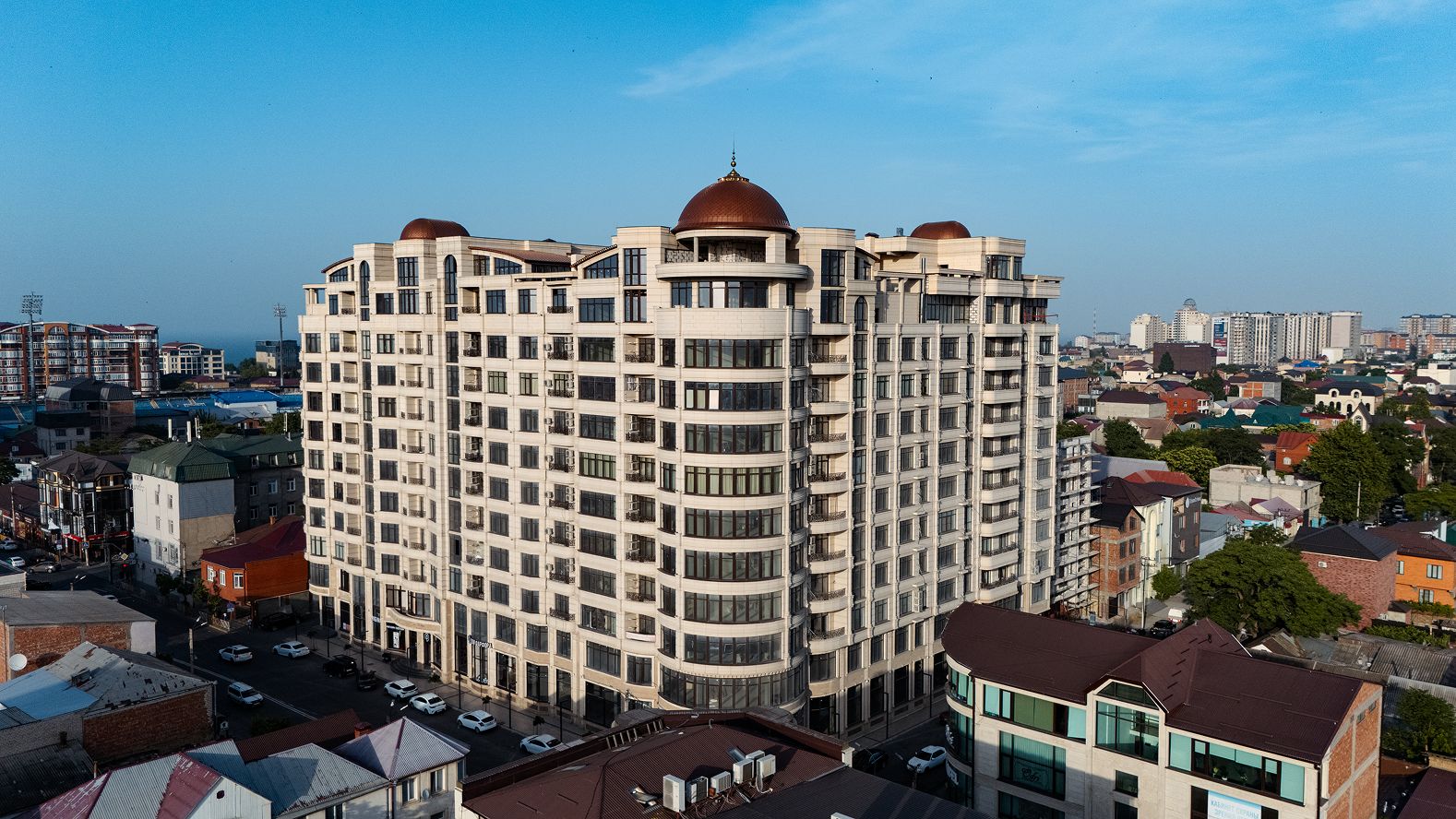
Corrosion
Corrosion is a slow but common cause of failure in rainscreen systems and decoration fixings.
• Galvanised steel brackets and rails lose protection where the zinc is damaged — at cut edges, drilled holes, scratches. Aluminium systems are more resistant but vulnerable in contact with steel and copper.
• Anchors and plugs — with constant wetting of the substrate, the expansion part corrodes and capacity falls.
• Cast-in parts in concrete and stone elements — corrosion products expand and split the surrounding material.
• Aggressive environments — marine climate, industrial emissions, de-icing salts at the plinth accelerate the process.
Signs: orange streaks from under panels and at anchors, blistered paint, spalling around fixing points. Fastener material is chosen at design stage according to the corrosivity of the environment; in repairs, replacements are made with elements of at least the original resistance class.
Prevention
Prevention is made up of decisions at design stage and regular maintenance.
1. Design — calculating the substructure for wind and dead loads, choosing fasteners for the substrate and environment, mechanical fixing of heavy cladding.
2. Testing — control pull-out tests of anchors in the substrate before installation begins.
3. Installation control — records of concealed work on anchoring and substructure, spot checks of tightening and rivets.
4. Drainage — sound sills, parapets and downpipes, sealed junctions.
5. Inspections — in spring and autumn and after severe weather; selective opening-up of rainscreen cladding.
6. Timely repair — replacing cracked panels and corroded fasteners.
7. Protecting people — as soon as suspicious elements are found, the zone is fenced off and nets are installed.
For adhesive-fixed cladding on existing buildings, periodic tap testing is useful: a hollow sound indicates delamination, and such tiles are removed or additionally secured mechanically before they fall. For rainscreen systems, the main preventive tool is selective opening-up with checks of anchors and rivets, since a fixing failure is usually invisible from outside until the last moment.
Liability
In Russia, responsibility for facade safety during operation lies with the building owner or the organisation to which management has been transferred (in an apartment building — the management company or homeowners' association). It is their duty to organise inspections, routine repairs and urgent measures.
If a defect is caused by construction faults, claims can be made against the developer or contractor within the warranty period; for construction contracts, the Russian Civil Code (Art. 756) sets a five-year period for discovering defective work on buildings and structures, unless otherwise provided by law or contract. Liability for harm caused to third parties or their property by falling cladding usually rests with the owner or management organisation, which can then seek recourse from the contractor at fault.
That is why documents — the inspection log, records, as-built documentation — are not a formality: they show that the building was operated properly and help identify who is at fault.
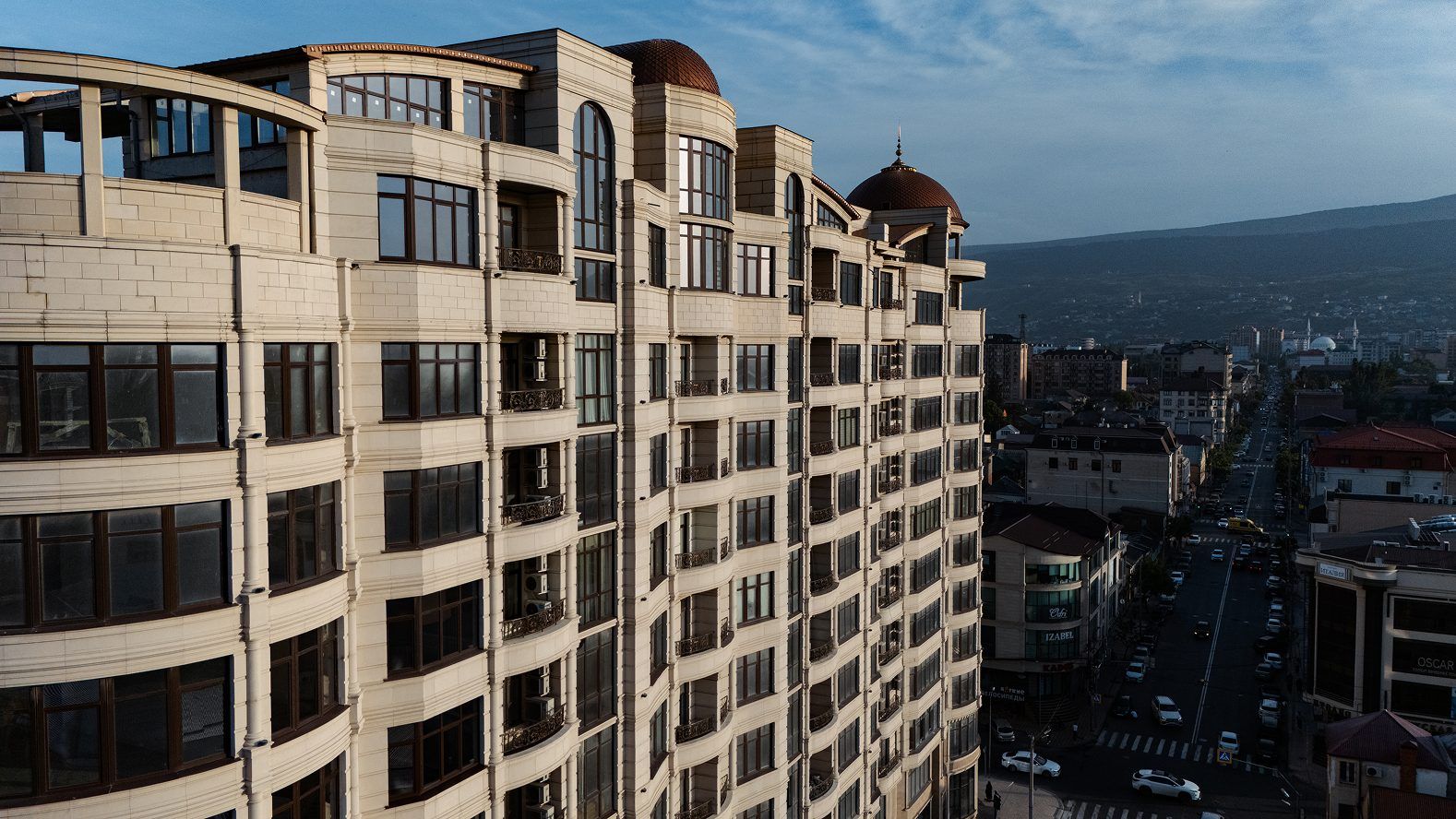
Examples from TECHNOFORMA projects
TECHNOFORMA Group designs facades, installs rainscreen substructures with its own installation team and clads buildings in GFRC, porcelain stoneware and natural stone with mechanical fixing. Examples:
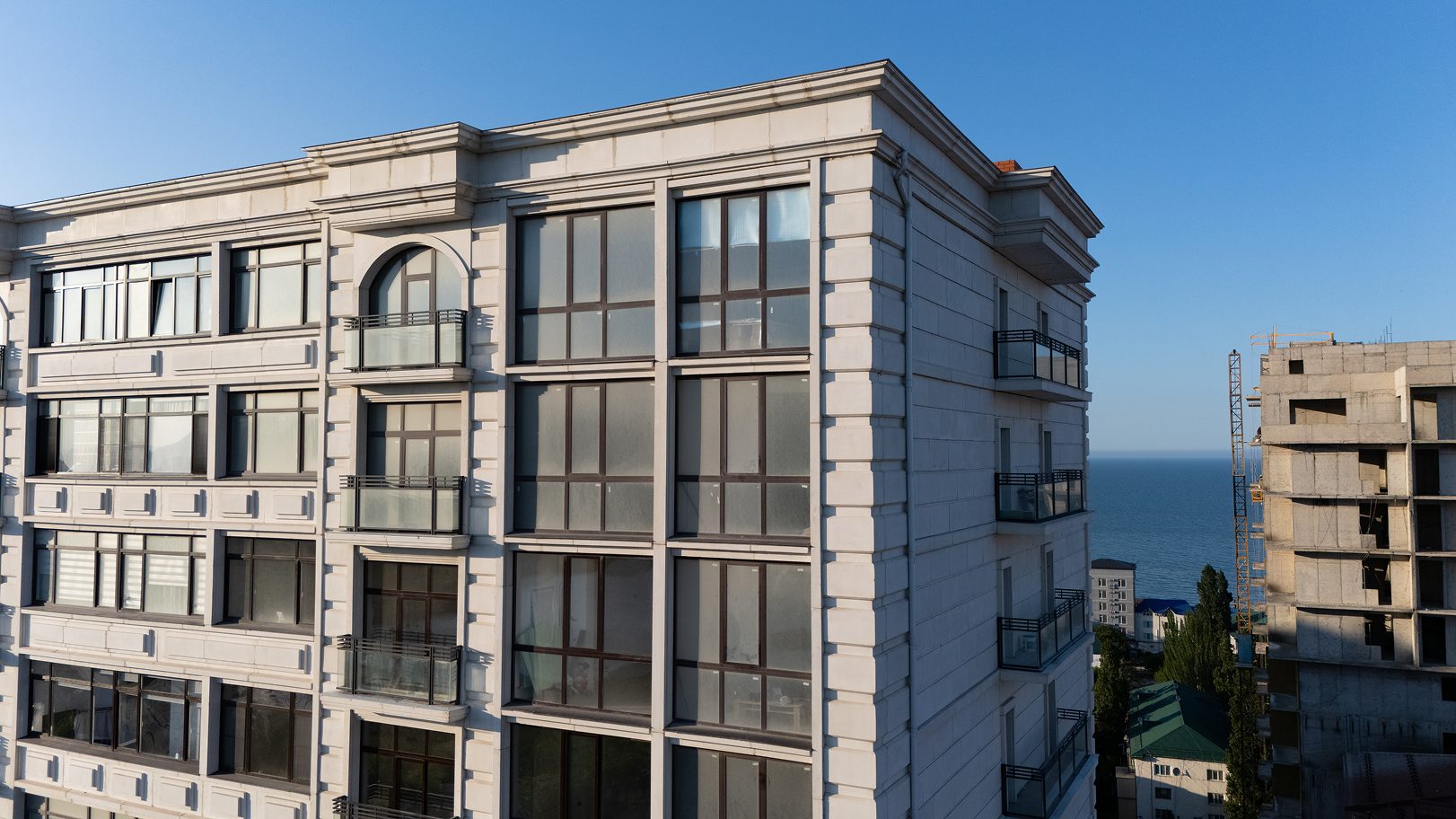
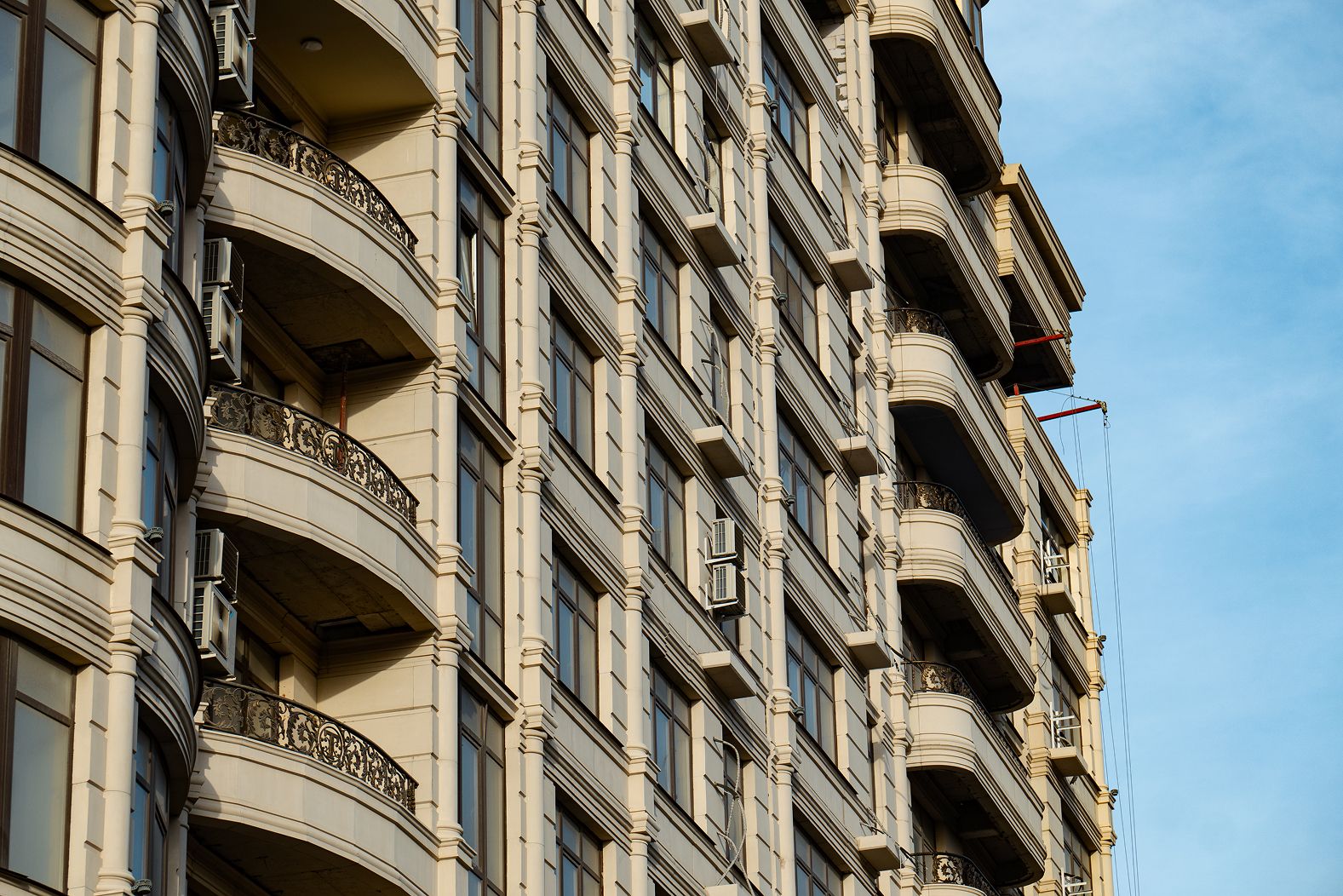
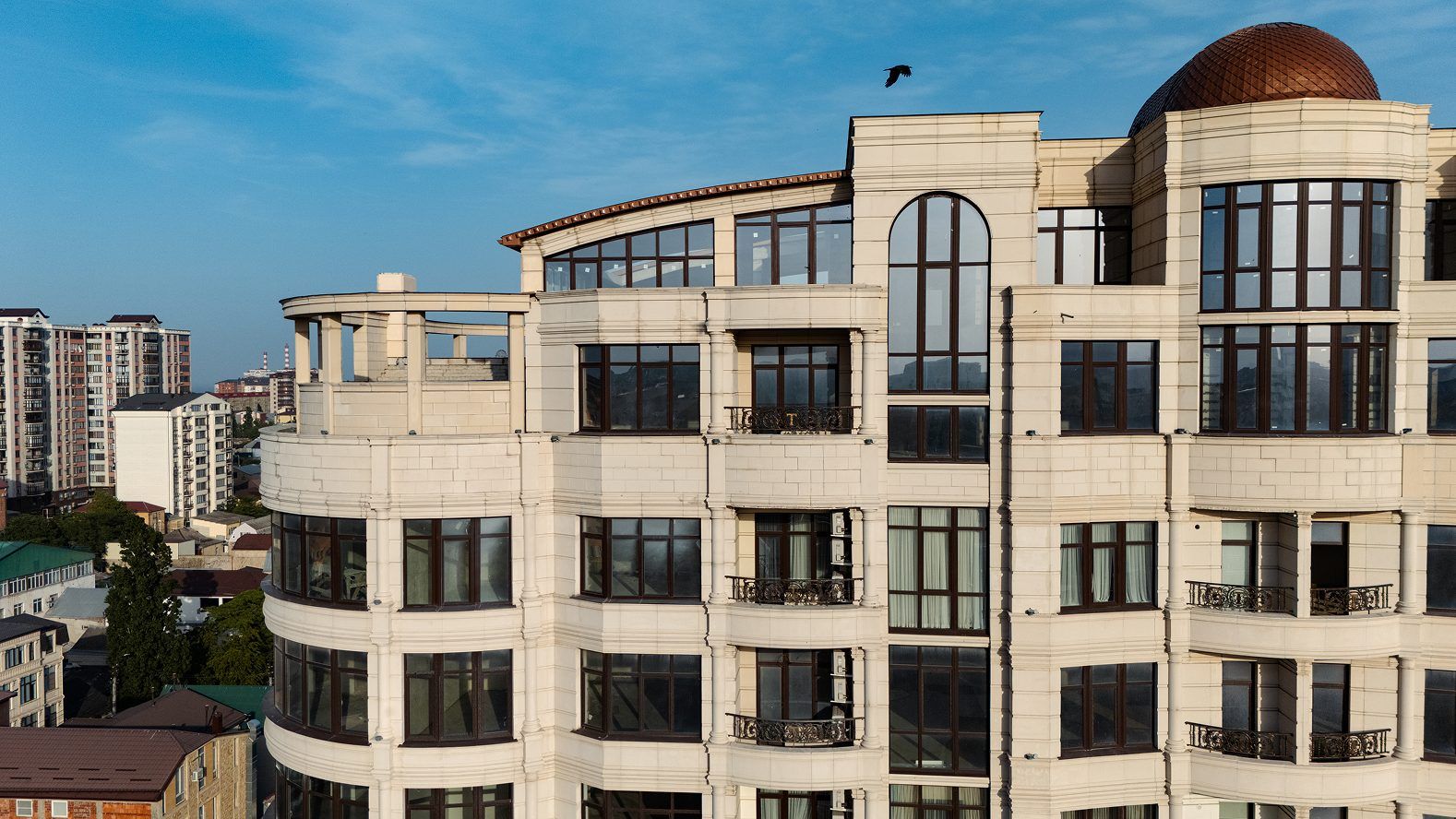
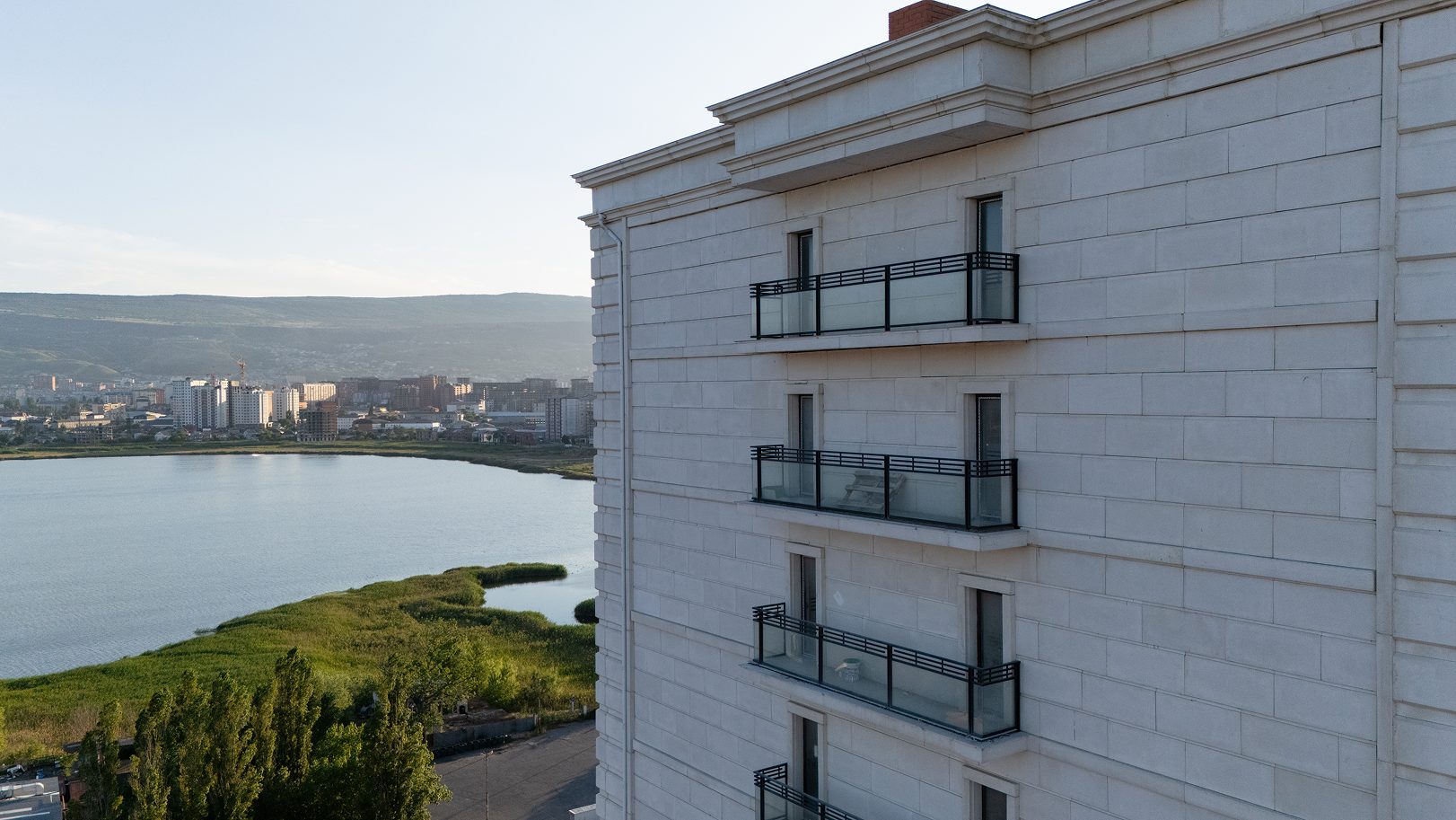
• Dominanta residential complex in Makhachkala — 18 storeys, 14,000 m² of GFRC and 13,000 m² of porcelain stoneware; design and installation.
• RUBLEVO BUSINESS PARK business centre in Moscow — 15,000 m² of GFRC and 5,000 m² of FRONTEK on a rainscreen facade.
All projects are under TECHNOFORMA projects. Frost is one of the causes of cladding deterioration; how it is taken into account when choosing materials is explained in Frost resistance of facade materials: what the F grade means.
FAQ
What should be done if facade cladding has fallen off?
Immediately fence off the danger zone, install nets and remove unstable elements if necessary, notify the owner or property manager and arrange a survey to find the cause.
Why do tiles fall off a facade?
Because of loss of adhesive bond with the substrate, voids and water freezing behind the cladding, anchor failure or corrosion of fixings in a rainscreen system, and installation errors.
Who is responsible when cladding falls?
Towards third parties — usually the owner or management organisation. If the cause is a construction defect, claims can be made against the developer or contractor within the warranty period.
How can cladding be prevented from falling?
A design with calculated fixings, anchor testing, installation control, sound drainage, regular inspections and timely replacement of damaged elements.
Is a rainscreen facade more reliable than tiles on adhesive?
For heavy and large-format cladding at height — yes: each element is mechanically fixed to a calculation, and the cladding is separated from wall movement. Provided it is installed and maintained correctly.