Choosing Facade Materials for the Regional Climate
A facade in a southern region must withstand strong heat and ultraviolet radiation, large daily temperature swings, downpours and wind, and on the coast salt aerosols as well. In central Russia, frost resistance under frequent freeze-thaw cycles comes first; in the north, prolonged frost, snow loads and thermal protection.
The main selection criterion is not abstract 'strength' but the resistance of the material and details to the specific climatic conditions of the site. Mineral materials — natural stone, glass fibre reinforced concrete (GFRC), porcelain stoneware — are broadly suitable for all zones, but with different requirements for rock type, mix design, fixing and protection.
This article is for architects and developers designing buildings in different regions. Related topics are in the section Facade Design and Selection.
Climatic Loads
Climatic loads on a facade are best divided into groups. Each requires its own check of the material and structure:
| Action | What happens | What to check |
|---|---|---|
| Heat and solar radiation | Thermal movement, pigment fading, ageing of polymers | Thermal gaps, colour lightfastness, sealant durability |
| Daily temperature swings | Cyclic expansion and contraction, fatigue of fixings | Movable details, spacing of movement joints |
| Freeze-thaw | Breakdown of porous materials when saturated with water | Frost resistance grade, water absorption |
| Wind | Pressure and suction, vibration | Substructure calculation, element fixings |
| Driving rain | Wetting, leaks at junctions | Water absorption, design of sills and cornices |
| Salts (sea, de-icing chemicals) | Efflorescence, corrosion of metal | Substructure material, cladding resistance |
| Seismic activity | Inertial loads on the cladding | Fixings and gaps by calculation |
Facades in hot climates are often underestimated: in summer, dark cladding on the south side can heat up far above the air temperature and then cool quickly at night. It is these swings, not the absolute temperature, that load the fixings and joints.
The South and the Caucasus
Southern Russia and the North Caucasus mean hot summers and intense sun; in the foothills and on the coast, strong winds and downpours; and in a number of areas, elevated seismicity. Winters are mild, but freeze-thaw transitions occur, and in mountain areas severe frost is possible.
What to consider when choosing materials:
• Colour lightfastness: integral pigments in GFRC and the natural colour of stone resist fading better than many painted surfaces; light tones heat up less.
• Thermal gaps between cladding elements and movable fixings.
• Salt environment on the Caspian and Black Sea coasts: corrosion-resistant substructure and fixings, stone resistant to efflorescence.
• Seismicity: the cladding and its fixings are designed for seismic loads; lightweight materials reduce inertial forces.
• Fire safety: non-combustible cladding on high-rise buildings.
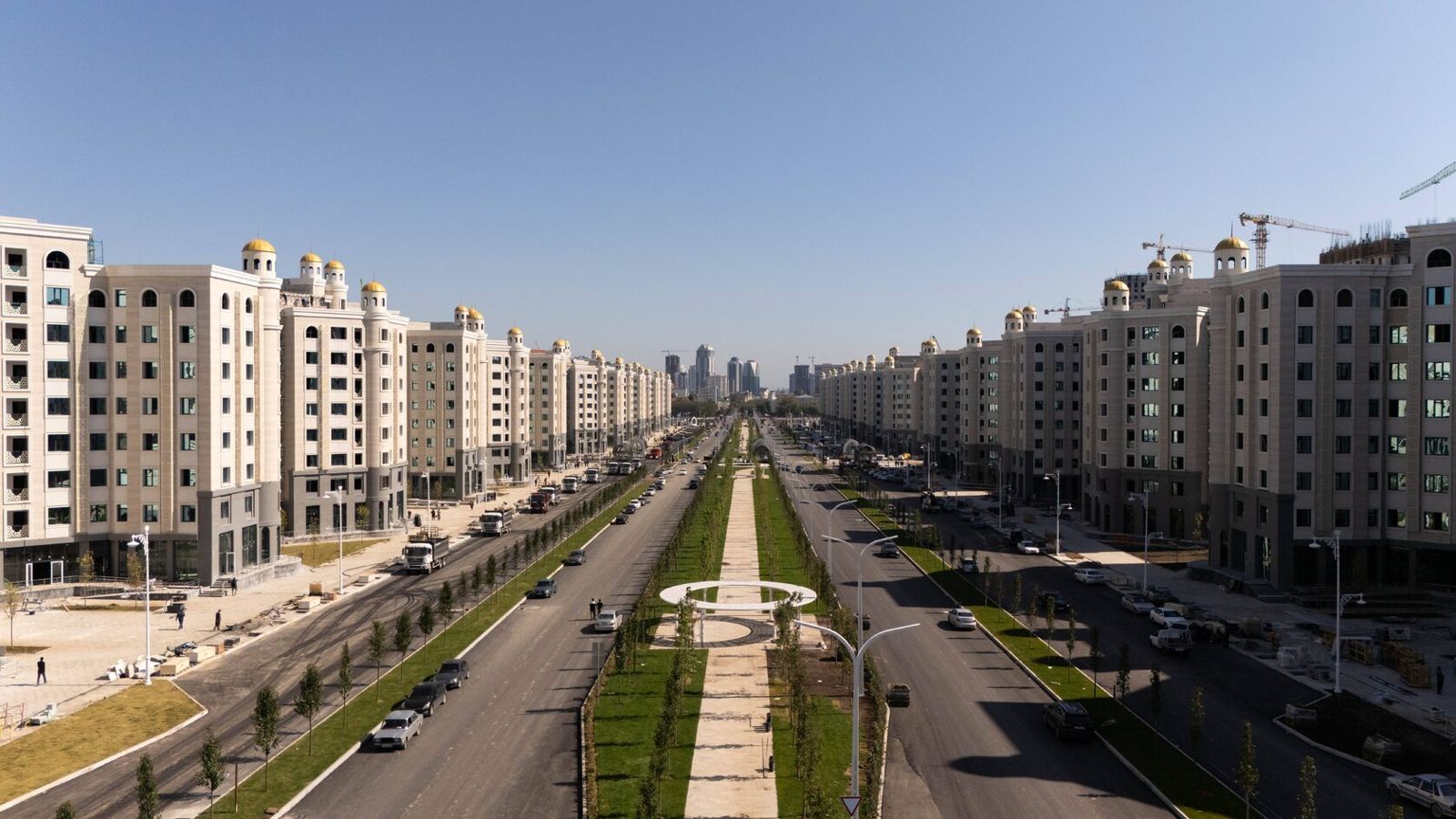
GFRC is in demand in this region: it is lightweight, non-combustible (NG class, according to the manufacturer) and allows decoration in keeping with the local architectural tradition. Most TECHNOFORMA Group projects are located here — in Dagestan, Chechnya, Karachay-Cherkessia and Stavropol Krai.
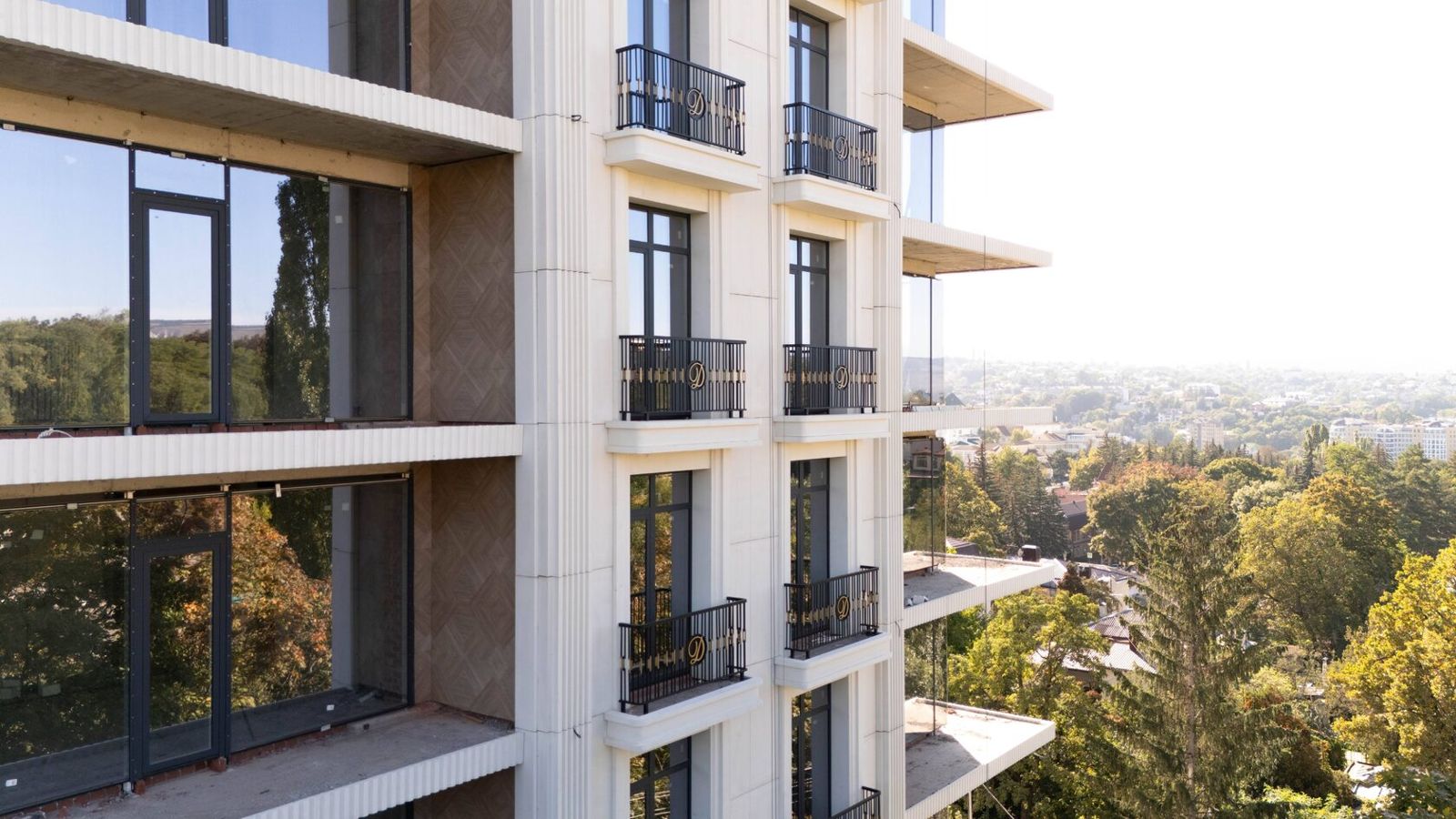
Central Russia
Central Russia has moderately cold winters with frequent thaws, a large number of freeze-thaw cycles per season, de-icing chemicals near pavements and wet snow. The most vulnerable zone of the facade is the plinth and lower floors, which receive water with snow and de-icing salts.
• Frost resistance of the cladding is the key property; for stone it depends on the rock type and quarry, for GFRC on the mix design and admixtures.
• Water absorption: the lower it is, the lower the risk of damage when water freezes in the pores.
• Plinth: dense stones — granite, basalt, dense limestone — or cladding designed for contact with de-icing chemicals.
• Water shedding: sills, cornices with drip edges, no horizontal ledges where snow can accumulate.
A ventilated rainscreen facade works well in this climate: the ventilated cavity removes moisture from the insulation, and the cladding protects the wall from direct wetting.
The North
The north and Siberia have long, severe frosts, heavy snow loads, strong winds and a short construction season. Facade requirements here are stricter:
• High frost resistance of the cladding, confirmed by tests for the specific batch or mix design.
• Insulation thickness per thermal calculation — usually greater than in central regions, which increases bracket projection.
• Fixings designed for thermal movement of the substructure with a large winter–summer temperature range.
• Snow and ice: cornices and projecting decoration are designed so that snow does not accumulate on them and icicles do not form above pavements.
• Ease of installation in a short season: factory-finished elements, a minimum of wet processes on site.
Work schedules on northern projects should allow for the season: some operations — sealing, painting — are limited by temperature.
Making the Choice
In summary, the material recommendations look like this. Properties depend on the specific product, mix design or quarry; exact values are in the product passport and test report.
| Material | South and Caucasus | Central | North |
|---|---|---|---|
| GFRC | Suitable; lightweight, non-combustible, lightfast integral colour | Suitable with confirmed frost resistance | Suitable with confirmed frost resistance and fixing calculation |
| Granite, basalt | Suitable, including for plinths | Optimal for plinths | Optimal for plinths and main cladding |
| Limestone, sandstone, shell limestone | Traditional material; water-repellent treatment needed | Dense frost-resistant varieties only | Limited use, after testing |
| Porcelain stoneware | Suitable | Suitable | Suitable |
The final choice is made for the specific project, taking into account building use and height, fire safety requirements, seismicity and budget. According to TECHNOFORMA Group, the frost resistance of its GFRC is high and is improved with admixtures.
Examples from TECHNOFORMA Projects
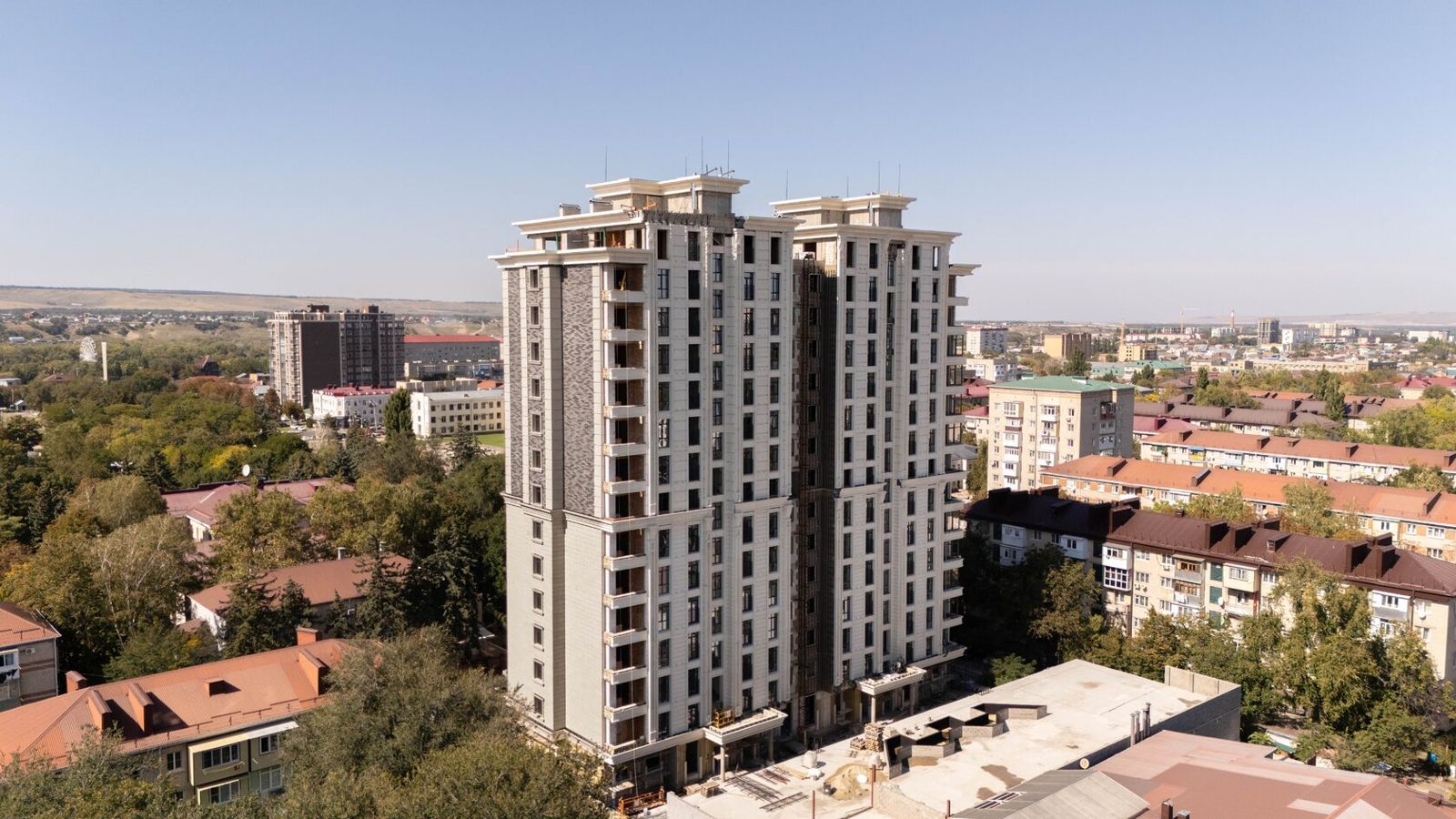
TECHNOFORMA Group knows the climate of the south and the Caucasus from its own projects. The Dominanta residential complex in Makhachkala on the Caspian Sea — 4 buildings of 18 storeys, 14,000 m² of GFRC and 13,000 m² of porcelain stoneware, design and installation, 11.2022–10.2024.
The Dinastiya club house in Kislovodsk — a foothill resort with a different climate from the coast: 6,000 m² of GFRC, 700 m² of porcelain stoneware and 700 m² of granite, 01.2024–06.2025. Other projects are in the section TECHNOFORMA projects. More on regional specifics in the article Facades in the Caucasus: Materials and Style.
FAQ
Which facade is best for a southern region?
Mineral cladding with durable colour and well-designed thermal gaps: GFRC, natural stone, porcelain stoneware; on the coast, with a corrosion-resistant substructure.
What matters for a facade in a hot climate?
Resistance to heat and UV, light tones, movable fixings and movement joints designed for daily temperature swings.
How do I check a facade's frost resistance?
By the frost resistance grade of the cladding in the product passport or test report, and by the material's water absorption.
Is GFRC suitable for northern regions?
Yes, if the frost resistance of the mix design is confirmed by tests and the fixings are designed for thermal movement.
Which stone should I choose for a plinth?
Dense frost-resistant stones — granite, basalt, dense limestone; the final choice depends on test results for the specific quarry.