Facades in the Caucasus: Materials and Style
Facades in Makhachkala, Grozny and other cities of the Caucasus differ from those elsewhere in Russia: there is a strong tradition of stone architecture and expressive decoration, clients more often choose classical and oriental motifs, and designers must take into account high seismicity, hot summers, wind and, on the coast, a maritime climate.
The main criterion for choosing cladding in the region is a combination of three conditions: consistency with the local architectural language, low weight and secure fixing designed for seismic loads, and resistance to sun and moisture. That is why natural stone, including Dagestan stone, and glass fibre reinforced concrete (GFRC) decoration, which reproduces stone forms at a lower weight, are widely used here.
This article is for developers, architects and private clients in Dagestan, Chechnya, Ingushetia, Kabardino-Balkaria, Karachay-Cherkessia and Stavropol Krai. General questions are covered in the section Facade Design and Selection.
Architectural Traditions
The architecture of the Caucasus developed at the crossroads of several traditions, and all of them show up in new facades today in one way or another:
• Local stone architecture: residential towers, fortresses, village houses of dressed stone, carved stone details — door and window surrounds, ornamental slabs.
• Oriental and Islamic tradition: pointed and ogee arches, geometric and floral ornament, domes, arcades and galleries.
• Russian and Soviet classicism: the order system, cornices, pilasters, rusticated plinths in historic city centres.
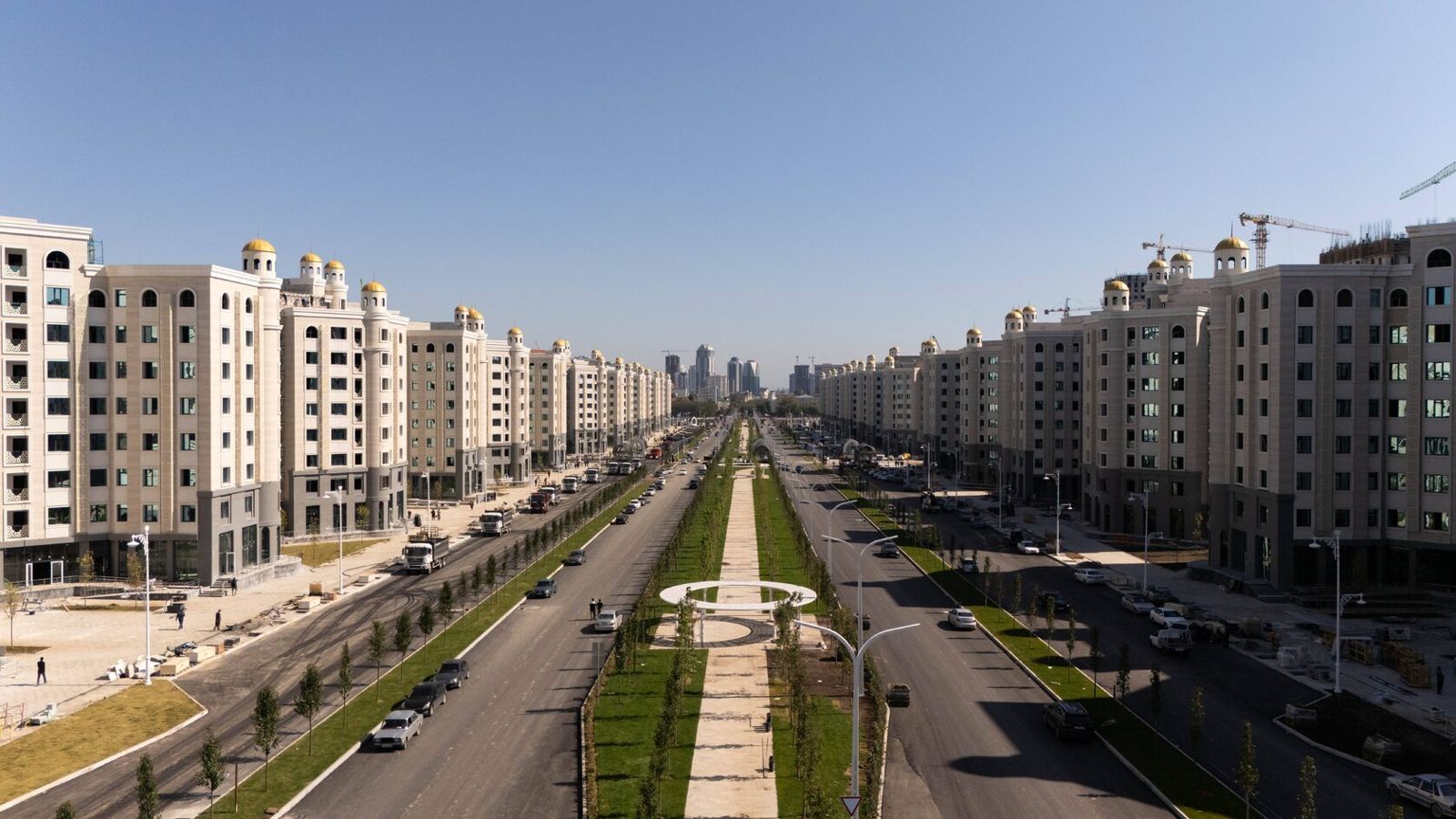
• Contemporary 'oriental classicism' in new construction: classical proportions combined with arches and ornament, light-coloured facades, rich decoration on hotels and club houses.
For production, this means a large volume of custom decoration: arches, columns, balustrades, ornamental panels. GFRC makes it possible to reproduce such forms from custom models, while natural stone is used for plinths, entrance groups and accents.
Local Stone
Dagestan is one of Russia's best-known stone-producing regions. Local limestones and sandstones in light, sandy and cream tones have historically been used in construction and are in demand today for cladding and decoration. TECHNOFORMA Group states that it has extensive experience of working with Dagestan stones.
| Material | Where it fits | What to watch |
|---|---|---|
| Dagestan limestone, sandstone | Wall cladding, decoration, surrounds | Water absorption and frost resistance of the specific quarry; water-repellent treatment |
| Shell limestone (coquina), dolomite | Walls, decoration in a mild climate | Porosity, protection from wetting |
| Granite, basalt | Plinths, steps, paving | Weight — fixings designed for seismic loads |
| Travertine, marble | Entrance groups, interiors, accents | Weather resistance varies between varieties |
Stone properties depend on the quarry and even on the bed within it, so facade cladding requires test reports for the specific batch. In addition to local stone, the company imports stone from India, Turkey, China and Iran and processes both soft rocks (sandstone, shell limestone, dolomite, limestone) and hard ones.
Seismic Activity
Most of the North Caucasus is classified as highly seismic, and this determines facade design. During an earthquake, cladding experiences inertial loads proportional to its mass, while the building frame itself deforms, and the facade must follow these deformations without elements falling out.
• Lightweight cladding reduces inertial loads: thin-walled GFRC products weigh significantly less than stone slabs of comparable size.
• Cladding fixings and the substructure are designed for the seismic action at the specific site.
• Gaps between elements and movement joints allow the cladding to move together with the frame.
• Large decorative elements and heavy stone slabs require additional mechanical fixing, not adhesive alone.
Fixings are covered in detail in a separate article, linked below.
Climate
The region's climate is varied. The Caspian coast has hot, dry summers, strong winds, mild winters and humid, salt-laden sea air. The foothills and the Caucasian Mineral Waters resorts have a temperate climate with noticeable winters. The mountains have cold winters and strong ultraviolet radiation.
• Sun: lightfast pigments, light-coloured cladding, thermal gaps.
• Wind: substructure and fixings designed for wind load, especially for high-rises on the coast.
• Sea air: corrosion-resistant fixings and substructure, stone resistant to efflorescence.
• Downpours: cornices with drip edges, sills, water-repellent treatment of porous stones.
• Mountain areas: confirmed frost resistance of the cladding.
According to TECHNOFORMA Group, its GFRC has high frost resistance, which is further improved with admixtures, and is a non-combustible material.
Typical Solutions
The solutions most often seen on new facades in the region:
• Multi-storey residential complexes in Makhachkala, Grozny and Cherkessk with GFRC cladding: cornices, pilasters, window surrounds, rusticated ground floors.
• Hotels and club houses with rich decoration: colonnades, balustrades, arched galleries.
• Public buildings — universities, administrative buildings — with a strict classical composition.
• Private houses clad in local stone with GFRC decoration.
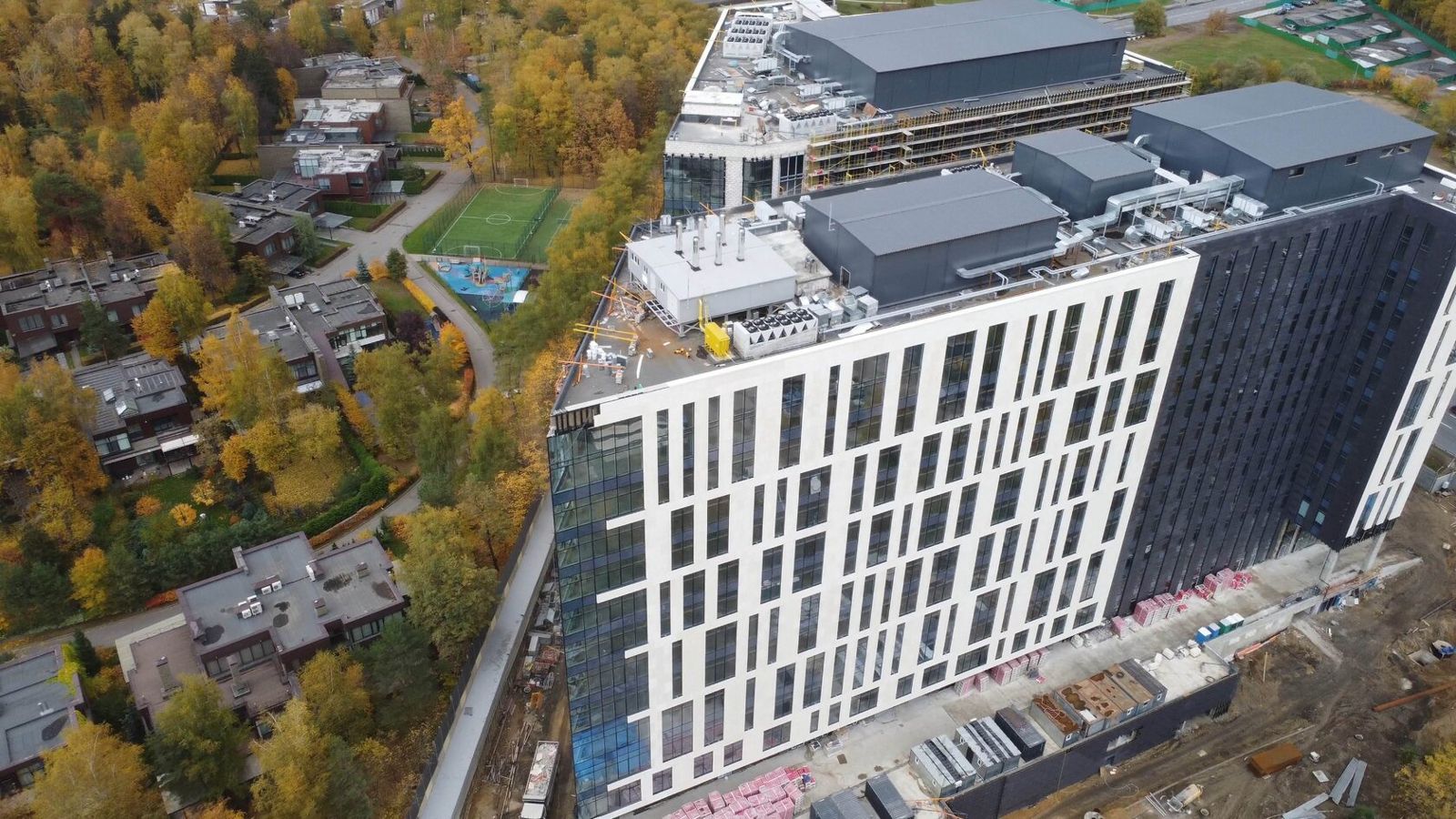
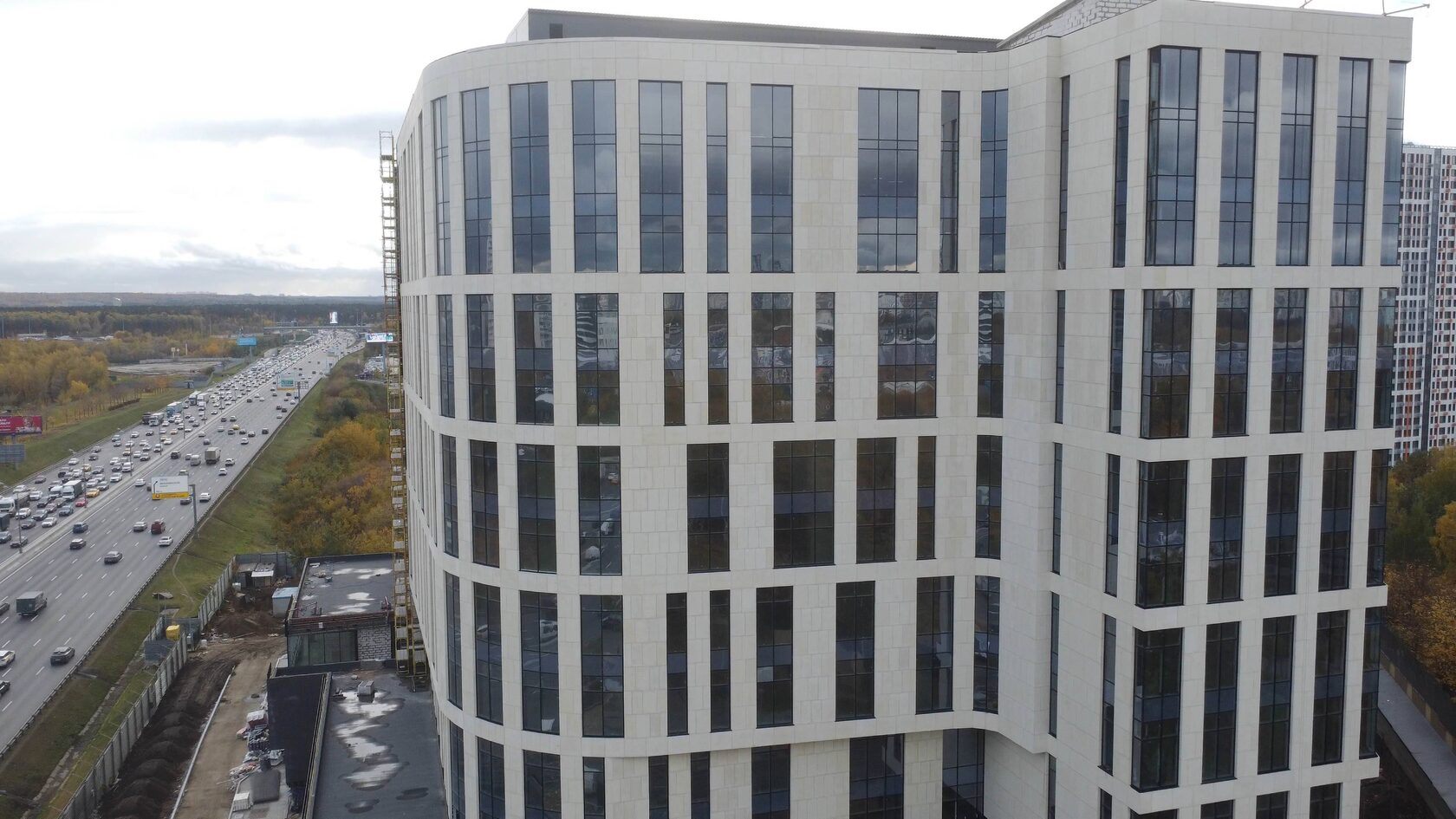
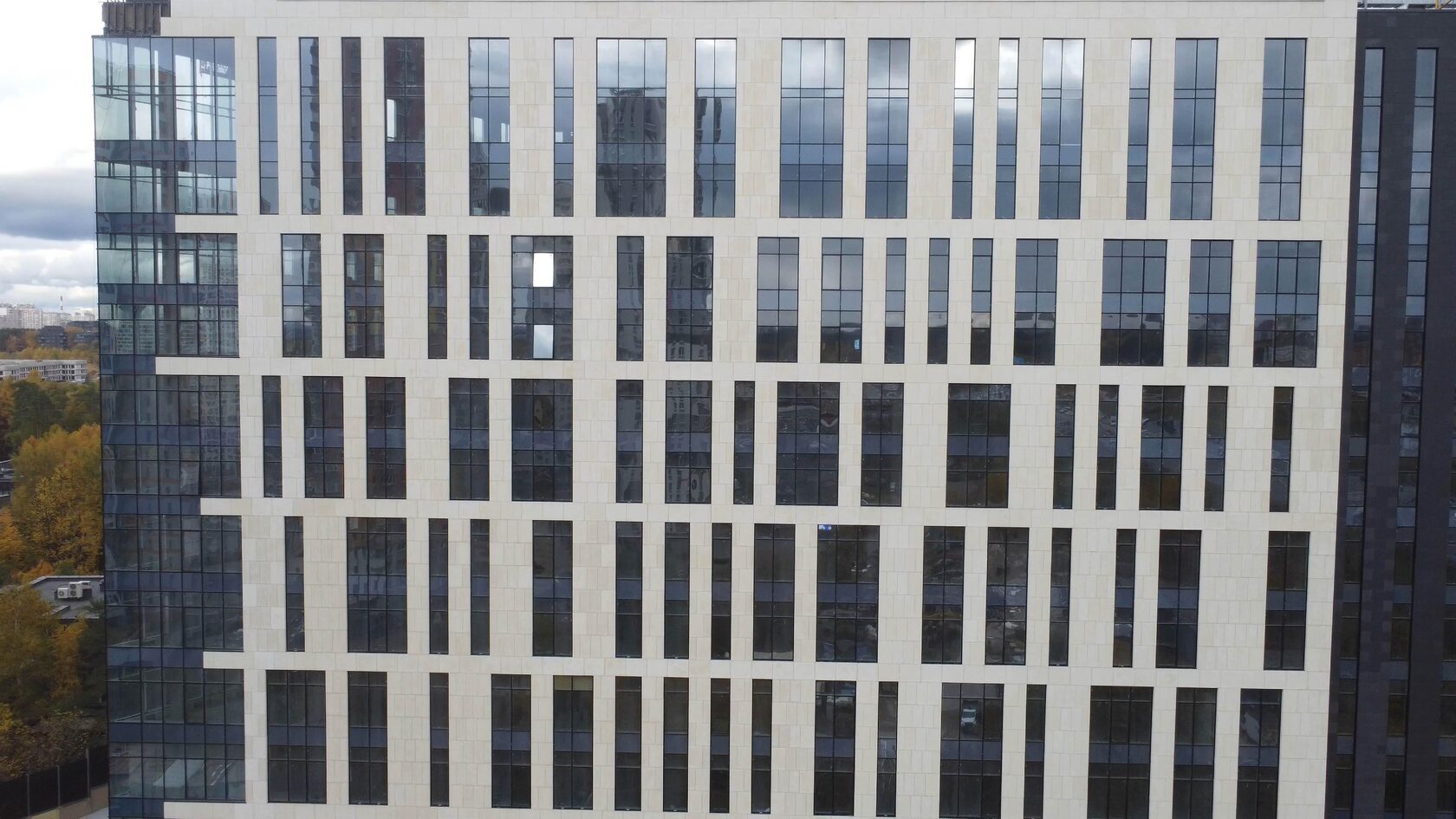
• GFRC combined with porcelain stoneware on high-rise buildings: decoration in the zones people look at, panels on large surfaces.
The typical solution for a high-rise is a ventilated rainscreen facade with insulation and cladding, where decorative elements are fixed to the substructure or to load-bearing structures with engineered fixings.
Logistics also matter for projects in the region: large decoration is better stored and shipped closer to the site. TECHNOFORMA Group has warehouses including in Makhachkala and Novorossiysk, while its production base and stone warehouses are in the Moscow Region.
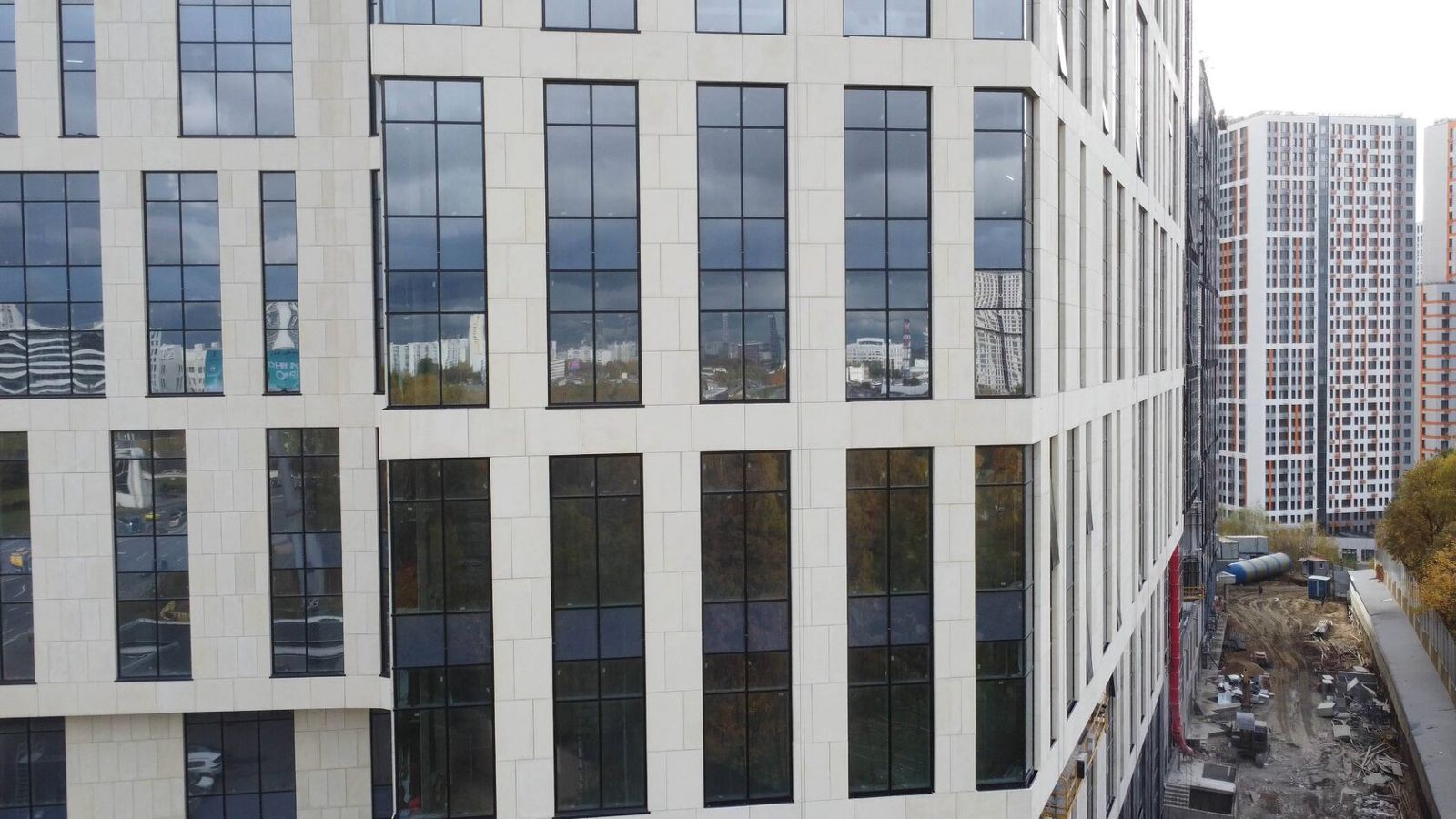
Examples from TECHNOFORMA Projects
Most TECHNOFORMA Group projects have been built in the Caucasus. In Makhachkala: the Dominanta residential complex (4 buildings of 18 storeys, 14,000 m² of GFRC and 13,000 m² of porcelain stoneware), Anzhi-City, Triumf, Zolotye Klyuchi, Belgravia and Bogatyreva.
In Grozny: the Dubai Houses residential complex (30 buildings, 70,000 m² of GFRC, 01.2025–07.2025) and Chechen State University (12,000 m² of GFRC, design and installation supervision). The full list is in the section TECHNOFORMA projects. On fixing cladding for seismic conditions, see the article Facades in Seismic Zones: Fixing the Cladding.
FAQ
Which facade should I choose in Makhachkala?
Lightweight non-combustible cladding designed for seismic loads and the maritime climate: GFRC decoration, natural stone with mechanical fixing, porcelain stoneware on a corrosion-resistant substructure.
Who builds facades in Grozny?
In Grozny, TECHNOFORMA Group carried out design and installation of the cladding for the Dubai Houses residential complex, and design with installation supervision for the facades of Chechen State University.
Can a facade be clad in Dagestan stone?
Yes, provided the batch's water absorption and frost resistance are confirmed by tests and it is mechanically fixed with seismic loads taken into account.
Why is GFRC often chosen in the Caucasus?
It is lightweight, which matters in seismic areas, non-combustible, and allows arches, columns and ornament to be made from custom moulds.