Scaffolding or Suspended Platforms: How High-Rise Facades Are Installed
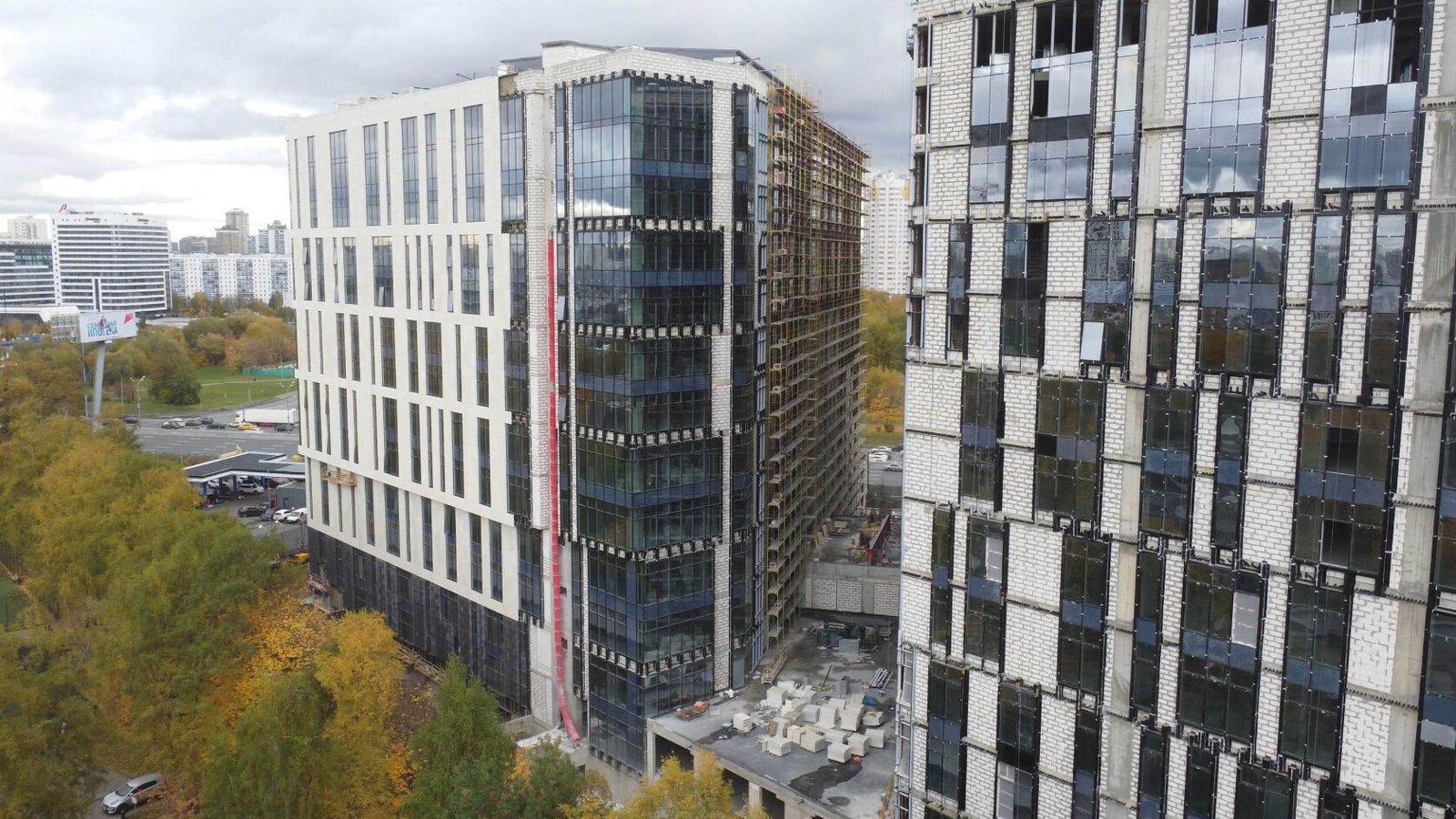
Facade scaffolding is a modular structure of standards, ledgers and decks that stands on the ground along the wall and gives installers a continuous working platform on every storey. The alternative is suspended facade cradles (gondolas): hanging platforms raised and lowered on wire ropes by hoists fixed to outriggers on the roof. There is also a third class: mast climbing work platforms and self-propelled aerial work platforms.
The main selection criterion is not height alone but the combination of height, the volume of work on one section of the wall and the weight of the cladding elements. Scaffolding wins when several crews work on the wall at once and material has to be stored on the working level; cradles win when the work front is narrow and vertical and the building is tall.
This article is for general contractors, site managers and technical supervisors planning the installation of a rainscreen facade on a multi-storey building. For background on the systems themselves, see Ventilated rainscreen facades.
Facade access options
In practice a high-rise facade is installed using one of four methods, and on large projects they are combined section by section.
| Method | How it works | Strengths | Limitations |
|---|---|---|---|
| Frame and wedge-lock scaffolding | Stands on the ground or on brackets, tied back to the wall with anchors | Continuous work front, space for material, simultaneous work on many levels | Slow to erect and dismantle, anchors in the wall, height limits without structural calculation |
| Suspended facade cradles | Platform on wire ropes, hoists and outriggers on the roof | Quick start, no footprint on the ground, suitable for great heights | Narrow work section, wind-dependent, little room for material |
| Mast climbing work platforms | Platform travels along a mast tied to the building | Wide platform, high load capacity, room for several workers | Needs level ground at the base and ties to the building frame |
| Truck-mounted lifts and self-propelled platforms | Mobile machinery with a basket | Spot repairs, lower floors, plinth, entrance areas | Limited height and reach, vehicle access required |
The choice is recorded in the method statement for the works (known in Russia as PPR): it specifies the type of access equipment, tie-in schemes, storage zones and danger zones.
Working at height
Installing a ventilated rainscreen facade at height is a sequence of operations: setting out and fixing brackets, insulation and wind barrier, substructure rails, then the cladding. Each operation puts different demands on the access equipment.
• Brackets and anchors involve drilling and a lot of horizontal movement. This is easier from scaffolding or the wide platform of a mast climber.
• Insulation is light but bulky; on a cradle it has to be delivered in batches.
• Cladding is where element weight decides. Porcelain stoneware and light cassettes are installed from cradles. Large glass fibre reinforced concrete (GFRC) panels and natural stone slabs are heavier; they are often lifted by crane or hoist, while installers stand on scaffolding or a platform and guide the element into its design position.
Decorative elements are a separate topic: cornices, string courses, window surrounds, columns. They are fixed to embedded plates and brackets using project-specific details, and the installer needs stable footing and both hands free. That is why, even when the main front is done from cradles, areas of complex ornament are often scaffolded.
Safety
In Russia, work at height is governed by occupational safety rules for working at height approved by the Ministry of Labour, plus the method statement for the specific site and the equipment certificates. Key points checked by technical supervision:
• scaffolding is erected according to its certificate or a structural calculation, tied to the wall as specified, with guardrails and toe boards; after erection it is accepted by a signed record and inspected regularly;
• cradles and hoists undergo technical inspection and operate with fall arrest devices and a safety rope separate from the working rope; workers are clipped to an independent anchor line;
• when wind rises above the permissible value for the equipment, work in the cradle stops; this is stated in the certificate and the method statement;
• a danger zone for falling objects is marked at ground level, and protective canopies are installed over entrances;
• only trained workers with the appropriate safety qualification and a work permit are allowed to work at height.
For rainscreen facades with heavy cladding, the slinging and lifting scheme is checked separately: a panel or slab must not swing against the wall, and an installer should not receive it while standing on the edge of a narrow platform.
Cost
There is no universal price per square metre for access equipment: the cost is made up of rental, delivery, erection and dismantling, and for cradles also roof fixings and repositioning between sections.
• Scaffolding: costs grow in proportion to facade area and rental period; a significant share goes on erection and dismantling.
• Cradles: lower one-off set-up costs, but every move along the perimeter has to be planned; productivity is lower when the cladding is heavy.
• Mast climbers: more expensive to rent, but on large areas they can pay off through faster progress.
The right way to compare options is by the total cost of the whole work cycle, not by the rental rate: slow installation from cheap access equipment extends the construction schedule. TECHNOFORMA determines the cost of facade installation after inspecting the site, and the method of access to the wall is included in the estimate.
How to choose
A short checklist to help decide at the method statement stage:
1. Assess height and geometry: a continuous flat wall argues for cradles or mast climbers; lots of projections, bay windows and balconies argue for scaffolding.
2. Look at the weight and format of the cladding: light porcelain stoneware suits a cradle; large GFRC panels and stone call for scaffolding or platforms with a crane.
3. Check the ground: is there room for scaffold bases and a mast foundation, and will landscaping, neighbouring buildings or driveways get in the way?
4. Consider the schedule: if several trades work on the wall in parallel, scaffolding gives every crew a work front at once.
5. Consider climate and season: windy sites reduce the number of working days in a cradle.
A combination is often best: scaffolding on the lower floors and in areas of complex ornament, cradles or mast climbers on typical floors.
Examples from TECHNOFORMA projects
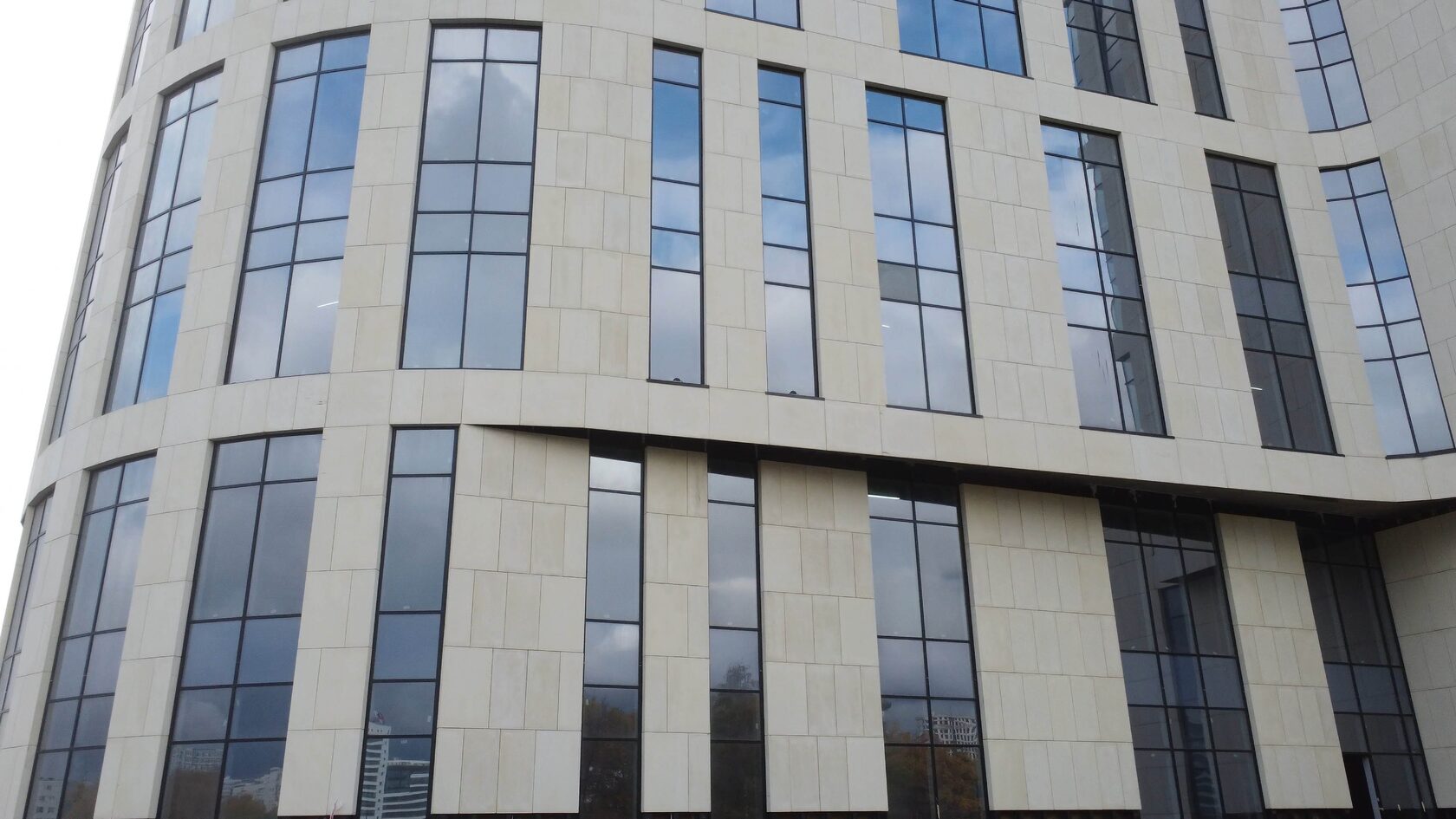
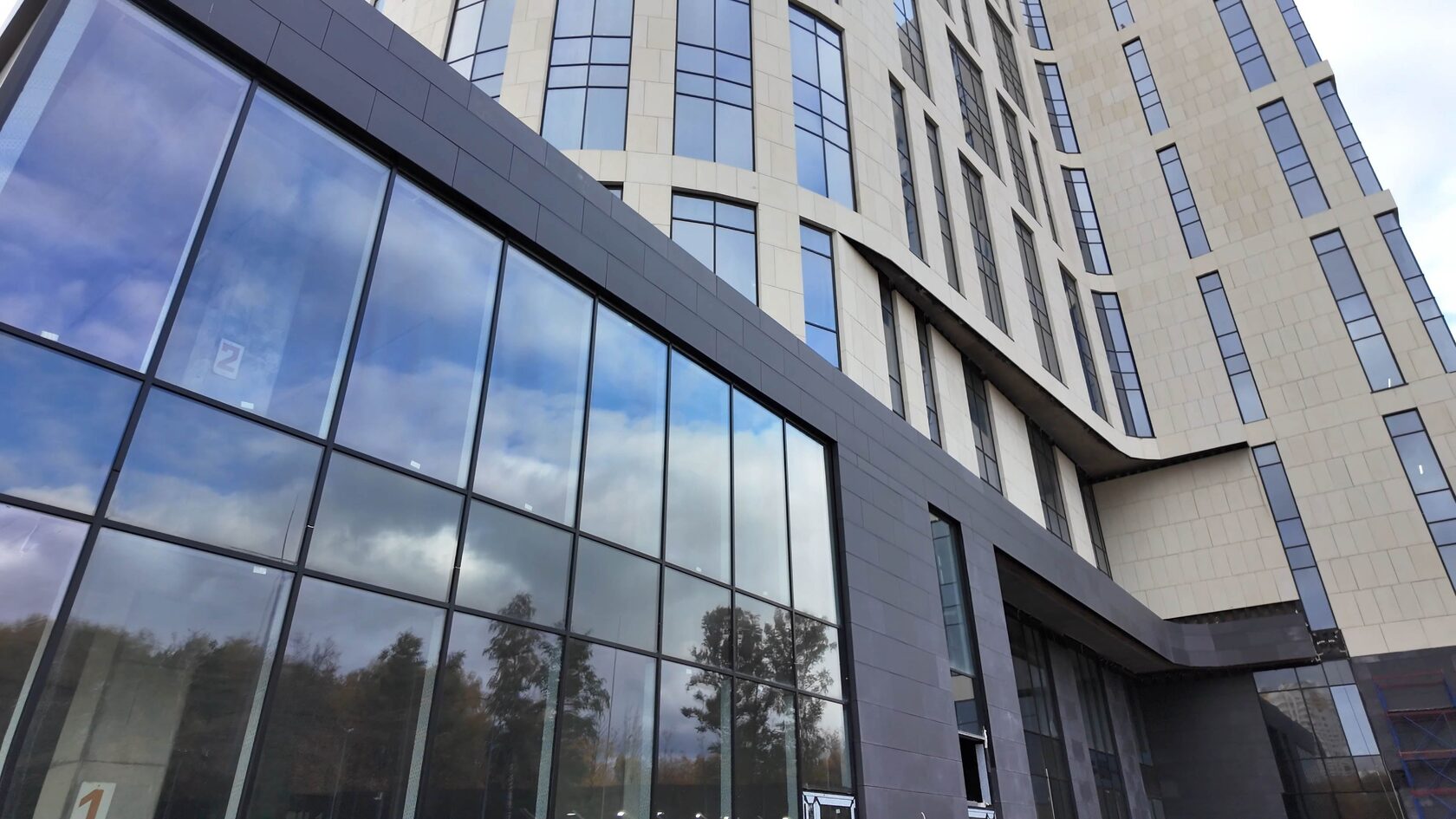
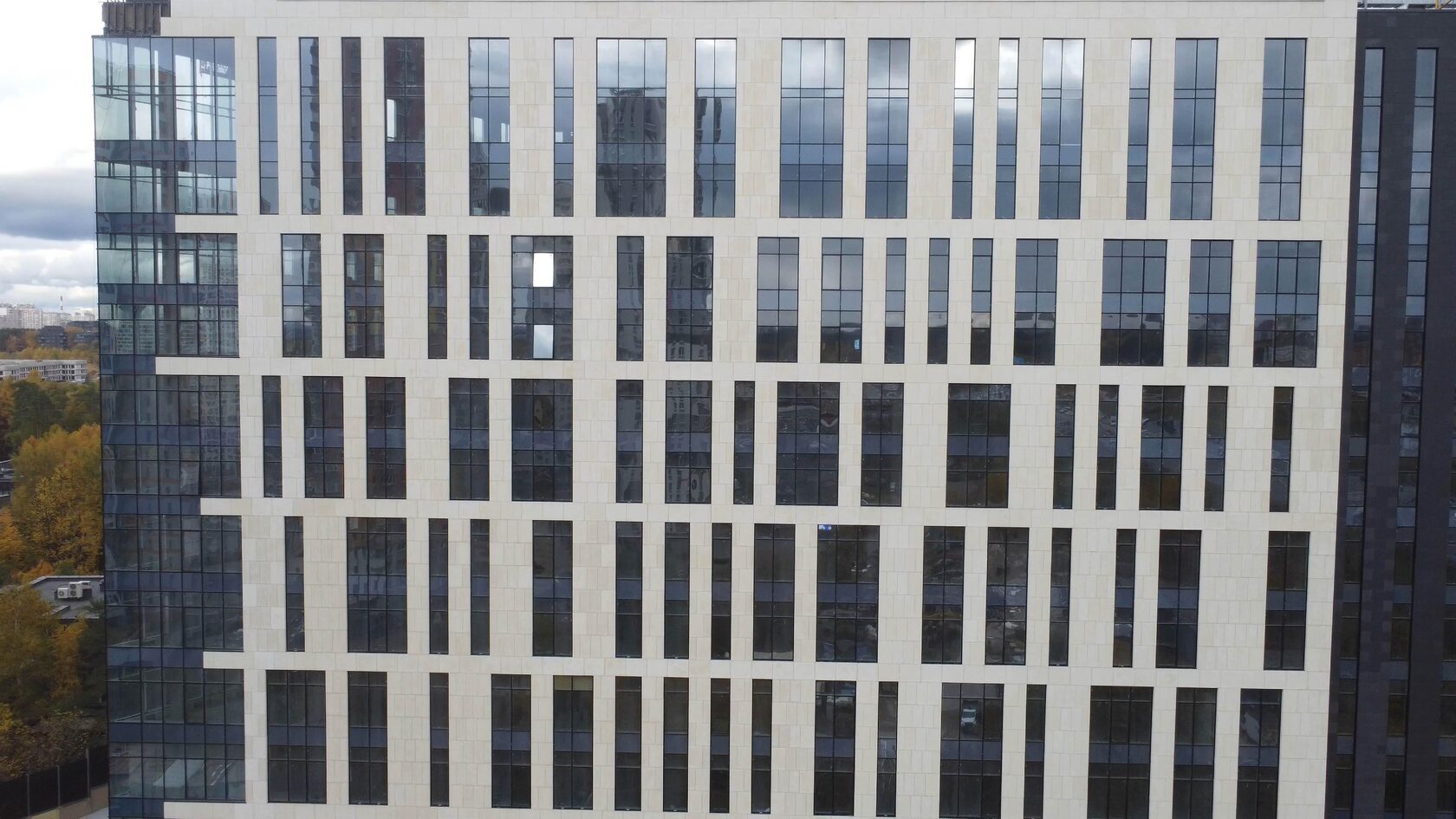
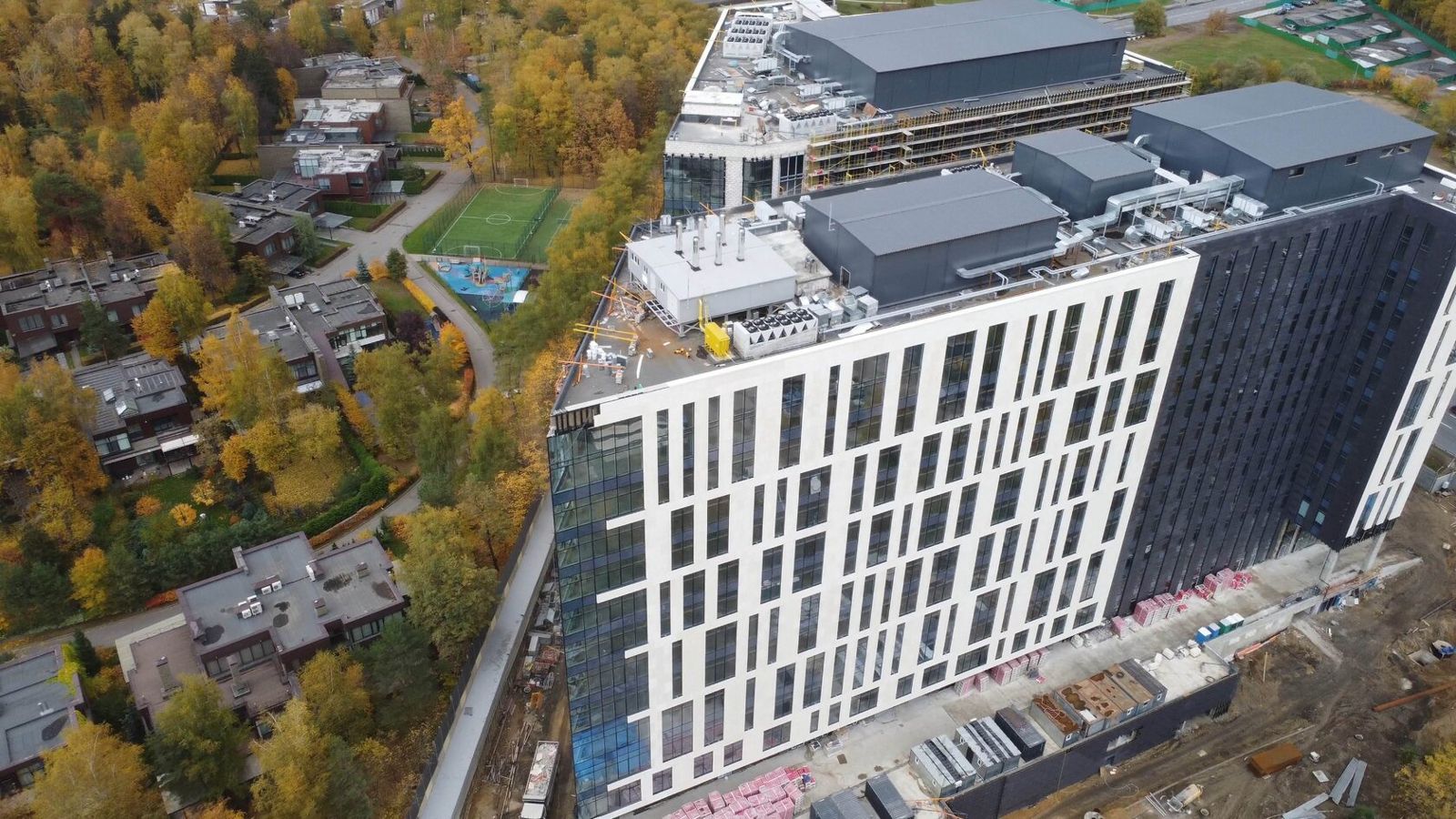
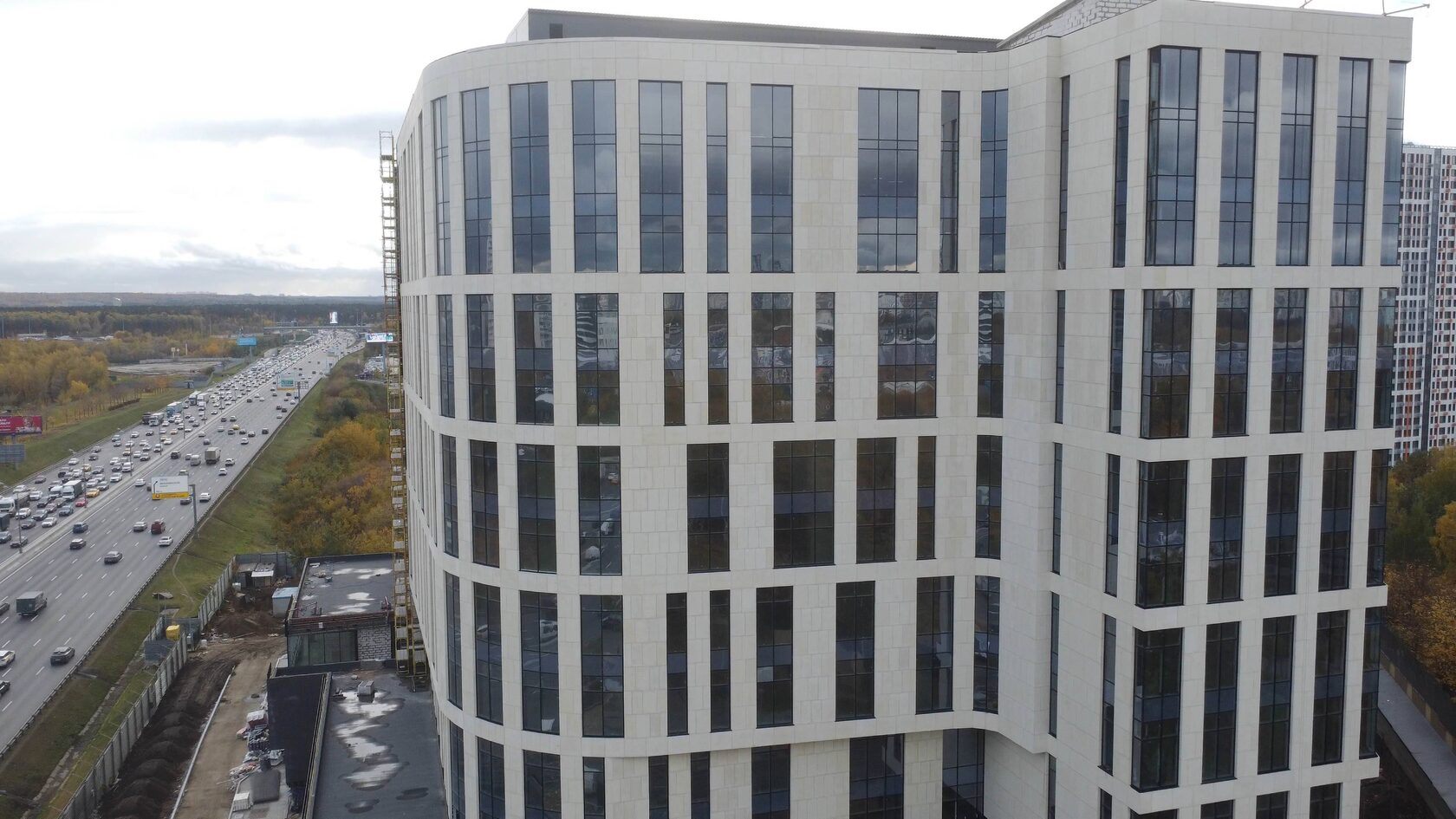
TECHNOFORMA handles the full cycle on site: design, substructure, insulation and cladding installation by its own installation team (100+ specialists). One example is RUBLEVO BUSINESS PARK in Moscow: 12 storeys, 2 buildings, 15,000 m² of glass fibre reinforced concrete and 5,000 m² of FRONTEK, design and installation in 2023–2025. Another multi-storey example is the Dominanta residential complex in Makhachkala: 18 storeys, 4 buildings, 14,000 m² of GFRC and 13,000 m² of porcelain stoneware.
All projects are listed under TECHNOFORMA projects. If you are still choosing a facade system type, read Render facade vs ventilated facade: a comparison.
FAQ
Which is better for a high-rise facade: scaffolding or suspended cradles?
It depends on the volume of work and the cladding. Cradles are quicker to set up and suit tall flat walls with light cladding. Scaffolding provides a continuous front for several crews and is more convenient for heavy panels and complex ornament. On large projects the methods are combined.
Can GFRC panels be installed from facade cradles?
Small elements, yes. Large panels are usually lifted by crane or hoist, and installers receive them from scaffolding or a wide platform. The decision is recorded in the method statement, taking into account element weight and the slinging scheme.
Do you need permits to put up scaffolding against a facade?
Scaffolding is erected according to its certificate or a calculation and accepted by a signed record. If it occupies a pavement or public land, approval from the local authority and a works permit are required; the procedure depends on the city.
At what wind speed is working in a cradle not allowed?
The maximum wind speed is stated in the certificate of the specific cradle and in the method statement. If it is exceeded, work stops and the cradle is lowered and secured.
How much does facade installation cost including scaffolding?
The cost depends on the area, height, cladding type and the method of access to the wall. TECHNOFORMA calculates it after inspecting the site.