What Makes Up the Cost of a Ventilated Facade
The cost of a ventilated facade is made up of cladding, substructure, insulation with membrane and fasteners, installation labour, access equipment, design and associated work — reveals, sills, parapets, tests. An advertised "per square metre" price almost never includes all of this at once, so comparing it with a real estimate is pointless.
The main price factor is the cladding and the complexity of the facade: stone and architectural GFRC cost differently from porcelain stoneware, and a facade with dozens of openings and projections costs differently from a blank wall. This article helps clients and general contractors understand the structure of an estimate and compare quotes on the same scope of work. At TECHNOFORMA, the cost is determined after a site inspection.
Basic concepts are in the Ventilated rainscreen facades section.
Estimate structure
A full rainscreen facade estimate usually contains the following groups of items:
| Group | What is included | What it depends on |
|---|---|---|
| Design | Survey, geodetic survey, layout, substructure calculation, details, anchor tests | Facade complexity, availability of existing documentation |
| Cladding | Tiles, panels, architectural elements, cladding fixings | Material, format, degree of bespoke elements |
| Substructure | Brackets, rails, anchors, fasteners, fire barriers | Cladding weight, offset, wind zone, material |
| Insulation | Insulation, membrane, dowels | Thickness, brand, number of layers |
| Trims and flashings | Reveals, sills, parapet cappings, junctions | Number of openings, perimeter |
| Installation labour | Installing all layers, inspection, as-built documentation | Height, complexity, timescale |
| Access and mechanisation | Scaffolding, cradles, hoists, cranes | Height, configuration, duration |
| Logistics | Delivery, storage, lifting to level | Distance, site constraints |
The proportions between groups depend on the project. On a facade with simple porcelain stoneware, a large share goes to the substructure and labour; on a natural stone or complex GFRC facade, most of the cost is in the cladding and its fixing.
Cladding
Cladding is the most variable item in an estimate.
• Porcelain stoneware — standard formats from stock, predictable price; large formats and concealed fixing cost more.
• Fibre cement and composite — sheet materials; price depends on the manufacturer, coating and fire hazard class.
• GFRC — elements are made to the design. Cost depends on the number of element types, complexity of form, texture and finish. The more repeated elements, the more efficiently moulds are used. TECHNOFORMA makes models and moulds in its own mould shops, so tooling costs stay within the manufacturer's cycle.
• Natural stone — price is determined by stone type, quarry, thickness, surface finish and logistics. TECHNOFORMA imports stone from India, Turkey, China and Iran, keeps a warehouse stocking material from these countries, and supplies stone to order from anywhere in the world.
Cutting waste, allowance for breakage and replacement, packaging and delivery are separate items that are often invisible in a "per metre" price.
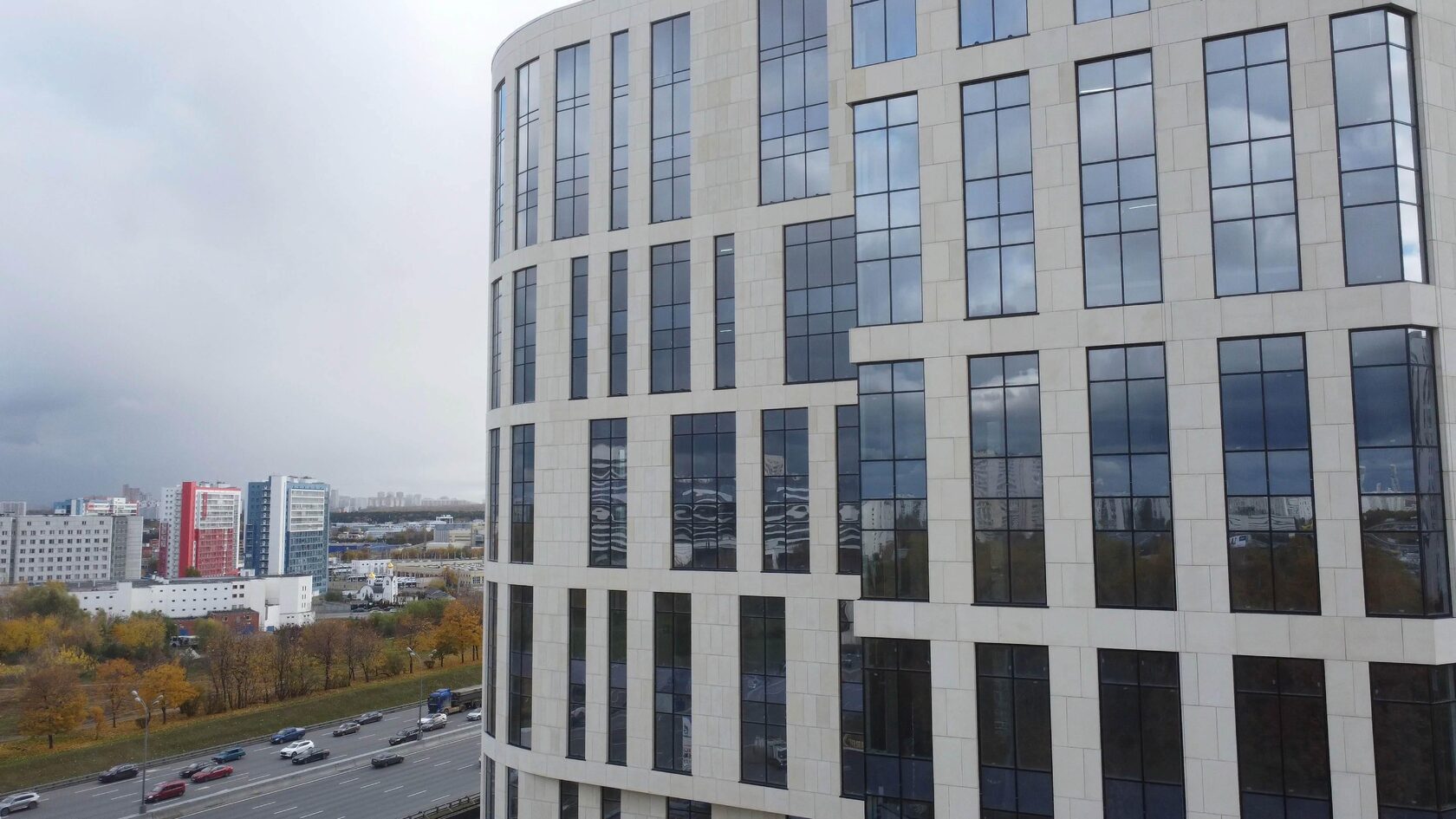
Substructure and insulation
A substructure for heavy cladding costs more: more brackets, stronger profiles, more anchors. Cost is affected by:
• material — aluminium, galvanised or stainless steel;
• bracket offset — thick insulation and an uneven wall increase it;
• spacing, determined by calculation for wind and weight and by anchor test results;
• fire barriers and steel opening surrounds;
• bespoke details — cornices, projections, curved surfaces.
Insulation and membrane are priced by area and thickness; two-layer insulation adds labour. Economising on the insulation brand is dangerous: a system with a technical certificate is designed for specific materials. Substructure costs become most accurate after anchor tests and calculation — until then the figure remains an estimate.
Labour and scaffolding
Installation cost depends on more than area.
• Height and number of storeys — the higher the building, the higher the costs of access, lifting and safety.
• Facade complexity — the number of openings, corners, projections and junctions. Two facades of the same area can differ in labour several times over.
• Cladding type — heavy elements require mechanisation.
• Access equipment — scaffolding is more expensive to hire and erect but allows several crews to work; cradles are more economical on tall, simple facades.
• Timescale and season — tight deadlines mean more crews; winter work means additional measures.
• Remoteness and logistics — travel expenses, delivery. TECHNOFORMA has warehouses from Novorossiysk and Makhachkala to Novosibirsk and Yekaterinburg, and its production base is in the Moscow region.
How to compare quotes
For a fair comparison, quotes must be brought to the same scope.
1. Check the scope boundaries: whether design, anchor tests, scaffolding, trims and waste removal are included.
2. Compare materials: cladding brand, substructure system with a technical certificate, insulation brand and thickness, membrane type.
3. Check the substructure: bracket spacing and material must follow from the calculation, not from a wish to lower the price.
4. Clarify units: facade area with or without openings, whether reveals are included.
5. Look at the contractor: who designs, who manufactures, who installs. The more handovers of responsibility between organisations, the higher the risk of disputes on site.
A suspiciously low price usually means part of the work is excluded, the substructure is lightened or materials are substituted. Such items later come back as contract variations.
It is useful to ask all tender participants for estimates in the same structure — by the groups in the table above — with a bill of quantities: cladding area, number of brackets, lengths of reveals and sills. Then price differences become explainable: you can see where one contractor allowed more metal and another a more expensive cladding. Payment terms, the cladding delivery schedule and the procedure for design changes should also be compared: with bespoke products such as GFRC, a change after the moulds are made affects both price and timescale.
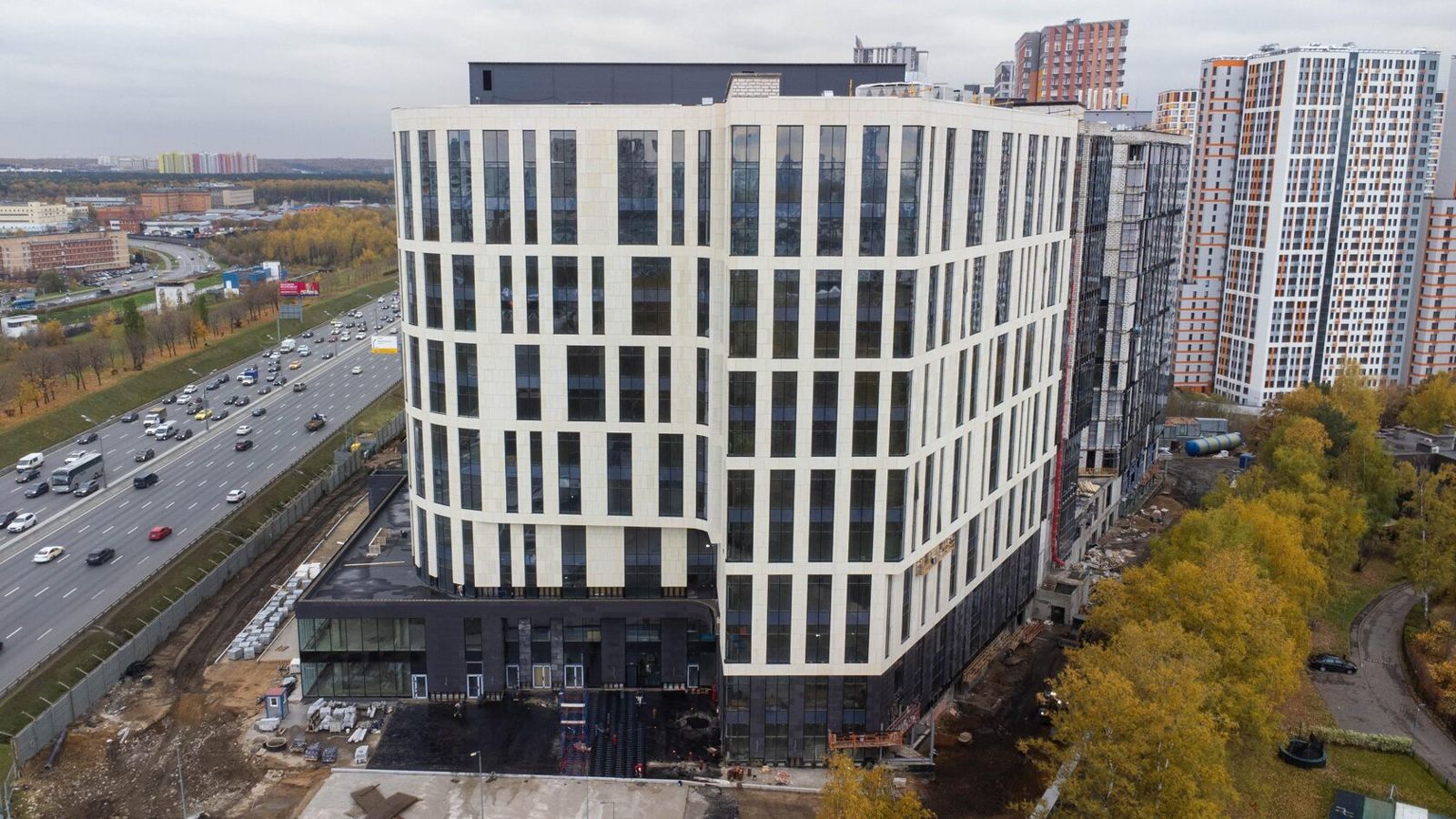
Examples from TECHNOFORMA projects
Projects of different scale show how the cost structure changes. Among TECHNOFORMA projects are the Dubai Houses residential complex in Grozny, 30 buildings and 70,000 m² of GFRC: a large series of repeated elements. And the Dinastia club house in Kislovodsk: one building, but three types of cladding — GFRC, porcelain stoneware and granite. On both projects the company carried out design and installation.
Timescale is the second planning question after budget; see "Facade installation timescales: how to plan".
FAQ
How much does a ventilated facade cost per square metre?
There is no single price: it depends on the cladding, substructure, insulation, height and facade complexity. TECHNOFORMA determines the cost after a site inspection.
What is included in the cost of a turnkey ventilated facade?
Design, cladding, substructure, insulation and membrane, trims, installation, access equipment and logistics. The scope needs to be checked in every quote.
Why do contractors' prices differ so much?
Because of different scopes of work, materials and substructures. Only quotes brought to the same scope can be compared.
Where can you save on a rainscreen facade?
On a layout with fewer cuts and element types, on the choice of cladding and on optimal access. Saving on the substructure, anchors and insulation is not acceptable.
Does building height affect facade cost?
Yes: costs of scaffolding or cradles, lifting materials and safety increase, as does wind load and therefore the substructure.