
Articles

Stone Imports: India, Turkey, China, Iran

Natural stone for facades and interiors

Stone Imports: India, Turkey, China, Iran

Natural stone from India is above all granite and quartzitic sandstone in a wide range of colours, from black and green to warm yellow-brown. Together with Turkish marble and travertine, Chinese granite and Iranian onyx and travertine, it forms the core of the imported range for facades and interiors in Russia.The main criterion when choosing imported stone is not the country but the specific quarry and batch: they determine colour, uniformity, porosity, strength and frost resistance. So the decision is made on samples and batch documents, and the project schedule is checked against whether the required item is in stock or has to be shipped to order.TECHNOFORMA imports stone from India, Turkey, China and Iran, keeps stock from these countries in a warehouse in the Moscow region, and brings in items to order from other quarries. An overview of stones and applications is in the section Natural stone for facades and interiors.
Natural Stone or Porcelain Stoneware on a Facade

Natural stone for facades and interiors

Natural Stone or Porcelain Stoneware on a Facade

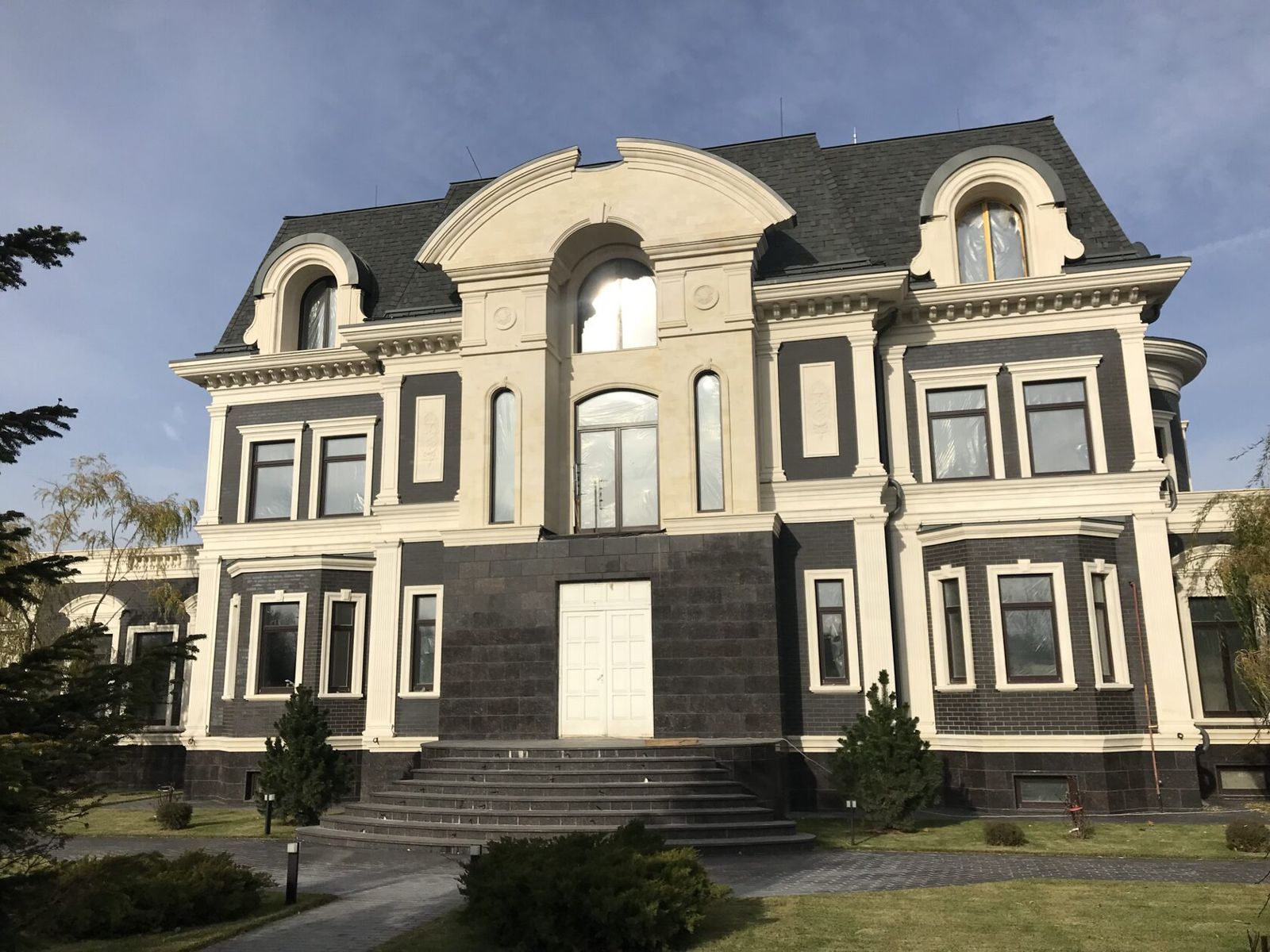
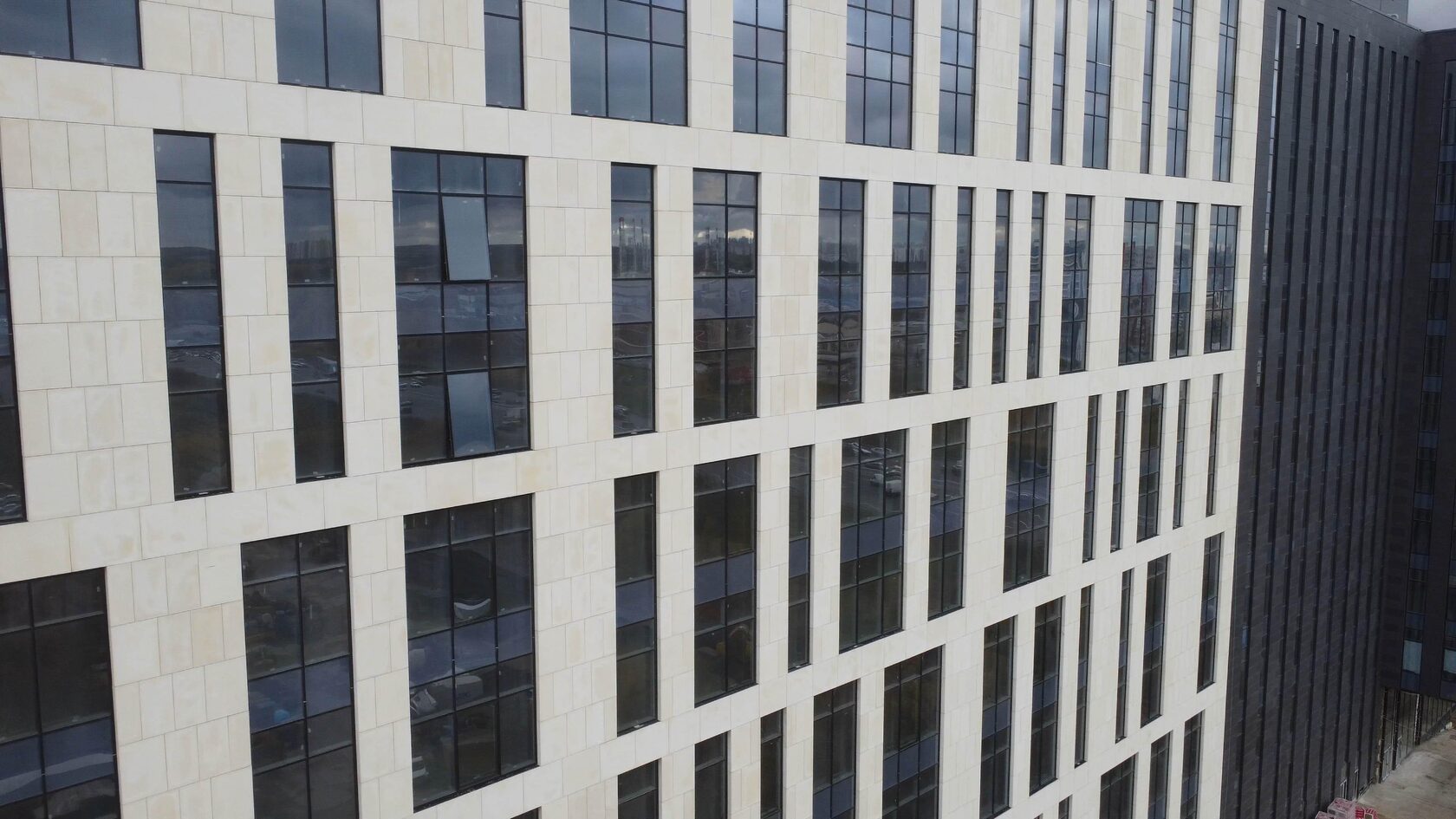
Choosing between natural stone and porcelain stoneware for a facade is a choice between a unique natural texture and industrial predictability. Natural stone has an inimitable pattern, ages gracefully and can be repaired: a slab can be reground. Porcelain stoneware is consistent from batch to batch, lighter for a comparable format, stable in its properties and usually easier to procure.The main criterion is the purpose of the facade. If the building is prestigious, its appearance must last for decades and the budget allows, stone is chosen. If schedule, repeatability, large areas and budget control matter, porcelain stoneware. Many projects combine them: stone on the plinth and entrances, porcelain stoneware and GFRC (glass fibre reinforced concrete) on the main wall areas.This guide is for architects, developers and general contractors. A general overview of stones is in the section Natural stone for facades and interiors.

Artificial Stone for Facades: Types and Differences from Natural Stone

Natural stone for facades and interiors

Artificial Stone for Facades: Types and Differences from Natural Stone

Artificial stone for facades covers cladding products that imitate natural stone but are made industrially: from concrete with pigments and aggregates, gypsum, polymer binders, GFRC (glass fibre reinforced concrete), as well as sintered materials such as clinker and porcelain stoneware. They reproduce the texture of dolomite, slate, sandstone, rubble and split-face stone at a lower weight and price than natural stone.The main criterion for a facade is not the catalogue look but frost resistance, water absorption and the fixing method. Gypsum stone, good for interiors, breaks down outdoors; concrete stone suits exterior cladding if its frost resistance is confirmed; GFRC makes it possible to produce large and three-dimensional elements on a rainscreen system.The material is chosen by private homeowners for cladding facades and foundations, and by developers who need the look of stone over a large area with limited weight. A general overview of natural stones is in the section Natural stone for facades and interiors.

Stone Layout: Pattern Matching and Slab Marking

Natural stone for facades and interiors

Stone Layout: Pattern Matching and Slab Marking

A stone layout is a drawing in which every cladding slab gets its own position, size and number, and the pattern of adjacent slabs is coordinated. For uniform granite the layout mainly solves geometry and minimises waste; for marble, onyx, travertine and other stones with a pronounced pattern it is also about beauty: veins should continue rather than break off, and shades should transition smoothly rather than blotch the wall.The main criterion of a good layout is that it is based on the real slabs of a specific batch, not on a catalogue photo. Only then can you be sure the result on site matches what was approved in the visualisation.A layout is needed by architects and designers, and by clients commissioning natural stone cladding for facades, halls, staircases and bathrooms. TECHNOFORMA prepares layouts as part of its stone services, together with measurements, 3D visualisation, installation and designer supervision. A general overview of stones is in the section Natural stone for facades and interiors.

3D Visualisation of a Stone Facade Before Purchase

Natural stone for facades and interiors

3D Visualisation of a Stone Facade Before Purchase

A 3D facade visualisation is a photorealistic image or model of a building showing the chosen materials, their colour, texture, layout and articulation under real lighting and in context. For a natural stone facade visualisation is especially useful: stone is expensive, variable and bought in batches, so a mistake in choosing the stone or pattern is cheaper to spot on screen than on the wall.The main criterion of a good visualisation is that it is built on real data: surveys or working drawings, textures of specific slabs or samples, the design layout of the slabs. A pretty picture with a generic library marble helps sell an idea but does not help decide on a purchase.Visualisation is needed by architects, developers choosing cladding, private house clients and those preparing materials for approvals. TECHNOFORMA employs designers and 3D visualisers. An overview of stones and applications is in the section Natural stone for facades and interiors.

What Determines the Price of Natural Stone

Natural stone for facades and interiors

What Determines the Price of Natural Stone

The price of natural stone is not a single figure per square metre of slab but the sum of several components: the cost of the stone at the quarry, sawing and processing, thickness, waste from cutting and pattern matching, delivery, substructure and installation. So the same granite costs differently on a warehouse price list and on a finished facade, and two stones with a similar slab price can produce very different final estimates.The key principle of comparison is to calculate the cost per finished square metre of cladding on a specific project, not the price of the material. It is affected by slab format, facade complexity, building height, region and schedule.The article will be useful to developers, estimators, architects and private homeowners planning a cladding budget. TECHNOFORMA determines the specific cost of works after a site inspection; the article contains no ready-made prices. An overview of stones is in the section Natural stone for facades and interiors.
How to Order Stone for a Project: From Sample to Delivery

Natural stone for facades and interiors

How to Order Stone for a Project: From Sample to Delivery

Buying natural stone in bulk for a project is not like buying tiles from a catalogue but a chain of decisions: choosing the stone from samples, calculating the quantity from the layout, approving the batch, logistics and acceptance on site. A mistake at any stage (an unsuitable stone, an insufficient reserve, stone from different batches) is costly, because stone travels a long way and is hard to return or reorder quickly.The main criterion when choosing a supplier for a project is the ability to take responsibility for the whole journey, from sample to slab installed in its place. That is why developers and general contractors tend to work with companies that have their own warehouse, processing, designers and installation.This article is for developers, general contractors, procurement departments, architects and private clients building large houses. Below is the process as it works at TECHNOFORMA: a warehouse in the Moscow region with stone from India, Turkey, China and Iran, supply to order from anywhere in the world, layout, measurements, 3D visualisation, installation and designer supervision. An overview of stones is in the section Natural stone for facades and interiors.
Facades for Developers: How to Reduce the Risk of Delays

Facade design and selection

Facades for Developers: How to Reduce the Risk of Delays

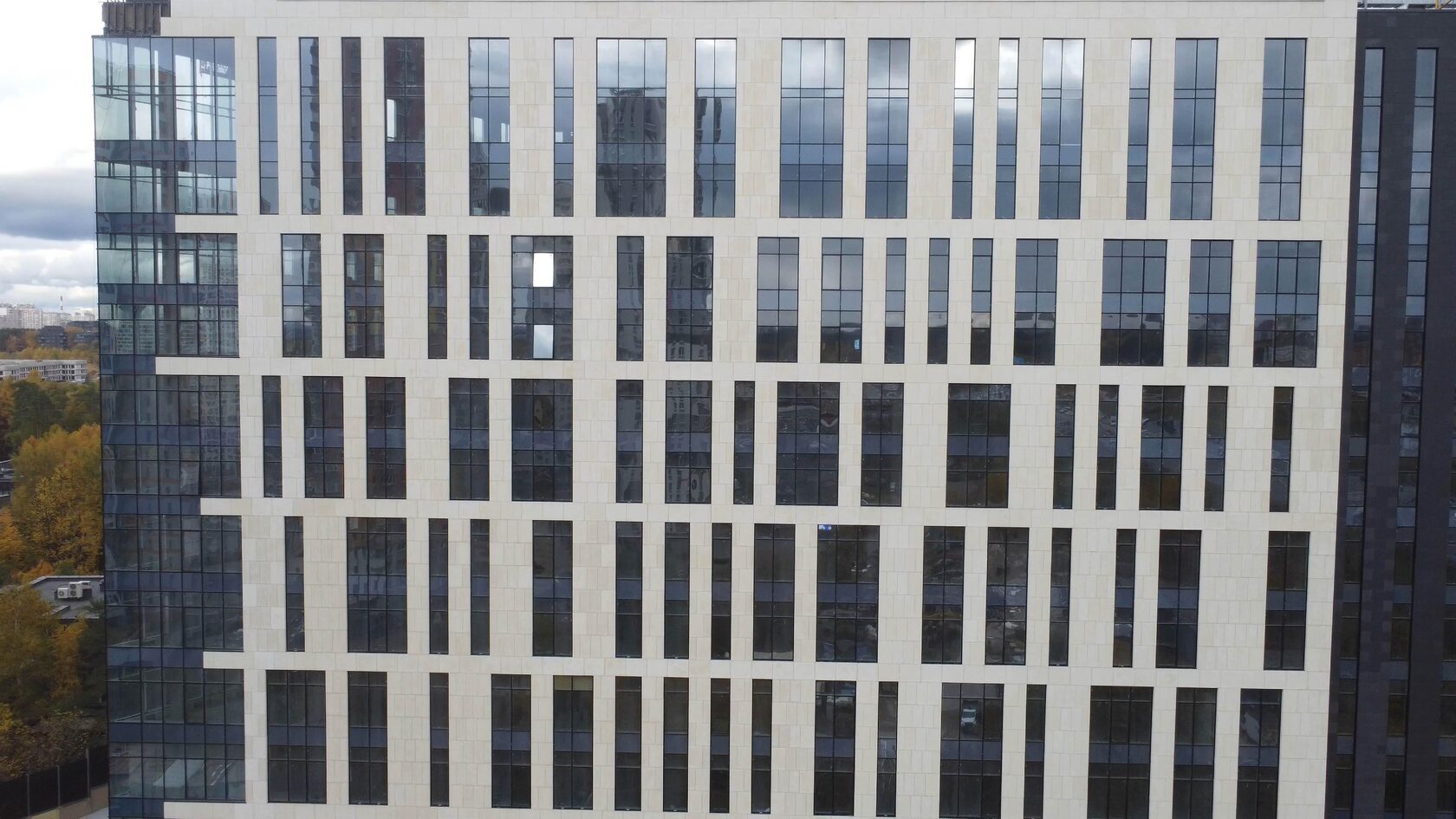
For a developer, the facade is not only the building's appearance but also one of the longest and riskiest parts of the schedule: cladding starts after the frame and walls and finishes just before handover, when there is no time buffer left. Any delay in delivery, rework of a detail or shortage of installers pushes back commissioning.The main criterion when choosing a solution and a contractor is how controllable the 'design → production → delivery → installation' chain is. The fewer hand-overs of responsibility between different companies, the fewer points where a delay cannot be controlled.This article is for developers, technical clients and general contractors of apartment buildings, business centres and hotels. The general approach to choosing cladding and working with the design is covered in the section Facade Design and Selection.

How to Choose a Facade Contractor: A Checklist

Facade design and selection

How to Choose a Facade Contractor: A Checklist

How to choose a facade contractor: check that it designs, manufactures the cladding and installs it with its own crews, that it has completed projects of comparable scale with addresses, and that the contract fixes stages, deadlines and the acceptance procedure. The price in the commercial offer is the last criterion, not the first: a low rate often means that part of the work has been left out.Below is a checklist for developers, general contractors and private clients choosing a contractor for a ventilated rainscreen facade or cladding in glass fibre reinforced concrete (GFRC), natural stone or porcelain stoneware. Other decisions at the design stage are covered in the section Facade Design and Selection.

How to Choose a GFRC Manufacturer

Facade design and selection

How to Choose a GFRC Manufacturer

A glass fibre reinforced concrete (GFRC) manufacturer is a plant that makes its own models and moulds, prepares the mix of glass fibre, sand, cement and water, casts, cures and inspects the products. It should be chosen on three criteria: in-house full-cycle production, product properties confirmed by tests, and completed projects of comparable scale.GFRC is a material for facade decoration, cladding panels and small architectural forms: cornices, columns, window surrounds, balustrades. Product quality is determined almost entirely by the technology of the specific plant, so the same material behaves differently at different manufacturers.This article is for architects, developers and technical supervisors choosing a GFRC supplier for a project. Other cladding selection questions are covered in the section Facade Design and Selection.

Facade Tender: How to Write a Specification and Compare Bids

Facade design and selection

Facade Tender: How to Write a Specification and Compare Bids

A facade works tender gives a fair comparison only when all bidders price the same scope. To achieve this, the client prepares a technical specification with the design, an element schedule and material requirements, and compiles the bids into a single table line by line — rather than comparing the totals.The main criterion for choosing the winner is not the lowest price but the completeness of the bid, realistic deadlines and the contractor's proven ability to manufacture and install the cladding. Price differences between bidders are almost always explained by different scopes of work.This article is for developers, technical clients and general contractors running a tender for a ventilated facade or cladding in glass fibre reinforced concrete (GFRC), natural stone or porcelain stoneware. Related topics are in the section Facade Design and Selection.

Facade Works Estimate: Structure and Review

Facade design and selection

Facade Works Estimate: Structure and Review

A facade works estimate is a document that breaks the cost of a facade down into materials, labour, plant, overheads and the contractor's profit. It should be checked in two directions: completeness (are all items in the design included) and justification (do quantities match the design and rates match the market).The main mistake when checking is looking at the total or the price per square metre. Two estimates with the same total may describe different facades: one includes substructure, insulation and junctions, the other only cladding.This article is for developers, quantity surveyors, technical supervision and private clients who have received an estimate from a contractor. Other design-stage questions are covered in Facade design and selection.

Request a callback