Hotel Facades: Balancing Image and Operation
A hotel facade has to sell rooms and keep working without interruption: guests see the building in booking photos before they walk into the lobby, and the owner cannot close the hotel to repair the cladding. That is why hotel construction almost always uses ventilated rainscreen facades with durable cladding: glass fibre reinforced concrete (GFRC), natural stone or porcelain stoneware.
The main criterion is how well the cladding keeps its image with minimal maintenance in a given climate. A seaside resort hotel, a city hotel and a mountain complex each require different choices of materials and protection.
This article is for hotel developers, architects and operators. General information on the systems is in Ventilated rainscreen facades.
Image and brand
For a hotel, the facade is part of the product. It sets guest expectations and affects how the category is perceived. The architectural image is usually built from the brand concept or the location:
• Classical or palatial style: orders, columns, balustrades, cornices, arched windows. Typical of resort and prestige hotels.
• Regional style: motifs of local architecture such as ornament, carving, characteristic arches and stone colour.
• Contemporary style: large planes, rhythmic fins, panoramic glazing.
It is important that the image can be produced in series: a hotel has many identical windows, loggias and balconies, and each repeated element is more economical to make from one mould. This is exactly where glass fibre reinforced concrete is convenient: one mould yields dozens of identical pieces.
The image must also work at scale. Hotel complexes often consist of several buildings, and their facades need to be designed as an ensemble: common cornice lines, a shared window rhythm, repeated details, with emphasis on the main building and entrance. Cladding colour is chosen for the local light: under the southern sun, light warm shades look different from how they look in central Russia.
Materials
A typical set of materials for a hotel rainscreen facade:
| Material | Role on the facade | Advantages | Limitations |
|---|---|---|---|
| Glass fibre reinforced concrete | Main cladding and ornament | Any shape, non-combustible (NG per manufacturer), serial production | Requires a layout and detail design |
| Natural stone | Plinth, entrances, terraces | Durability, premium look | Weight, stone chosen for the climate |
| Porcelain stoneware | Main wall areas, courtyard facades | Price, easy cleaning | Limited modelling |
| Render systems | Secondary buildings | Budget | Repairs need scaffolding; sensitive to impact |
Material characteristics depend on the mix and the quarry; exact values are stated in the product data sheet and test reports.
For hotels, as for other public buildings, the rainscreen system must comply with the current Russian fire safety codes (SP), and the cladding must be non-combustible. Details around guest room windows and fire barriers in the ventilated cavity are checked separately. Noise protection should also be addressed early: on busy streets and near roads, cladding and insulation work together with the windows.
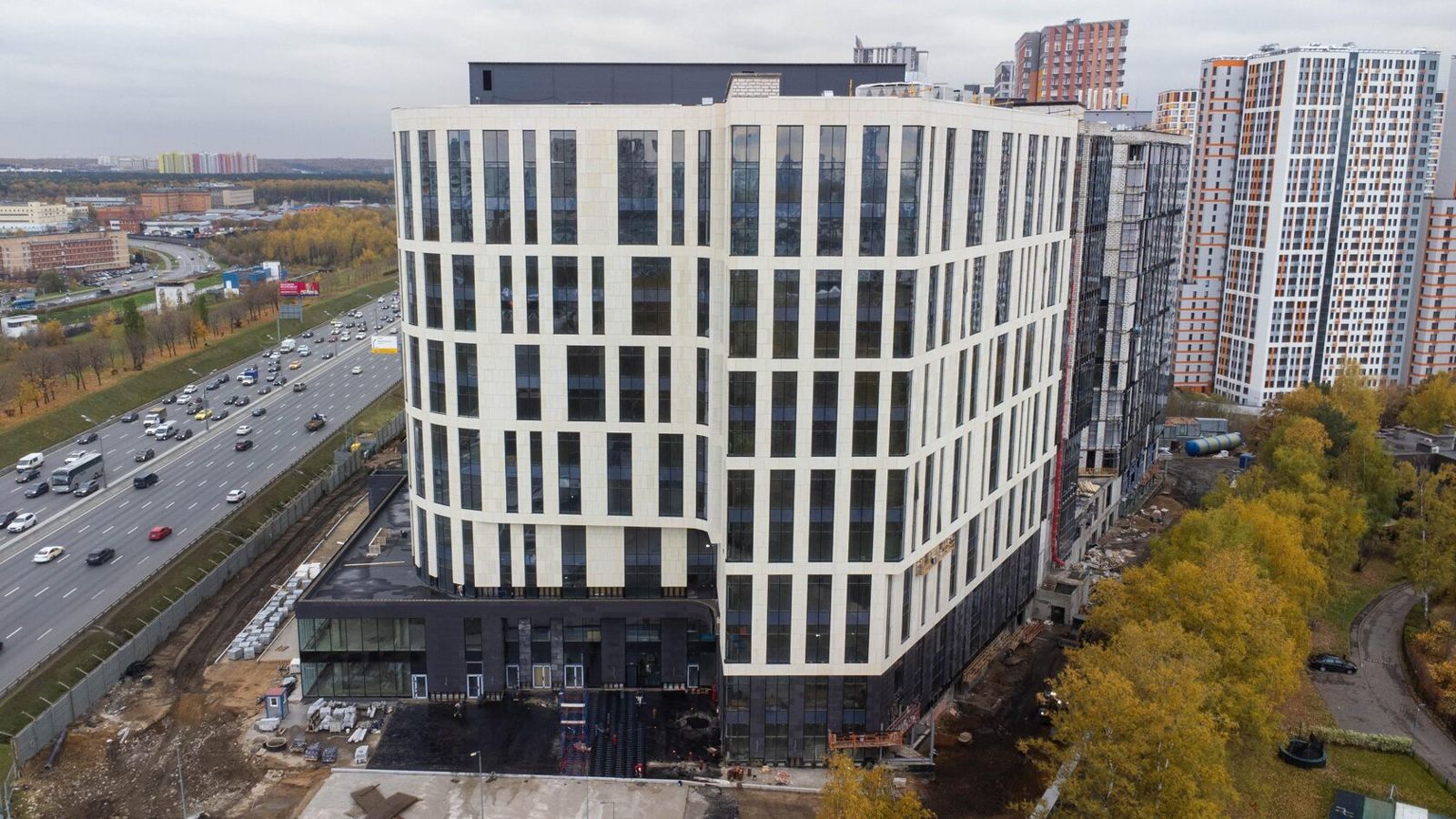
Ornament
Ornament on a hotel facade works for photographs and for the close-up impression: guests walk past the entrance columns and look at the balustrade from their balcony.
• Entrance: a portico with columns, a canopy, a large pediment or arch; GFRC and natural stone are often combined here.
• Balconies and loggias: balusters, handrails, brackets, all serial products from one mould.
• Window surrounds: architraves, pediments, keystones.
• Crowning elements: cornices, parapet urns, attics.
TECHNOFORMA makes models and moulds in its own mould-making workshops, so ornament can be developed for a specific project rather than chosen from a catalogue. The colour and texture of GFRC are agreed using samples: the product can imitate limestone or travertine, or have a smooth surface for painting.
Climate
Climate determines which solutions will stand up to use:
• Seaside: salty air and wind accelerate corrosion; the substructure needs materials and coatings with appropriate protection, and the cladding needs dense materials with low water absorption.
• Mountains and continental climate: many freeze-thaw cycles. The key property is the frost resistance of the cladding; for GFRC it is high and further improved with additives, for natural stone it depends on the stone type.
• Hot climate: heating of dark surfaces and thermal movement; expansion joints and light tones on sunny elevations are needed.
Horizontal decorative elements are designed with slopes and drips so that water does not stand on cornices or leave streaks.
Another climatic factor is wind. Coastal and mountain hotels often stand on exposed sites where wind loads are higher than in urban areas. The substructure and fixings of large decorative elements are designed for the specific site, not from standard tables.
Maintenance
A hotel operates all year round, so facade maintenance is planned so as not to disturb guests:
• regular cleaning and inspection, preferably in the low season, with cradle anchors provided on the roof;
• water-repellent treatment of porous stone and concrete surfaces so that dirt and salts are absorbed less;
• a reserve of cladding and ornament from the same batch, or retained moulds for recasting;
• as-built documentation: layout, details, material data sheets.
A rainscreen facade has the advantage that a damaged element is replaced individually without closing the rooms beneath. Facade work above entrances and terraces is carried out at times of lowest occupancy and with the danger zone fenced off.
The operating budget should be considered when choosing materials. Cladding that needs repainting every few years costs a hotel more than it seems: besides the work itself, there is scaffolding in front of guest room windows, noise and lower guest ratings. Durable cladding on a rainscreen system costs more up front but is easier to maintain.
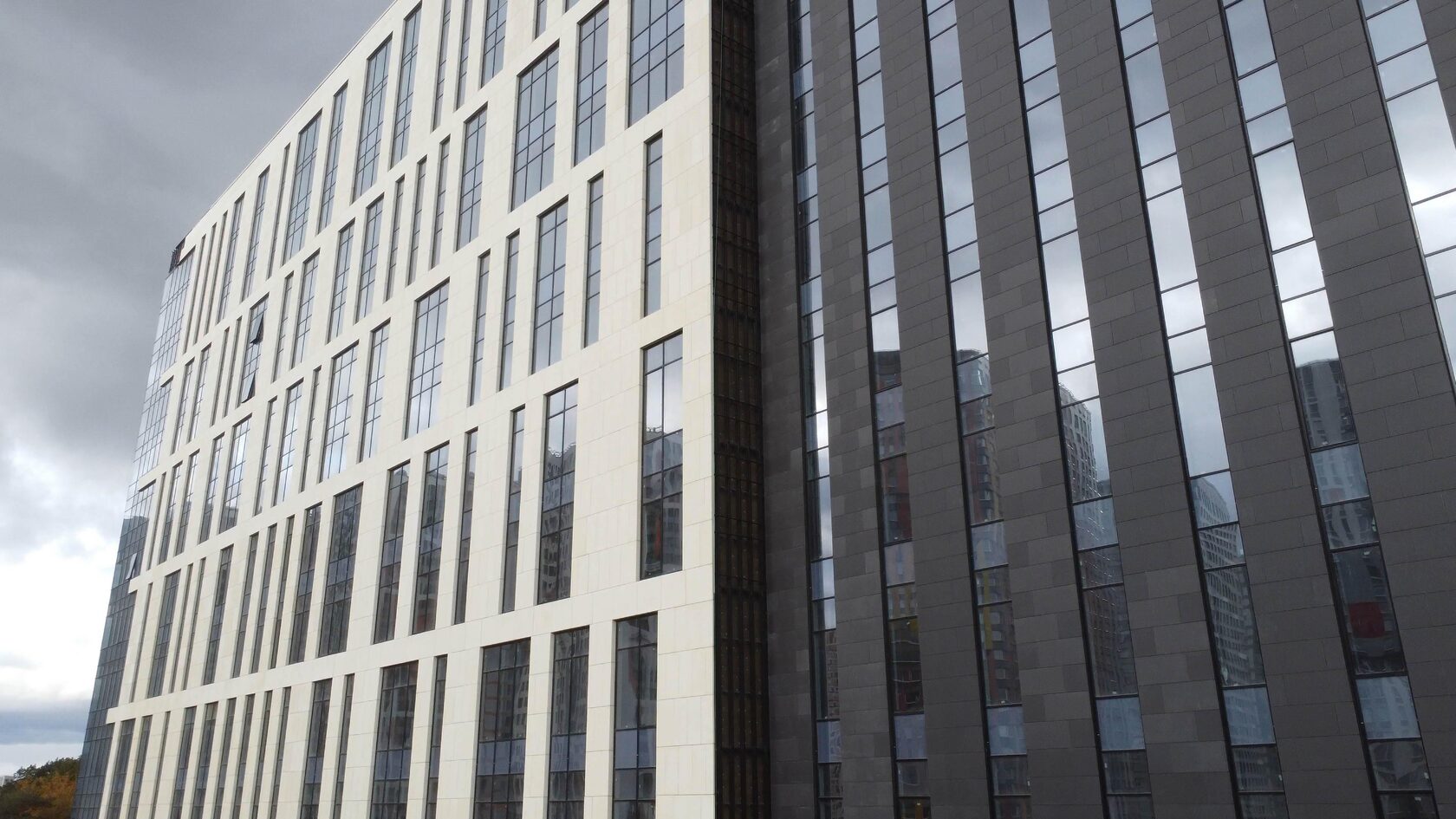
Examples from TECHNOFORMA projects
The largest hotel project in TECHNOFORMA's portfolio is the Al-Qasr hotel complex in the village of Manas (Republic of Dagestan): 11 storeys, 4 buildings, 24,000 m² of glass fibre reinforced concrete. The company carried out design and installation from October 2023 to December 2025.
More projects are in TECHNOFORMA projects. The specifics of universities, theatres and administrative buildings are covered in Public building facades: universities, theatres, institutions.
FAQ
What is the best cladding for a hotel facade?
GFRC or porcelain stoneware on a rainscreen system for the main cladding and ornament, hard natural stone for the plinth and entrance. The choice is refined according to the climate.
Can hotel ornament be made to a custom design?
Yes. TECHNOFORMA designs the elements and makes models and moulds in its own workshops, so ornament is produced for the specific project.
How does a hotel facade cope with a seaside climate?
It needs a corrosion-protected substructure and cladding with low water absorption. Specific solutions are defined in the design.
Does a hotel have to close for facade repairs?
With a rainscreen system, usually not: damaged elements are replaced individually from cradles or lifts.